San Draw Responds to Training Needs with New 3D Printed Medical Simulator


 Medical students have to train for a wide variety of procedures, many of them delicate and precise. Obviously, it’s critical that they know exactly how to perform such procedures before attempting them on human patients, which means that they need good, accurate simulation tools. Most procedures can’t exactly be practiced on living humans, so hospitals and schools need tools that replicate real humans as closely as possible.
San Draw was founded in 2014 to do what no other companies were doing at the time – offer 3D printing services in silicone. The company’s FAM technology enabled 3D printing in full color, with multiple materials and adjustable hardness. While silicone 3D printing has become a bit more common, San Draw was the first silicone 3D printing service, and has become well-known as a supplier of 3D printed silicone items ranging from medical products to items like seals for fuel cells.
An industry in which silicone products are in high demand is the medical one, however, so San Draw created a separate medical division called San Draw Medical. The company has created a 3D printed silicone facial implant for aesthetic surgeons, and has also developed a series of medical training tools, like a 3D printed arm that allow medical students to practice giving injections. Each arm can be customized by changing the diameter and depth of the vein, for example, and the rigidity of the skin. A replaceable silicone skin pad can be injected several times before being easily replaced.
After developing that particular medical trainer, San Draw Medical created a similar tool for medical students to practice sutures. Like the injection trainer, this tool featured a 3D printed arm with a silicone skin pad that replicated real skin in terms of texture and structure, being 3D printed in layers that mimic the layers of actual skin.
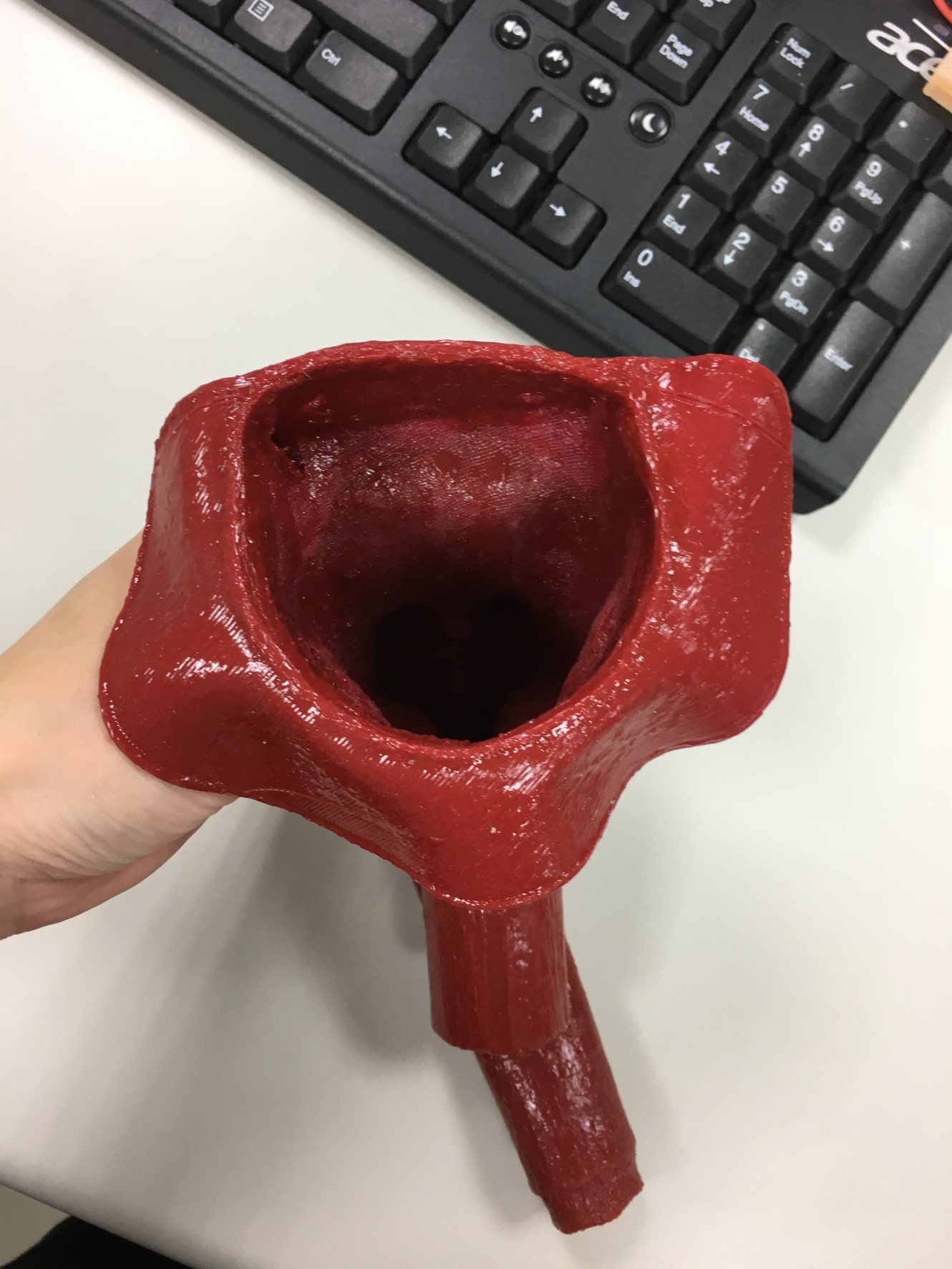
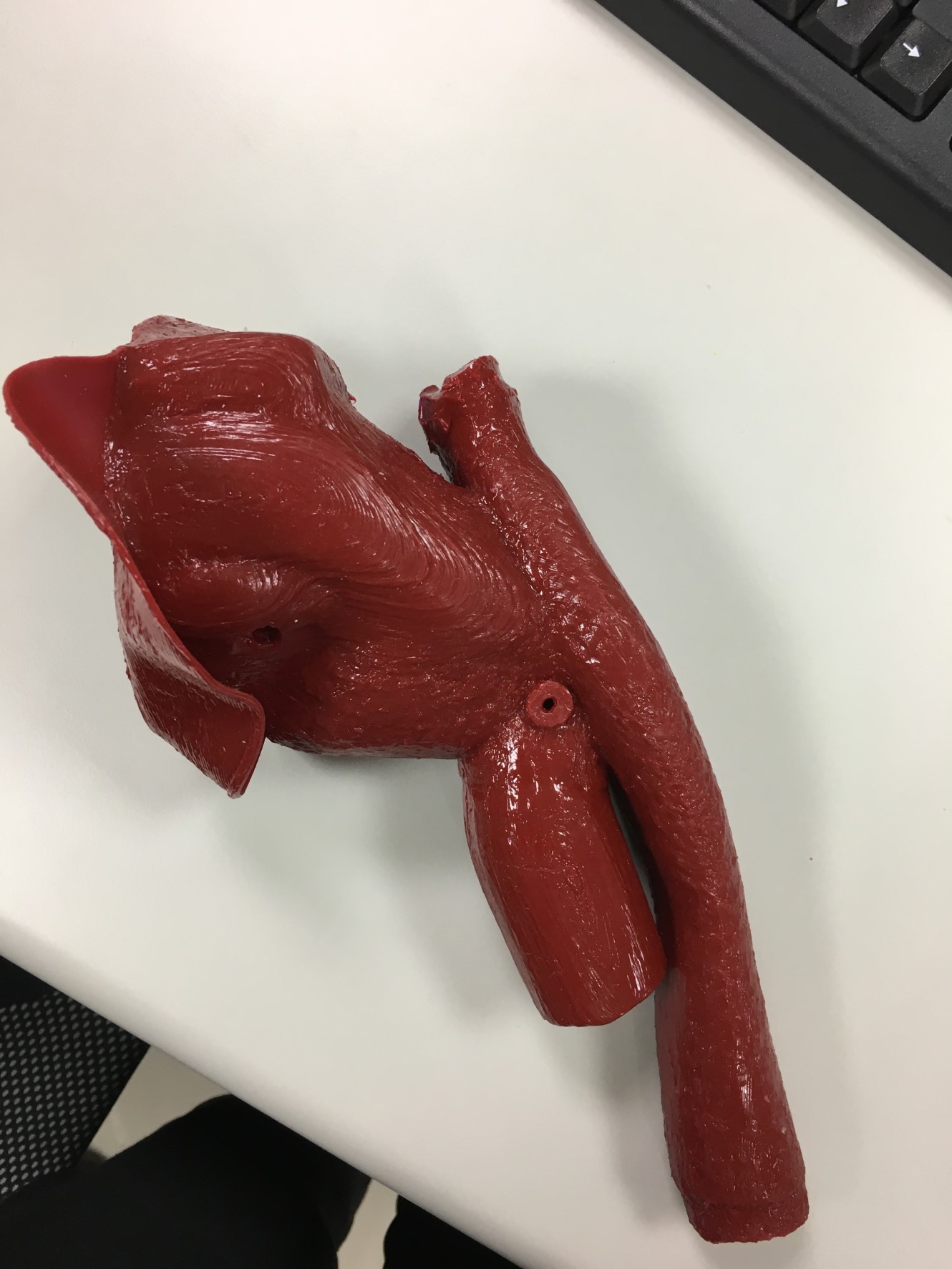
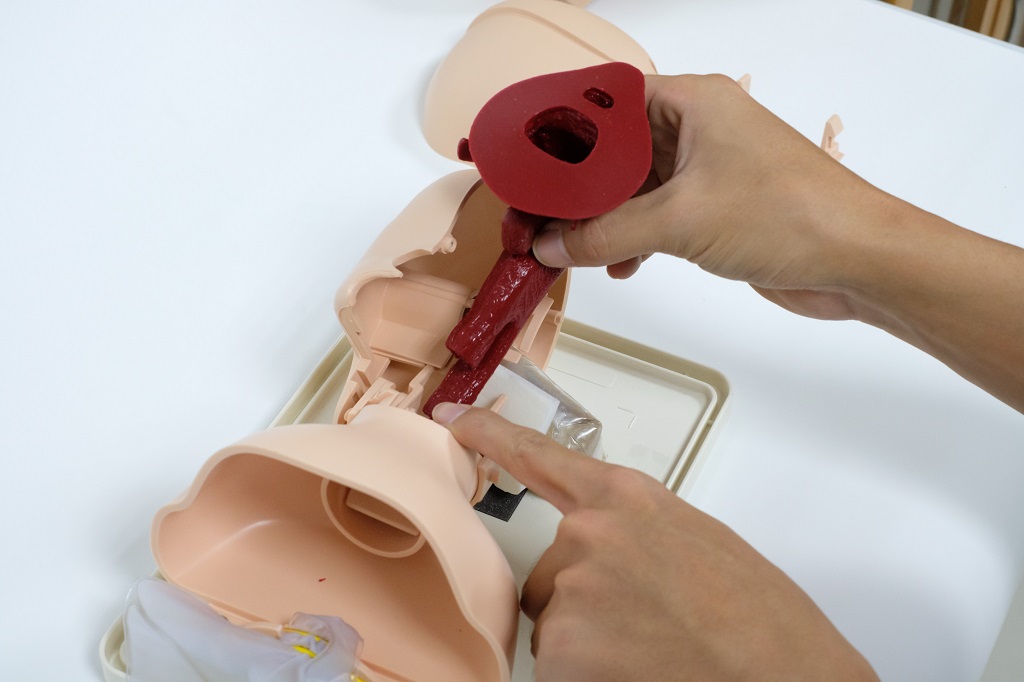
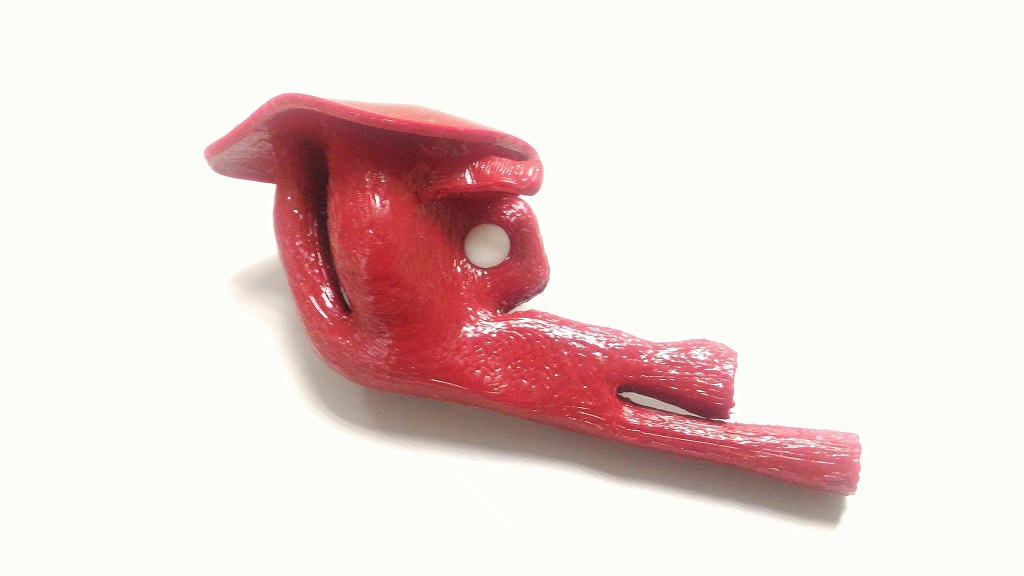
Recently, the company tells us, San Draw’s sales manager was visiting hospitals to promote the company’s medical trainers, and the simulation specialists he met had a request: they wanted San Draw to customize the airway for their intubation trainer or airway management trainer (AMT). Intubation is another critical procedure that can’t exactly be practiced on a volunteer subject, so good simulators are crucial. The problem that many training programs have is that the airways in such simulators aren’t often easy to use or even anatomically correct. In addition, once the airway part of the AMT is out of production, they can’t extend the AMT’s use.
San Draw responded to the request by creating a CAD file that replicated a real airway, then 3D printing it in silicone. The result was a customized, realistic, durable AMT that was also more affordable and replaceable for medical training programs.

“San Draw’s amazing FAM technology not only enables custom silicone parts in quick turn-around and affordable cost, but also helps simulation specialists a lot to customize their training, classes, and workshops, bringing out the true value of medical simulation,” Dr. Thomas Lin, CEO of the Center of Education in Medical Simulation (CEMS) at Taipei Medical University, told 3DPrint.com.
Medical training programs were pleased with San Draw’s device; the company’s customers now include some of the top hospitals in Taiwan, including National Cheng Kung University Hospital and Far Eastern Memorial Hospital.

Discuss this and other 3D printing topics at 3DPrintBoard.com or share your thoughts below.
[Images provided by San Draw]
Subscribe to Our Email Newsletter
Stay up-to-date on all the latest news from the 3D printing industry and receive information and offers from third party vendors.
Print Services
Upload your 3D Models and get them printed quickly and efficiently.












You May Also Like
Divergent Declares that German 3D Printers are Superior, And Plans Massive LPBF Expansion
Divergent has announced a new version of its Laser Powder Bed Fusion (LPBF) printer and a new site. The company aims to do nothing short of “further accelerating its mission...
Inside Haddy: Jay Rogers Wants 3D Printing to Build Real Products, Not Just Prototypes
A warehouse from the outside, but step inside Haddy and it shifts quickly: finished pieces up front, clean and minimal, furniture you can touch and sit on. Walking through the...
SpaceX IPO Puts a Major 3D Printing Powerhouse on Wall Street
SpaceX officially began trading on the Nasdaq today under the ticker symbol SPCX, marking one of the most anticipated and largest public offerings in Wall Street history. The company priced...
DEEP Manufacturing Collaborating with Fortius Metals to Demonstrate WAAM at Scale
DEEP Manufacturing is trying to build pressure vessels and marine habitats at scale with DED technology. Using commercial robot arms and wire arc additive manufacturing (WAAM), the company is hoping...