3D Printed Silicone Seals for Fuel Cells Lead to New Service from San Draw

 In terms of 3D printing materials, silicone is a relatively new one, but it’s developing quickly. Two months ago, Wacker Chemie introduced the first-ever industrial 3D printer for silicone materials, meaning that we should be seeing a lot more 3D printed silicone parts in the near future – but that doesn’t mean they’ve been nonexistent so far. The medical industry, in particular, has been working with the material to produce things like prosthetics and surgical guides, and one company has especially stood out for their innovative use of the material in medical training.
San Draw Medical recently introduced their 3D printed silicone arm models for the purpose of allowing medical students to practice giving injections. The realistic models simulate an actual arm, giving students the opportunity to perfect the technique of inserting needles before they ever have to try it on a real human. The models have been very well received in the medical field, but San Draw is more than their medical division.
“San Draw is a silicone 3D printing company, and we provide 3D printing as a service to industries including automobile, consumer electronics, construction, shoe, and medical. San Draw was founded by two Stanford University alumni Gary Chang and Michael Lu, and it was an alumnus of UC Berkeley’s accelerator SkyDeck,” notes the company.
 The company was founded only two years ago, but has already been responsible for some major developments in silicone 3D printing. Their FAM technology allows for objects to be printed in full color with adjustable hardness and multiple materials, resulting in silicones with varied properties and a lot of versatility and potential for customization. San Draw offers the first silicone 3D printing service, and while they may be most well-known for their medical applications and insoles, a new application is drawing attention from the engineering community.
A couple of months ago, San Draw was approached by a professor whose specialty is fuel cells. He was looking for a fast, affordable way to create custom silicone seals; previously, he had been purchasing universal seals and cutting them into the shapes he needed. That technique was proving to be inadequate, however; he couldn’t get the shapes of the seals to be quite accurate enough for optimal performance.
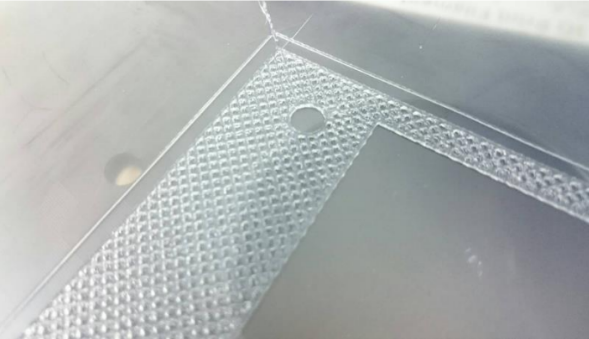
San Draw had a solution for him – customized, perfectly accurately-shaped and -sized 3D printed silicone seals with a double-sided lattice structure that immensely improved the sealing performance and thus the efficiency of the fuel cell. The reaction of the client was so positive that San Draw decided to set up a new service specifically for the 3D printing of silicone sealing solutions.
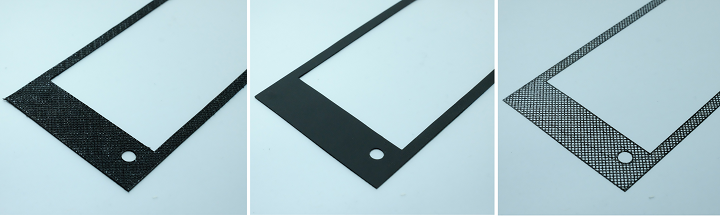
L to R: double-latticed, non-latticed and open-latticed seals.
With the new service, San Draw offers custom seals of up to 300 x 200 mm in size. Available thicknesses include 0.2mm for a non-latticed seal, 0.3mm for a single-side latticed seal, and 0.4mm for double-sided lattice. The seals can operate in temperatures as low as -60°C and as high as 260°C, and – as with San Draw’s other 3D printing services – customers can specify the precise material hardness that suits their needs. MOQ is 10 pieces, making the service ideal for small-volume orders.
For more information about ordering and pricing, contact San Draw here. Discuss further over in the 3D Printed Silicone Seals forum at 3DPB.com.
Subscribe to Our Email Newsletter
Stay up-to-date on all the latest news from the 3D printing industry and receive information and offers from third party vendors.
Print Services
Upload your 3D Models and get them printed quickly and efficiently.













You May Also Like
AI Design and Point-of-Care Integration Headline ADDITIV Medical 2026
Medical additive manufacturing is expanding rapidly inside major healthcare institutions. In 2026 alone, hospital systems including Indiana University Health and Sheffield Teaching Hospitals launched dedicated point-of-care 3D printing facilities to...
GKN Aerospace’s UAV Demonstrator with 3D Printed Engine Avoids ITAR Regulations
The US CIA director recently made an unannounced visit to Moscow that has naturally raised much speculation, while the EU and NATO have now officially accused Russia of being behind...
The Business Case for 3D Printed Stents
A new 3D printed stent developed at New York University (NYU) does not look like the devices doctors typically use today. Instead of a simple tube, the prototype resembles a...
3D Printing Financials: 3D Systems, Prodways, and Align Build on Positive Momentum
The latest earnings from 3D Systems (NYSE: DDD), Prodways (EPA: ALPWG), and Align Technology (Nasdaq: ALGN) show that the 3D printing market continues to move forward. Some businesses are growing...