Ironhead Studio’s 3D Printing Creates the Power of Hela’s Headdress

Thor: Ragnarok is out in theaters and it’s making a splash at the box office and in reviews, The Washington Post‘s Michael O’Sullivan calling it, “a delicious blend of meaty action and sublime silliness.” It’s probably not going to bump serious films like The Godfather or The Shawshank Redemption out of their spots, but it’s well worth price of a seat and popcorn, and the special effects are worthy of a watch, even if you have to see it dubbed (as I do, living in Mexico).
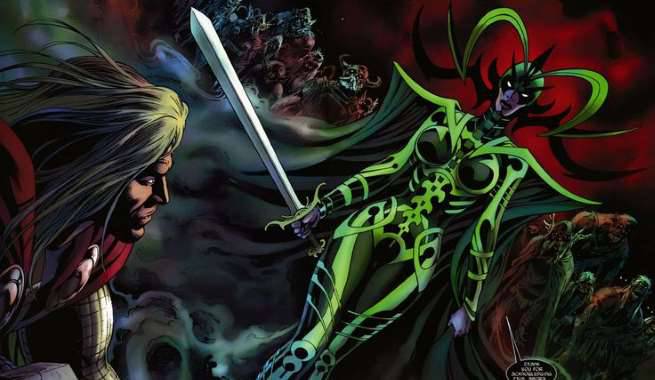 The villain in this blockbuster, Hela, was introduced into the comic book universe in 1962. In addition to being touted as Marvel’s first queer icon, the power of her presence as portrayed by Cate Blanchett is undeniable. She is, in short, absolutely captivating. Here we have a character brimming with raw sexuality, but not as a result of her décolletage or skimpy skirts; instead, it is an energy that positively exudes from her, oozing from every pore like an irresistible pheromone. And that headdress doesn’t hurt.
You may have thought that the antlered head gear was a computer generated effect, but it is, in fact, an actual, physical thing, and it was created using 3D printing. The process behind its creation was revealed in a video made by Norman Chan at this year’s DesignerCon. The interview was released on the Tested YouTube channel, the latest showplace for the genius of Adam Savage. Its creator, Ironhead Studio, which opened in 2007, is headed up by Jose Fernandez, who made his debut on the film scene in 1989 working on the film Gremlins, and has since gone on to work as a sculptor in films such as Godzilla, Planet of the Apes, and Hellboy. Fernandez discussed some of the difficulties of creating this iconic headgear:
“It was a great challenge because it, kind of is pretty big. The challenge was getting the weight right, getting it balanced on her head, and getting it secure without actually having it coming down to far on her forehead. I think we nailed it; when we first saw it on her, with her walking around in the studio, it was pretty impressive.”
Fernandez is not one to shy away from hand sculpting, but in this case, the process was almost entirely 3D creation from digital modeling to 3D printing. As Fernandez explained:
“It’s pretty much all 3D. So we modeled it in the computer. we scanned her so that we had her data and then we did a skull cast for her so that it fit really well, and then we just started modeling it…once they [Marvel] were happy, we started printing the pieces. It’s an interesting composite, it’s called SLS but theres also one with a carbon fiber fill, so it’s very light. Structurally very sound.”
What you see in the movie is often CG, but the head piece served to help Blanchett get the feel for the space she occupied and as a guide as the effects were added. It’s also modular, as per the request of the team at Marvel, and each antler was printed separately; that way pieces can be removed and added to create a more tailored helmet as needed.
 Directly out of the machine, the pieces had that traditional, grainy look typical of 3D printing, but were then finished by hand to a high degree of polish before being turned over to Fernandez’ painter. To get the opalescent depth to the color was a labor intensive process requiring alternating mirror chrome with layers of color.
In the meantime, Fernandez gets to continue living the dream, working on the next Aquaman film, and Hela gets to harness the power of 3D printing in her efforts to do what every villain wants to do: try and take over the world.
What do you think of this news? Let us know your thoughts; join the discussion of this and other 3D printing topics at 3DPrintBoard.com or share your thoughts below.
Subscribe to Our Email Newsletter
Stay up-to-date on all the latest news from the 3D printing industry and receive information and offers from third party vendors.
Print Services
Upload your 3D Models and get them printed quickly and efficiently.











You May Also Like
Next-Gen CAD/CAM Tool Accelerates Development of Innovative AM Electronics Applications
3D-printed electronics is an emerging field that combines additive manufacturing techniques with the integration of electronic components to produce previously unachievable results. It enables the creation of complex, customized electronic...
3D Printing News Briefs: February 19, 2026: Market Data, Africa, Metal Parts for Defense, & More
We’re starting with some business news for you in today’s 3D Printing News Briefs! The Wohlers Report 2026 is now available, Carbon announced its new Chief Technology Officer, and Farsoon...
From “Magic” to Metal: How Intrepid Automation Wants to Make 3D Printing Matter at Scale
Ben Wynne still talks about 3D printing the way people do when they’ve felt that “wow” moment up close. Back in the early 2000s, he was working at HP’s advanced...
From Vision to Volume: The Next Chapter for Additive Manufacturing
Additive manufacturing has spent years navigating skepticism, hype cycles, and industrial validation. Now, the industry finds itself at a decisive turning point. The conversation has shifted away from futuristic possibilities...