3D Printed Four-Eared Device Provides Immersive Soundtrack of the City


A couple of years ago, I went on a long and memorable family trip to the heart of NYC. After a long, exhausting bout of walking on my last late afternoon there, I stood on the corner and took a video of the traffic and general mayhem going on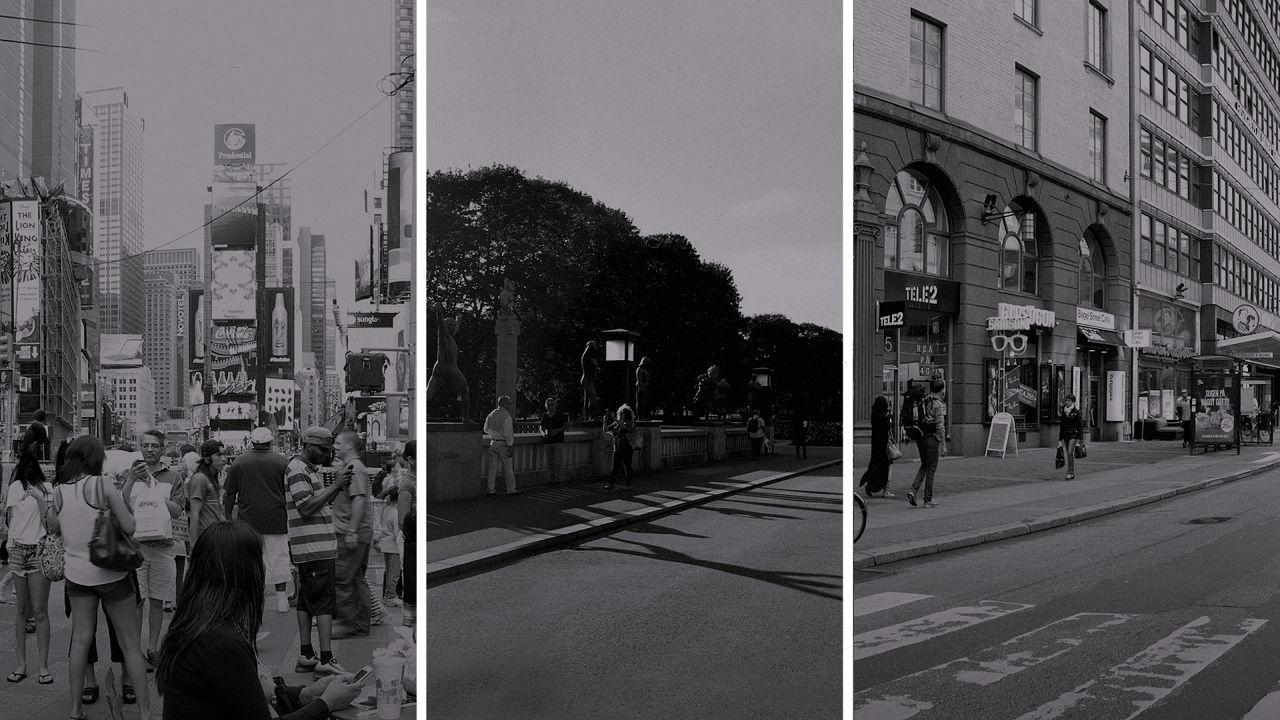 at rush hour. Later, safely ensconced back home, I would click on the video and listen to all the honking, yelling, and sounds that had grown familiar to me on my trip, almost bordering on comforting.
My short homemade memory, housed on my smartphone, would be the primitive version of what David Vale took many steps further with his ‘360-degree stereoscopic experience’ that I can tell you first-hand indeed has the ability to invoke emotion.
 Here, you become a part of the language of the city, as the auditory and visual aspects invoke your own personal soundtrack of memories or hopeful optimism for a journey or trek. The Sound City Project, still ongoing, so far encompasses not just New York City, but other areas like:
- Oslo
- Florence
- Bergen
- Stockholm
- San Francisco

David Vale
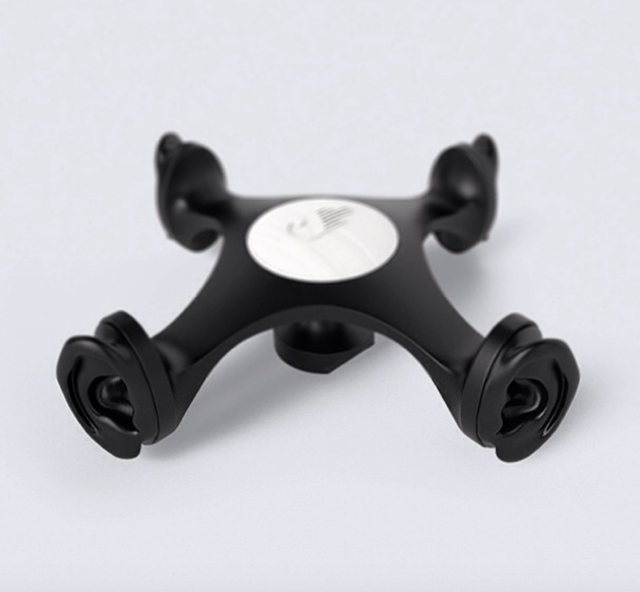
The guys at the Sound City Project are doing this and doing it big, with their four-eared 3D printed drone that is the result of a collaborative effort between co-creators David Vale and Rick Van Mook, and Caco Teixeira, a sound designer with Sonoplastico who helped Vale and van Mook work through creating and refining the design.
Their equipment consists of:
- A prototype that has four ears positioned at a 90 degree angle, with a total diameter of 21.5 centimeters.
- A soundhead with a sleek and functional design, which was 3D designed and 3D printed.
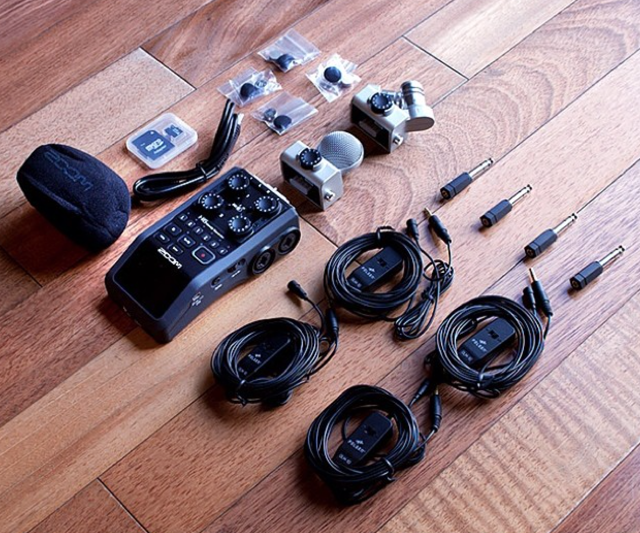
- Recording equipment which captured audio simultaneously, employing a set of four Countryman B3 omnidirectional microphones directly connected to a Zoom H6 recorder.
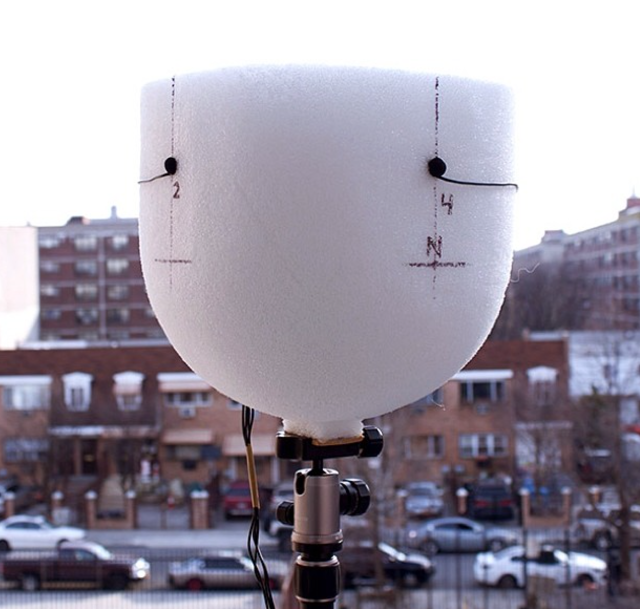 To get the immersive, all-around sound audio, Teixeira customized the 3D designed and 3D printed drone with four microphones, with the evolution of the device going from Styrofoam to the final, sleek black ‘soundhead,’ reflecting the sophisticated aesthetic of a big city.
“We made sure to build the prototype according the anatomy of a human head,” says Vale. “That meant respecting the distance between the ears to make the head related transfer function (HRTF) possible. It’s not a perfect model because it still lacks some details like the ear canal, but that would create the need of extra post-production of the sound files.”
The team overcame the enormous challenge of capturing the audio, but then had another mountain to climb altogether in figuring out how to mix the sounds, match them up to the visuals, and work with multi-channel audio.
“Usually when I use audio in a web project I use Howler.js,” says co-creator Rick Van Mook. “But once we figured out we wanted to use four-channel audio files we had to go for something custom. The usual audio libraries only deal with loading and playing audio, which makes sense, of course. We needed a way to download multiple files, merge them together, and manipulate the individual channel data.”
 The website came together as not only a full experience where you can practically smell the sounds of the city, but also as a beautiful work of art. The imagery and sounds work together seamlessly, and all the ingredients are there to invoke memory, emotion, and the urge to travel.
The Team:
- David Vale – Associate Creator at Firstborn digital agency
- Rick van Mook – Creative Developer at Firstborn digital agency
- Coco Teixeira – Sound Designer at Sonoplastico
The Sound City Project team is recording their journey on Instagram. We’ve all hoped to catch a glimpse of the Google Earth Streetview Camera Car—now we can watch out for David Vale with his ‘soundhead,’ out collecting data for the continuing audio and visual artistry of his website.
Keep your eyes (and ears!) open for more from these guys as they continue on their way. Safe travels and Godspeed to this creative team. Have you created anything like this with 3D printing? Tell us about it in the Sound City Project forum at 3DPB.com.
Subscribe to Our Email Newsletter
Stay up-to-date on all the latest news from the 3D printing industry and receive information and offers from third party vendors.
Print Services
Upload your 3D Models and get them printed quickly and efficiently.













You May Also Like
3D Printing News Briefs, June 20, 2026: Holograms, Insoles, & Prosthetics
We’re focused on volumetric 3D printing, 3D printed insoles, and 3D printed prosthetics in this weekend’s 3D Printing News Briefs. Read on for all the details! Researchers Using Holograms to...
3D Printing News Briefs, June 18, 2026: Reseller, Relocation, Metal Space Powder, & More
We’ll start with business news in today’s 3D Printing News Briefs, as XJet appointed a value-added reseller in Germany, BIO INX is expanding its presence in the Italian market, and...
Fabri Raises $13.5 Million to Create Digital Foundry
Fabri is a startup that wants to create a “digital foundry,” and just raised some funds to help it reach this goal. There are far too few foundries in America....
Scientists Use BMF to 3D Print Seal Whiskers That Track Prey Long After It’s Gone
Seals use their whiskers to hunt. Not Navy Seals, although they may in some way also, but this article is about lowercase seals. Not Seal the musician either; as far...