Jude Pullen Saves you Valuable Time—and Digits—With 3D Printed Cardboard Slicing Tool, the Card Rabbet

While everyone enjoys seeing a good piece of blood-spattered cardboard for a Halloween costume or prop, in reality, that’s just going to be an inconvenience that sends you to the first-aid kit, and back to the drawing board—where conventional methods of cutting and slicing are going to keep you there longer.
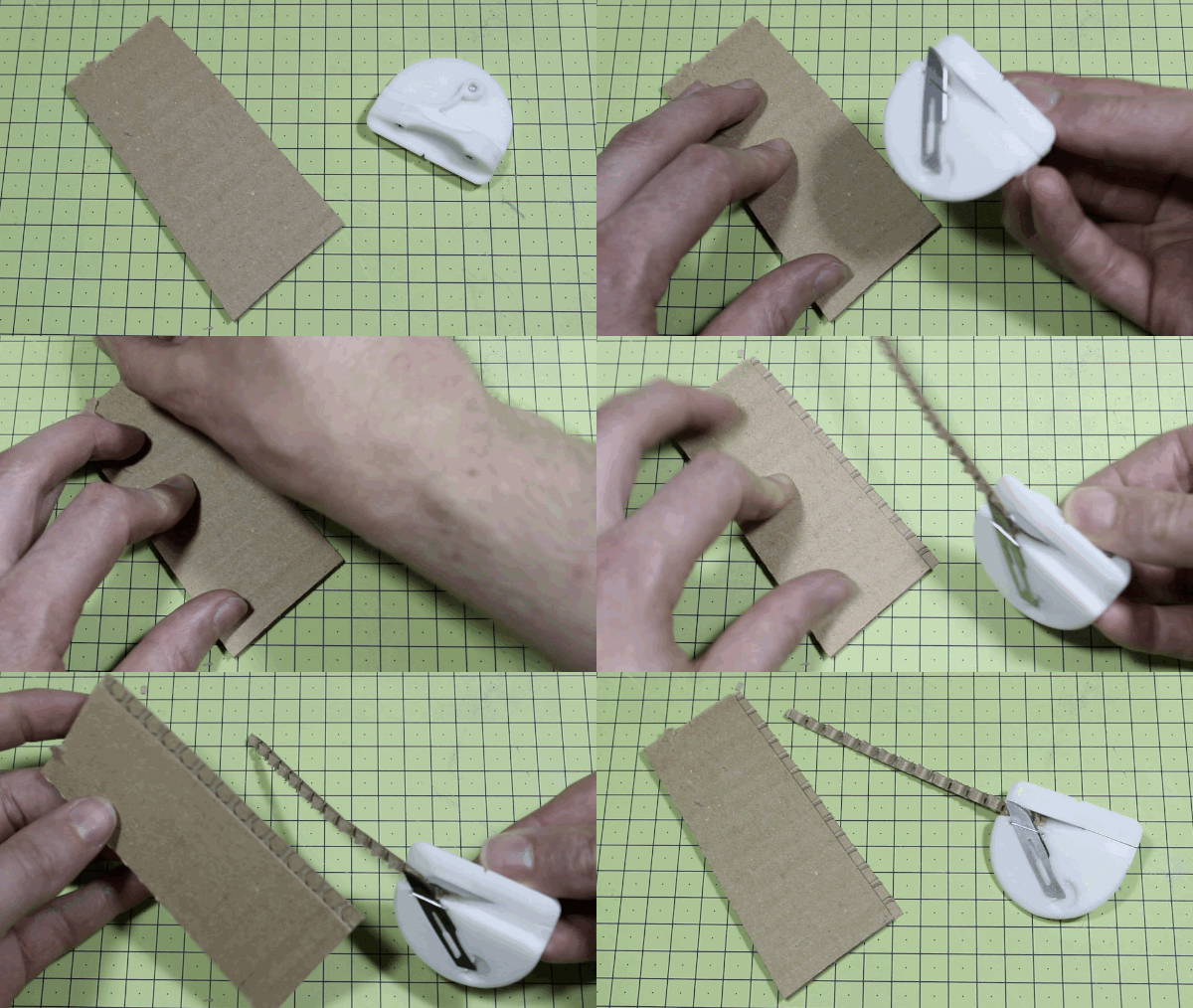 Jude Pullen was just plain over wasting his time, and sacrificing perfectly good flesh to the scalpel and ruler. Jude Pullen is a no-nonsense guy. He is also an experienced 3D modeler and product designer with no time for injuries while engrossed in work. To work faster, and more safely, avoiding slicing fingertips and hands, he designed the 3D printed Card Rabbet tool. This new design is actually two tools in one, and shaves off substantial time in the cutting and slicing process, as well as offering safety to your hands.
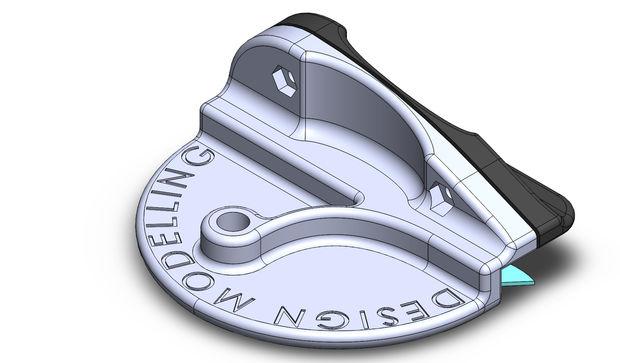
With two scalpel blades encased in the 3D printed design, the Card Rabbet cuts cleanly, with ease. In just ten easy steps, you can make Jude’s clever tool, which will have you:
- Making super-clean cuts
- Cutting at the perfect depth
- Working much more rapidly
- Working more safely, without the risk of the scalpel slipping and causing injury
Jude realized, in designing a prototype, that the tool could actually be quite a bit smaller than he originally thought. With stability guides to keep the tool from slipping, and a magnet which helps hold the blades in place, he also designed a clamp inside the tool for adjustment. After several ‘iterations,’ the tool was completed and 3D printed.
You can download Jude’s 3D printable design, as he generously created an Instructable, offering:
- The SolidWorks (+ STL) files for modification and 3D printing
- Tips on materials and printing
- Sources for the magnets and scalpels you’ll need

Jude Pullen, designer
Jude used an UP! Plus 3D printer, feeding 1.75mm diameter ABS through its extruder over 40 minutes to create the two pieces. No 3D printer? You can also order the two pieces, very affordably, from Shapeways.
Pullen makes mincemeat of conventional methods here. If you check out his video (below), it’s pretty fascinating to see Jude’s demonstrations between the Card Rabbet method and the old method, using the scalpel and ruler. You’ll be seeking out flat stuff like mad, to slice and dice once you have this 3D printed tool.
Have you created a tool similar to this, or is this a design you want to download and print? Tell us your thoughts in the 3D Printed Card Rabbet forum thread 3DPB.com.
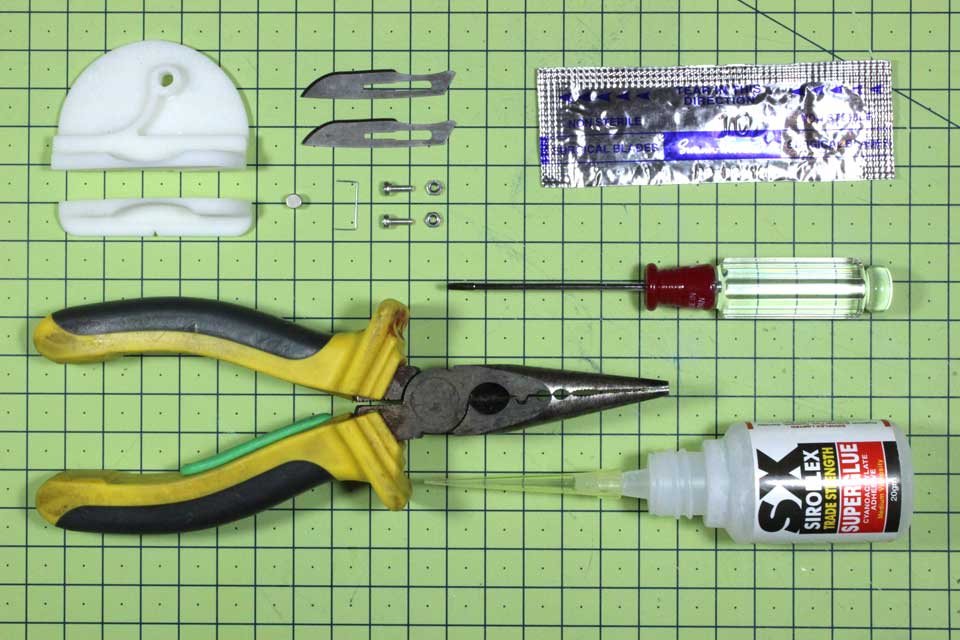
Tools necessary for assembly.
Subscribe to Our Email Newsletter
Stay up-to-date on all the latest news from the 3D printing industry and receive information and offers from third party vendors.
Print Services
Upload your 3D Models and get them printed quickly and efficiently.











You May Also Like
Automated Fill Print: An Obviously Better Way to 3D Print
I’m not saying that I invented this or that I’m the first to try this. For many years, people have been filling the infill patterns of material extrusion prints with...
INJEKTO Brings Desktop Injection Molding With 3D Printed Molds to the Workshop
Recently, a host of new machines have come to complement desktop 3D printing over the past few years. From desktop lathes and laser cutters, we are seeing a Deskside Manufacturing...
Skuld Brings Additive-Enabled Casting Closer to Production Reality
Over the past decade, much of the U.S. Department of Defense’s (DoD) additive manufacturing (AM) strategy has focused on proving that advanced manufacturing could work inside legacy casting environments. Today,...
QuesTek’s Space Bet: New Alloys Built for 3D Printing, Not for the Old Rules
If you ask most people what’s holding back 3D printing in aerospace, they usually think the answer is better hardware; mainly faster machines, bigger build chambers, and tighter process control....