Austrian Man Creates Extremely Detailed 3D Printed Insects on Form 1+ 3D Printer


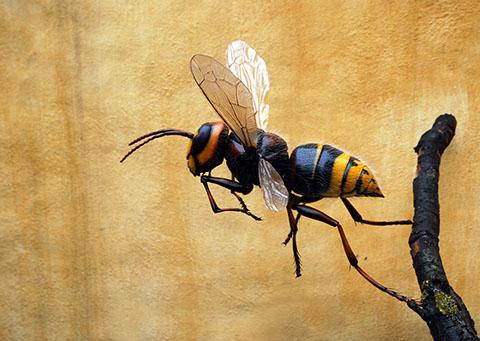
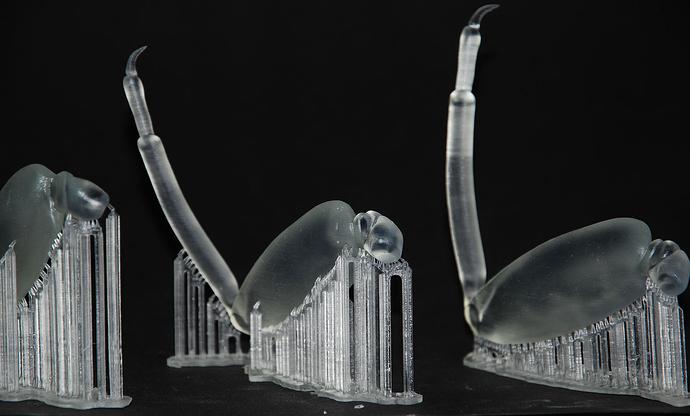
3D printed Hornet
Insects, you either love them or you hate them, but one thing is for sure, they are some of the most fascinating creatures on this planet. One thing that I always wondered about insects, was how in the world could they be able to do what they do, with such tiny little brains. While I wouldn’t consider myself a fan of insects by any means (just ask my wife), I would say that I have always been fascinated with them. When I was a child, I remember searching for bugs in my backyard, and letting them crawl on my hands and arms, as I thoroughly observed their tiny movements. Today, for some reason, I scream like an 8 year old little girl whenever I see one.
One thing that a lot of people don’t realize about these tiny little creatures, commonly referred to as “bugs”, is that they are quite beautiful if you were to take the time to examine them under a microscope. One Austrian man, named Klaus Leitl realizes this, and he set out to model and recreate 3D printed replicas of many of these fascinating creatures.
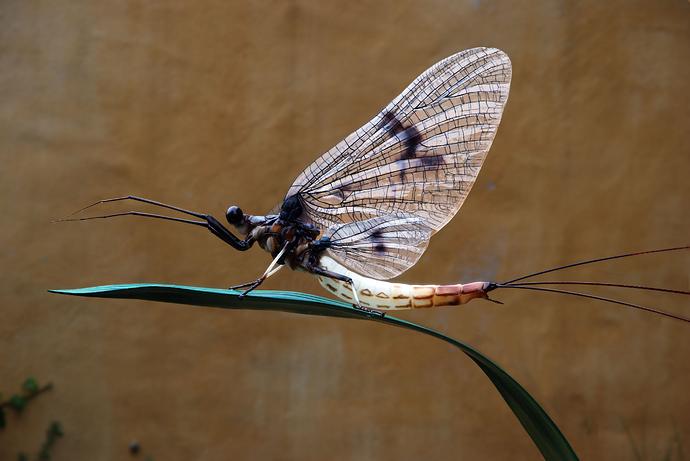
3D printed Mayfly
Modeling the insects at a 30:1 scale allows for the true beauty of them to come out, for the human eye to thoroughly observe. To create these intricately detailed insects, Leitl actually used a consumer/prosumer level 3D printer, the Form 1+ by Formlabs.
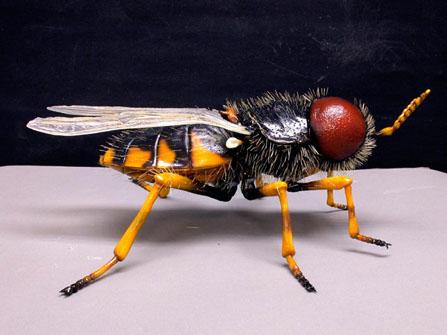
3D printed Soldier Fly
When most people think about 3D printers that they can actually own and operate at home, they think of FDM/FFF printers which can oftentimes struggle when printing fine details, or objects requiring high resolutions. Leitl, on the other hand, preferred to use the Form 1+ and its stereolithographic technology which allows for higher precision when printing detailed objects.
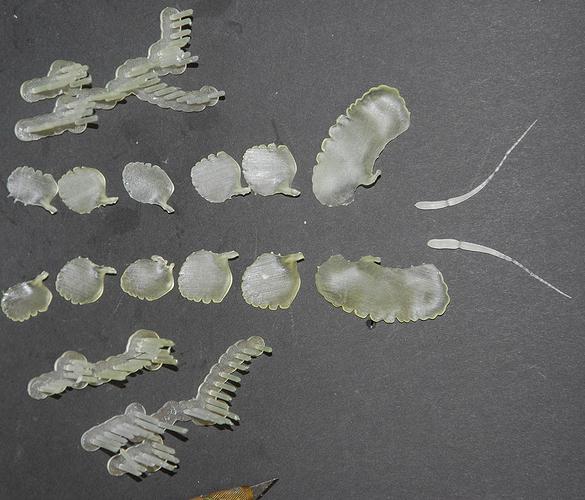
The majority of the insects printed, although they are scaled up 30 times, still only measure between 24 and 180 cm in length. He has created dozens of these 3D printed creatures, including a dragon fly, hornet, aquatic beetle, stonefly, blackfly-larva, mayfly and many more. Most of his insects are printed in multiple parts. For example his Mayfly-larva, measuring 30cm in length, is made up of an incredible 25 separate 3D printed parts.
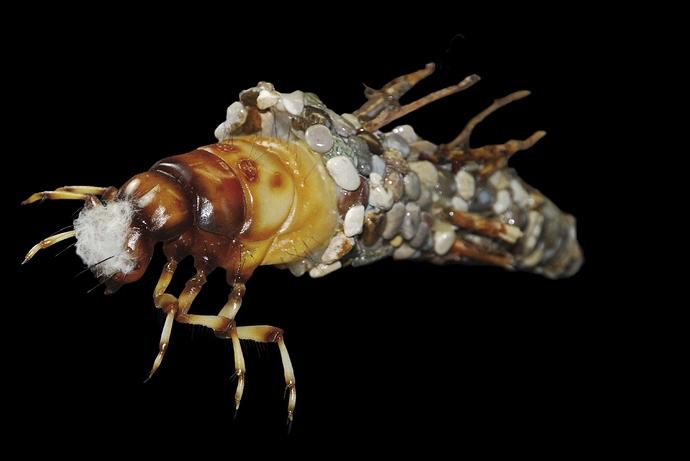
3D printed Caddisfly Larva
To model the insects, Leitl used zBrush. He splits them into two separate parts, hollows them, and then exports them as STL files, which were scaled in netfabb basic. He glues some of the parts together, using the very material that many of them are printed from. He takes the clear photosensitive resin, and uses a UV-lamp to fuse the pieces together. He then has to sand some of the pieces, and then paint them using an airbrush with Schminke Aero color ink. Once this is complete, he finishes them with acrylic lacquer, adds hairs, wings, and antennas (usually not 3D printed) and he glues the remaining parts using 2K-epoxy. Leitl’s insects can be seen in an exhibit called “Life Under Water” in the National Park Hohe Tauern, in Ferleiten, Salzburg (Austria).
Did you imagine that such detailed objects could come off of a $3299 consumer-level 3D printer? What do you think of these creations? Discuss in the 3D printed insects forum thread on 3DPB.com.
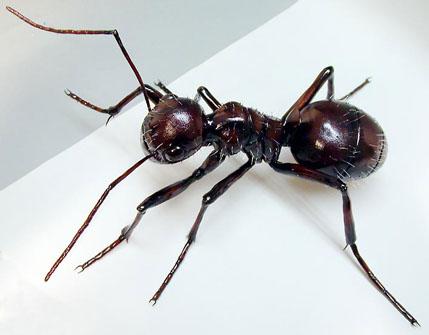
3D printed Ant
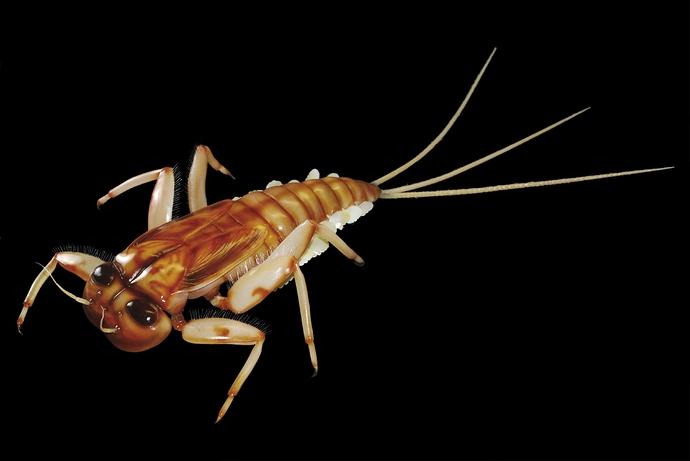
3D printed Mayfly Larva
Subscribe to Our Email Newsletter
Stay up-to-date on all the latest news from the 3D printing industry and receive information and offers from third party vendors.
Print Services
Upload your 3D Models and get them printed quickly and efficiently.













You May Also Like
50,000 Orders and Counting: EPlus3D & Chinese AM Services Provider Are Scaling Liquid Cooling Solutions for AI Servers
An under-appreciated story driving the additive manufacturing (AM) industry this year has been the divergence between what’s driving the market in China and what’s driving it everywhere else. Let’s start...
Seven Trends Reveal What’s Next for 3D Printing at TCT Shenzhen 2026
TCT Shenzhen 2026 opened on October 14 in Hall 15 of the Shenzhen World Exhibition & Convention Center in Bao’an, and ran through October 16. The event brought together equipment...
With Increased Aerospace & Defense Focus, CORE Industrial Partners Buys More Manufacturing Firms
Private equity’s march into manufacturing continues with CORE Industrial Partners’ latest acquisitions. CORE purchased Fathom a few years ago, and later bought 3DXTECH LLC, Triton 3D LLC, and Gearbox3D. It...
Can India’s AM Push Help Make it a Viable Supplement to China?
Diversifying manufacturing supply chains to locales outside of China has nothing to do with actually cultivating “substitutes” to the Chinese economy. The real stakes are these: China is an irreplaceable...