Burned to the Ground by the Nazis, the Turnertempel Emerges Again via 3D Printing



Photo taken in the morning after Kristallnacht
Tel Aviv’s Beit Hatfutsot, the Museum of the Jewish People, unveiled a 3D printed model of the Turnertempel recreated after painstaking research by the design team at Mathov Design. Built in 1871, the synagogue stood in Vienna until it was burned down on November 10, 1938. That night of frenzied destruction committed by SA paramilitary and some citizens was given the name Kristallnacht because of the shards of glass that littered the ground after the destruction of a large number of Jewish businesses, homes, and places of worship.
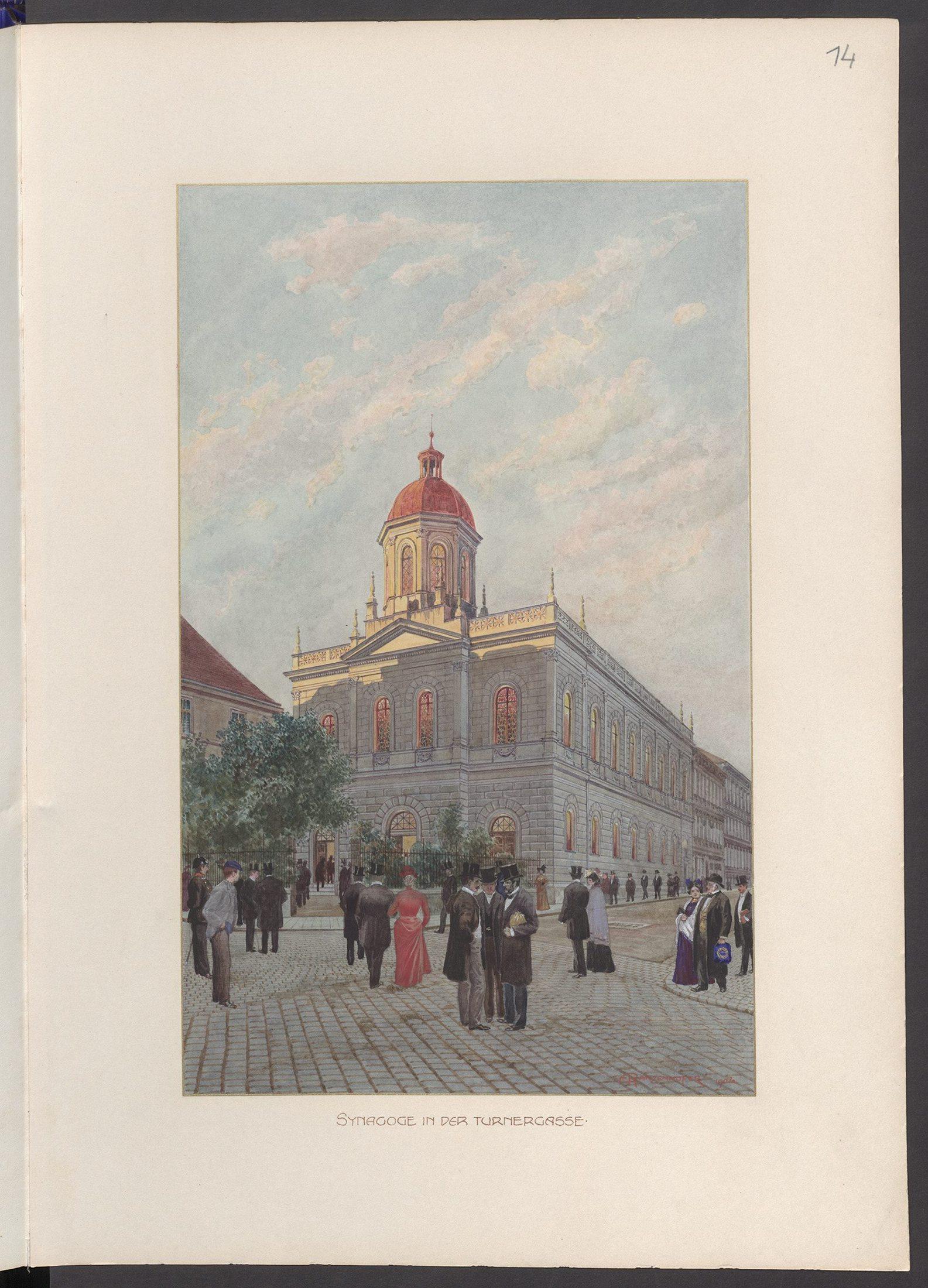
The original temple was designed by the architect Karl König (1841 – 1915) and could hold 850 worshipers. The interior of the synagogue was decorated on both walls and ceilings with intricate fresco work and the building itself was constructed of a combination of traditional and modern materials, brick and iron. The recreation of this non-extant structure was made possible only after nearly a year of in depth research aided by historic photographs. One contributor of photographs was Professor Moshe Yehuda who had served as a choir boy at the Turnertempel. He remembered his experience when the synagogue was still functioning:
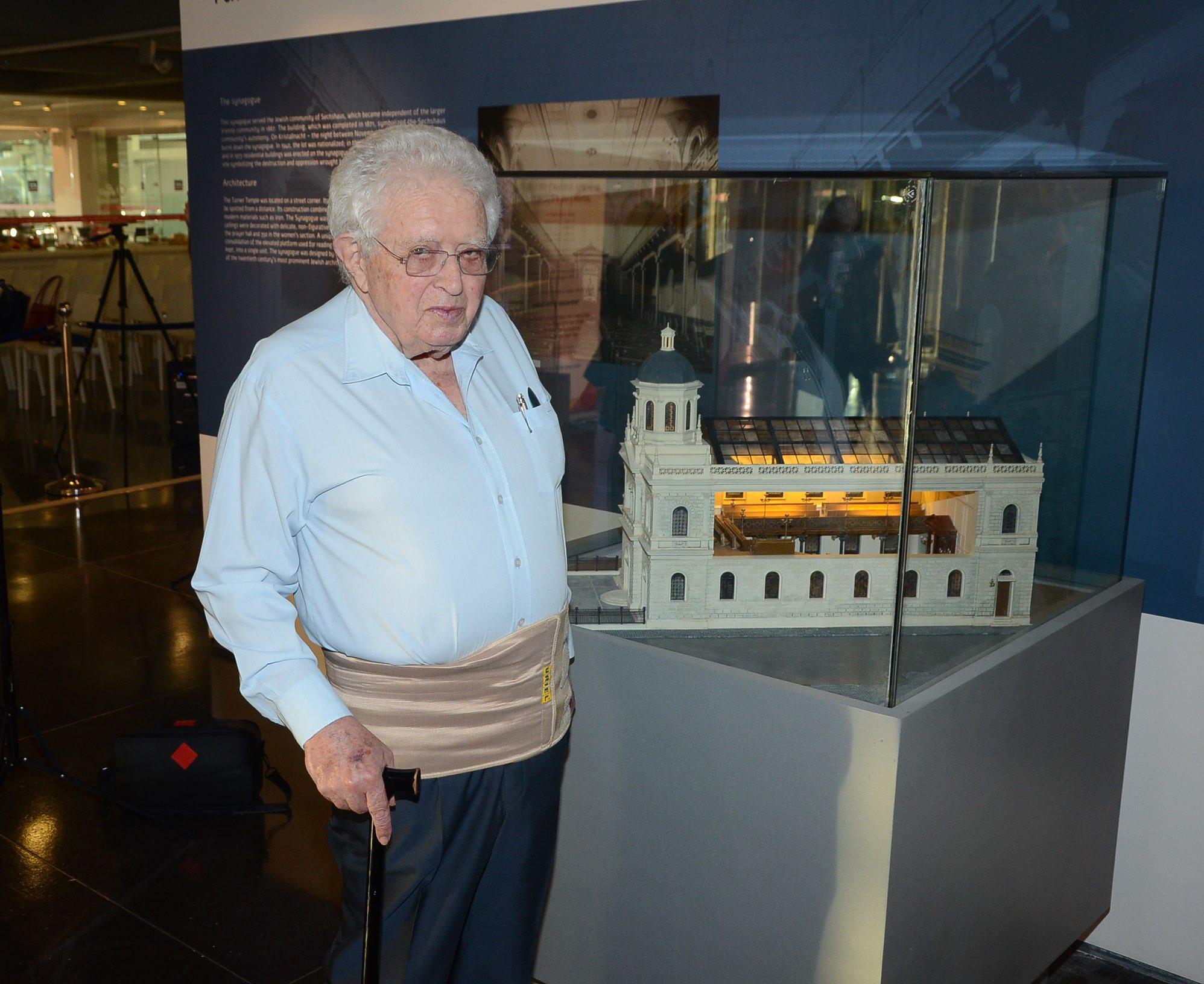
“I joined the boys’ synagogue choir when I was nine and a half. My grandfather was the synagogue gabbai [beadle]. I remember it all in great detail. It was a very important place for me, like a second home. People dressed nicely, spoke quietly, treated each other with respect. It had a special atmosphere.”
His memories of the horrors that ensued are chilling:
“I was shocked. As a Jewish child who studied in a Talmud Torah religious school, I conducted my first debate with God. I cried and asked God how he was allowing this. It’s a holy place. How can it be that they are burning your synagogue? I asked God, but he didn’t answer me, of course. The shock of seeing, as a child, my synagogue, which was so holy to me, burning…this shock is with me to this day.”
The destruction that had taken place across Germany and Austria as part of Kristallnacht instilled in Yehuda a desire to go to Israel. He said goodbye to his parents at the train station on his way to Trieste where he would meet up with other teens who were on their way to Eretz Israel. It was the last time he would ever see his family as his parents and sister were murdered in the camp at Auschwitz.
In the intervening years, the ground from which the 25 meter central tower of Turnertempel once rose has been nationalized by the Austrian government. In the 1950s a gas station was built on the site and later, in the 1970s a series of apartments joined the landscape that had been the synagogue’s home. Finally, in 2010 a commemorative plaque was placed that acknowledged the building and tried to convey some measure of its importance as a cultural icon for the community that had integrated into their lives.
The Museum of the Jewish People has 18 other miniature synagogues in its collection but the reproduction of the Turnertempel is the only one that was created using 3D printing. The museum plans to include all of the miniatures as a part of its core exhibition beginning in 2017. The ability to use 3D printing enabled a near perfect reproduction of the Turnertempel in a way which had not been considered in the past by the museum.
Let’s hear your thoughts on this incredible miniature reproduction of this storied synagogue, in the 3D printed Turnertempel forum thread on 3DPB.com.

[Images: haaretz.com]
Subscribe to Our Email Newsletter
Stay up-to-date on all the latest news from the 3D printing industry and receive information and offers from third party vendors.
Print Services
Upload your 3D Models and get them printed quickly and efficiently.













You May Also Like
50,000 Orders and Counting: EPlus3D & Chinese AM Services Provider Are Scaling Liquid Cooling Solutions for AI Servers
An under-appreciated story driving the additive manufacturing (AM) industry this year has been the divergence between what’s driving the market in China and what’s driving it everywhere else. Let’s start...
Seven Trends Reveal What’s Next for 3D Printing at TCT Shenzhen 2026
TCT Shenzhen 2026 opened on October 14 in Hall 15 of the Shenzhen World Exhibition & Convention Center in Bao’an, and ran through October 16. The event brought together equipment...
With Increased Aerospace & Defense Focus, CORE Industrial Partners Buys More Manufacturing Firms
Private equity’s march into manufacturing continues with CORE Industrial Partners’ latest acquisitions. CORE purchased Fathom a few years ago, and later bought 3DXTECH LLC, Triton 3D LLC, and Gearbox3D. It...
Can India’s AM Push Help Make it a Viable Supplement to China?
Diversifying manufacturing supply chains to locales outside of China has nothing to do with actually cultivating “substitutes” to the Chinese economy. The real stakes are these: China is an irreplaceable...