Scientists 3D Print New Solar Panels Which Work Best When Cloudy

Solar panels are the future of energy, at least for those living in areas of the world where the majority of days are filled with bright sunshine, like Florida, Arizona, Egypt, etc. Until recently, if you lived in Seattle, or most of Britain, and Northern Europe, than solar power is not something to get all that excited about.
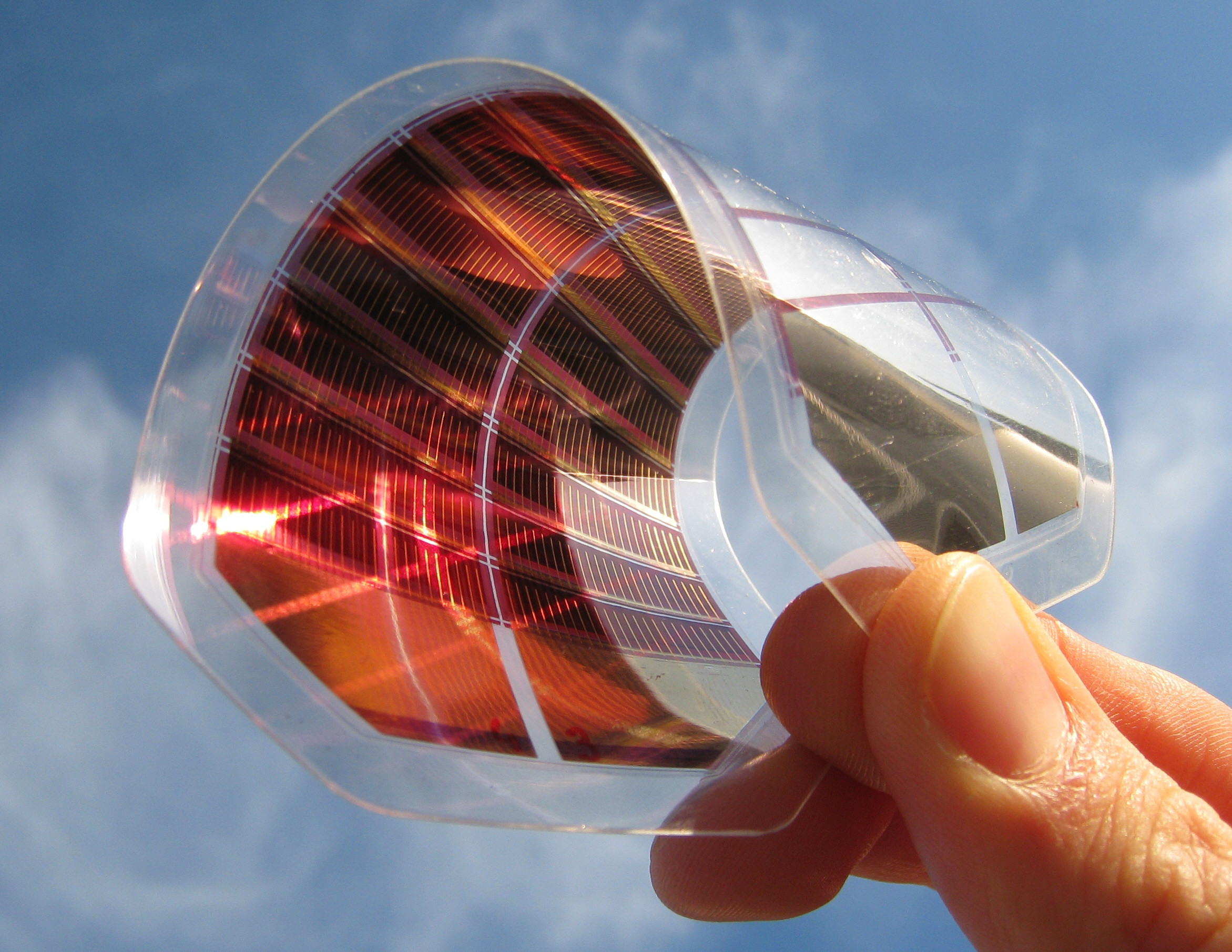 This week, British scientists at the National Physical Laboratory, created special solar panels which function best when it’s gloomy outside. That’s right, they produce more energy when clouds are blocking the sun, than when the sun is out in full force. In fact, scientists have shown that the new solar panels manage only 10% efficiency when placed in direct sunlight, while that number jumps to 13% when placed in cloudy conditions.
These solar cells, called organic photovoltaic, are unlike any other. They are made up of small organic molecules which act as semi conductors when struct with solar radiation. The amazing thing is that the molecules can easily be dissolved into a solution and 3D printed into any shape, size, or color desired.
Dr Fernando Castro, principal research scientists at the National Physical Laboratory in Teddington, said: Organic photovoltaics work much better in low and diffused light conditions. Even if it’s cloudy they still work. It’s not that they are going to produce more power but they are more efficient at generating power from the light that is available. So they would work better than normal soar cells do in cloud.

Initially scientists expect to see this technology used within electronics and perhaps even clothing, and as the technology progresses, it can eventually be used as a method to obtain energy for the grid. The material is much easier to install, can be customized via 3d printing, and is expected to be put to wide use within the next 5 years.
“Organic PV, which could offer greater efficiency in Britain’s gloomy skies, may appear less efficient based on standardized lab testing. For a long time this technology received little attention and limited push from investors. We would definitely be further on if people realized this earlier.” said Dr Castro.
There is still some work to be done to perfect this solar technology, in order to bring efficiency levels up enough to make them on par with traditional crystalline silicon based panels, but scientists are extremely optimistic about their future. Discuss these 3D printed solar panels at 3DPrintboard. Check out how easy it is to install a row of these organic PV solar cells:
Subscribe to Our Email Newsletter
Stay up-to-date on all the latest news from the 3D printing industry and receive information and offers from third party vendors.
Print Services
Upload your 3D Models and get them printed quickly and efficiently.











You May Also Like
3D Printing Financials: Stratasys Tightens Operations in Slow Market
Stratasys (Nasdaq: SSYS) is entering 2026 after a difficult year for revenue, but with tighter cost control and improved cash flow. The company’s latest financial results show that revenue remains...
ATO and Dynamism Partner to Expand Metal Powder Production in the U.S., Announced at AMS 2026
ATO Technology is expanding its presence in the United States through a new partnership with Dynamism, a well-known distributor of advanced manufacturing technologies. The collaboration was announced during the Additive...
AM Applications Expected to Reach $110B in 2034, New Report Finds
Additive manufacturing may still be a relatively young industry, but the number of real parts being produced with 3D printing is growing quickly. According to a new report from Additive...
AMR Webinar to Reveal 2025 3D Printing Market Data and What 2026 Will Really Look Like
On March 24, 2026, Additive Manufacturing Research (AM Research) will host a free webinar that many in the industry won’t want to miss. Titled “3DP/AM Market Insights: 2025 Review and...