ShareBot’s R&D Discovers how to 3D Print With Sugar on Their Sub-$20,000 SnowWhite SLS 3D Printer

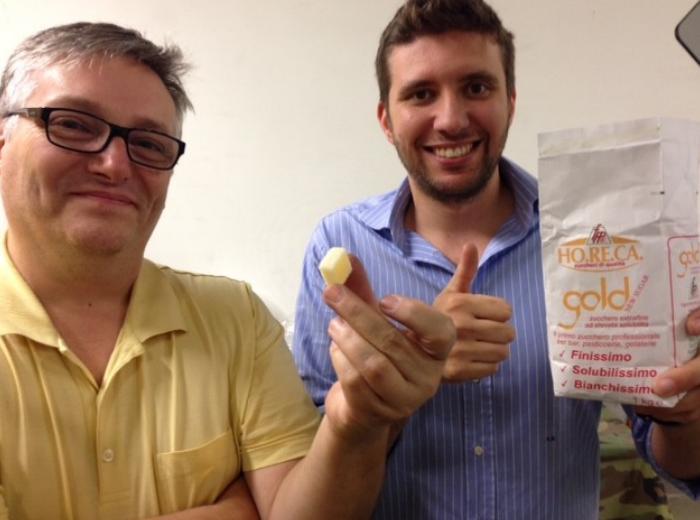
Gabriele Carloni and Andrea Radaelli
Last month, we reported on a new selective laser sintering (SLS) 3D printer that was coming to market at an astonishing price tag of under $20,000. Sharebot, a company which has been manufacturing 3D printers since 2011 could quite conceivably turn the 3D printing market upside down with this latest 3D printer, called the SnowWhite.
Today, Sharebot has informed 3DPrint.com that their R&D department has made quite the interesting discovery, while tinkering with this new machine.
“While preparing the Birmingham’s TCT Show and Rome’s Maker Faire, our R&D Department developed a way to be able to print with sugar [on the] Sharebot SnowWhite,” explained Claudio Bonfiglioli, of Sharebot srl.
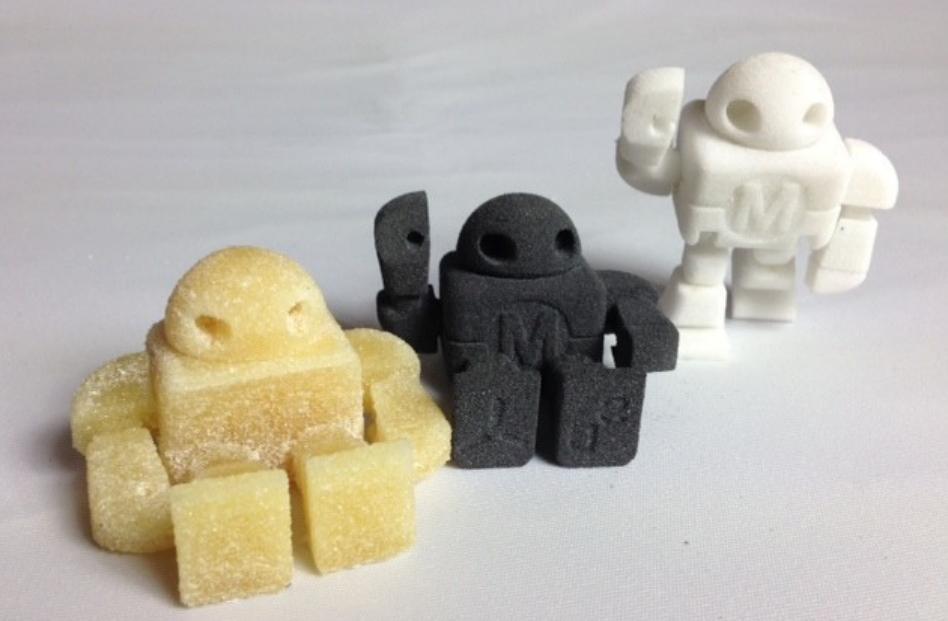
Printed in (left to right) sugar, graphene & nylon
We have heard of 3D printers that are capable of printing in sugar before. The most notable are the ChefJet line that 3D Systems recently acquired, but we haven’t yet seen a 3D printer that is capable of printing with traditional materials using SLS technology, as well as being able to print in sugar products. This is quite revolutionary, and could open up many doors for Sharebot.
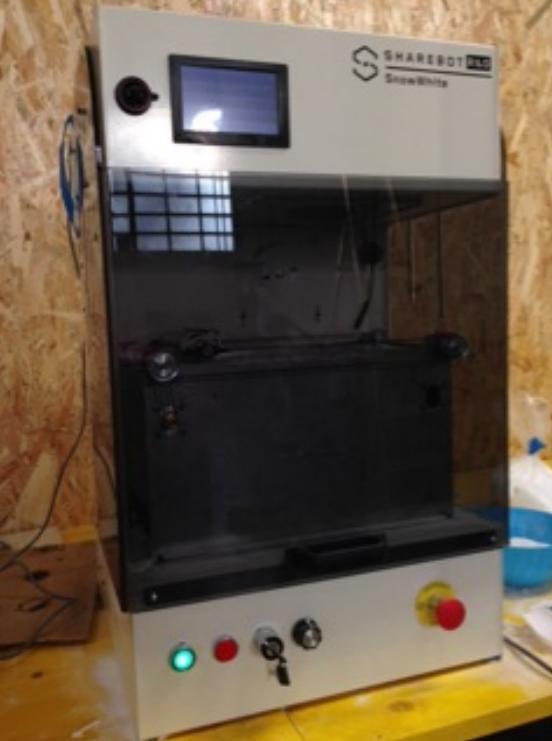
Sharebot SnowWhite 3D printer
To print with sugar, the SnowWhite 3D printer still uses its normal SLS printing method, taking advantage of its laser to sinter single layers of sugar, one at a time, until a complete object is built up. So now you can add sugar to the ever growing list of materials that this new 3D printer can print with. Some of the other materials able to be used on this machine are graphene and nylon.
While it is doubtful that someone will purchase the Sharebot SnowWhite in place of a 3D Systems’ Chefjet, which runs between $5,000-$10,000, it will give potential clients one more reason to purchase this relatively affordable SLS 3D printer. Typical SLS machines cost in the $150,000+ range, with some approaching $1 million. This is a way for small businesses and even individuals to get their hands on one of the best technologies that are available today within the 3D printing space, while also making some tasty treats.
The Sharebot ShowWhite is expected to be released sometime in early 2015, along with several other new 3D printers from the company.
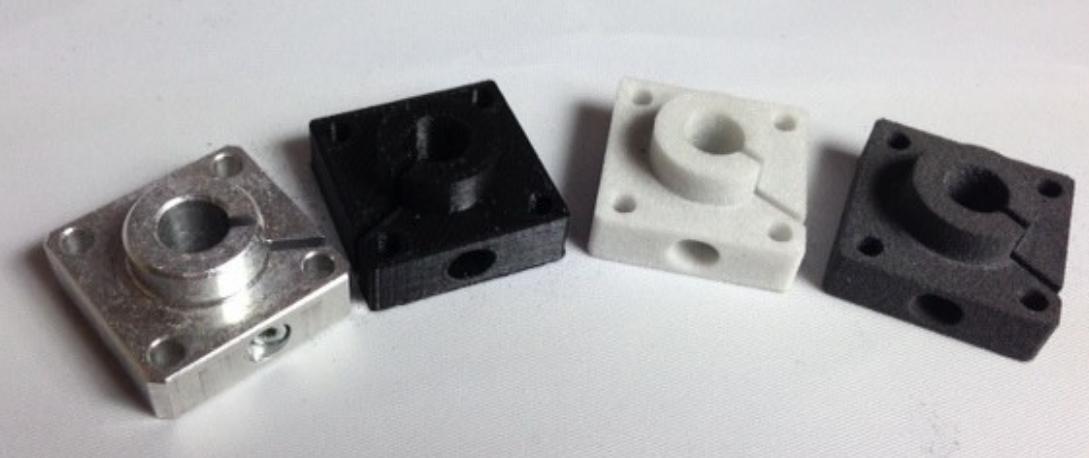
From left to right. Original part, FFF printed, SLS nylon, SLS graphene
What do you think? Do you think that the fact that the Sharebot SnowWhite can print using sugar, will provide customers with yet another reason to purchase this new machine? Discuss in the Sharebot SnowWhite forum thread on 3DPB.com.
Subscribe to Our Email Newsletter
Stay up-to-date on all the latest news from the 3D printing industry and receive information and offers from third party vendors.
Print Services
Upload your 3D Models and get them printed quickly and efficiently.













You May Also Like
Kickstarter is Testing the Next Wave of Desktop 3D Printing
3D printers are raising serious money again…on Kickstarter, that is. Over the last few months, a new group of 3D printer campaigns has attracted millions of dollars and thousands of...
Stratasys vs. Bambu Lab: What’s Really Behind the $27.6M Patent Verdict?
Editor’s note: This is Part 1 of a two-part series by Xu Fanglei examining the technology and patent issues behind the Stratasys-Bambu Lab dispute. Part 1 looks at the U.S....
Bambu Lab and SUSAN FANG 3D Print for London Fashion Week
At London Fashion Week, some of the more unusual pieces on the runway came from 3D printers. Chinese fashion designer SUSAN FANG presented her Spring/Summer 2027 Air-Illusion collection at the...
Stratasys Wins $27.6M in Patent Case Against Bambu Lab; Bambu Challenges Verdict
Update, September 21, 2026: This article has been updated with a statement from Bambu Lab responding to the verdict, along with additional information about the company’s ongoing patent challenges against...