GE to Invest $10 Million in GE Additive Education Program to Subsidize 3D Printers for Schools

 One of the big steps that GE has taken into the additive manufacturing industry was the creation of an entirely new branch of the company fully dedicated to the technology. GE Additive has been working to build a global network of additive manufacturing facilities – a network that already spans multiple countries and continents. Now the company is turning its attention to another vital area of the 3D printing world – education.
Over the next five years, GE will be investing $10 million in the GE Additive Education Program (AEP), a two-part educational initiative designed to foster and develop the skills of today’s students and tomorrow’s additive manufacturing experts. The 3D printing industry is a fast-growing one, as we’ve all seen, and building a workforce that can keep up with the rapidly developing technology in the future is a challenge that numerous companies and institutions have taken on.
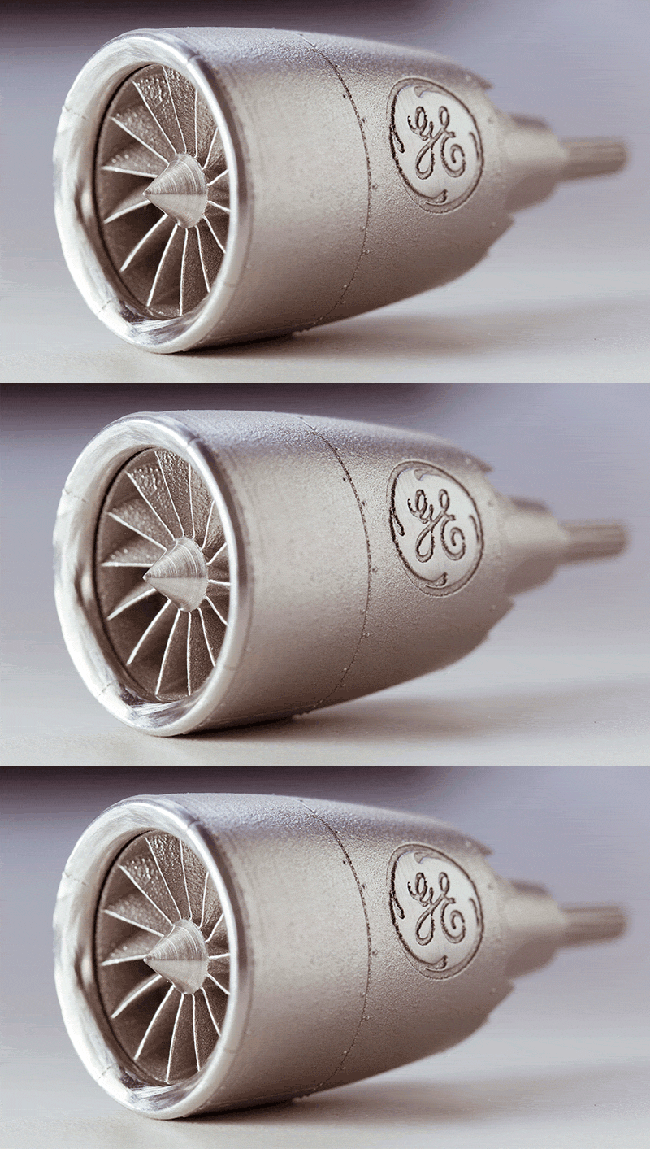
The first part of any educational initiative, of course, is making sure that students have access to the necessary resources and equipment. That’s still been one of the major hurdles in 3D printing education – despite the increasing focus on schools, the dropping 3D printer costs, and the design of education-specific printers, the technology is still unaffordable for many schools. Thus, AEP’s mission is to provide 3D printers to schools at both the primary/secondary level and the collegiate level – and GE is willing to invest plenty of money to achieve its goal.
“We want to build an ecosystem for additive manufacturing across multiple industries,” says Mohammad Ehteshami, Vice President of GE Additive. “GE is committed to this technology for the long-term.”

Mohammad Ehteshami
GE will invest $2 million over the next two years in subsidizing polymer-based desktop 3D printers for primary and secondary schools around the world. Priority will be given to schools with strong STEM (science, technology, engineering, math) programs for students ages 8-18, or schools with a demonstrated interest and ability to build a STEM program. Meanwhile, the company will be investing $8 million over the next five years to subsidize up to 50 metal 3D printers for colleges and universities – again, priority will be given to schools that already have a foundation in additive manufacturing curriculum or research.
Applications for the first round of grants are being accepted now, with additional rounds continuing into the 2018-19 school year. The company will go through all applications it receives and identify, or “down select,” the schools that it believes to be the best fit for the program. Those schools will then be required to submit more detailed applications to determine the final recipients. Here is the timeline for 2017, according to GE:
Primary and secondary schools (ages 8-18):
February 28, 2017 – Introductory applications due
March 15, 2017 – Down-selected schools notified
April 7, 2017 – Detailed applications due
April 28, 2017 – Final selections notified
Post high school, universities, colleges, technical schools (ages 18+):
February 28, 2017 – Introductory applications due
March 30, 2017 – Down selected schools notified
April 30, 2017 – Proposals due
May 30, 2017 – Final selections notified
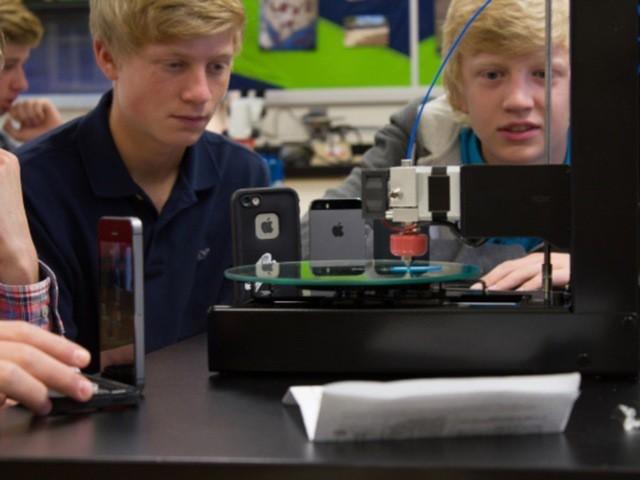
Image: Polar 3D
Primary and secondary schools that are chosen will receive desktop 3D printers from Polar 3D, as well as 3D printing curriculum developed by Dr. David Thornburg, Polar 3D’s recently-hired Director of Education. Selected colleges and universities will receive GE’s own metal additive manufacturing machines. Schools will be expected to contribute a minimal amount of funding or resources on their own for materials, training, or other needed equipment, and to provide feedback about the program and participate in best practice sessions. All schools, regardless of size or location, are welcome to apply.
“We are looking to support a diverse cross-section of schools, representing a variety of sizes, types and cultures from around the world,” GE states.
Primary and secondary schools interested in the program can apply here, while colleges and universities can access their application here. Discuss in the GE Additive Education forum at 3DPB.com.
Subscribe to Our Email Newsletter
Stay up-to-date on all the latest news from the 3D printing industry and receive information and offers from third party vendors.
Print Services
Upload your 3D Models and get them printed quickly and efficiently.











You May Also Like
From Material Maturity to Fleet Execution: What Comes Next for Additive Manufacturing in the U.S. Navy
Additive manufacturing is steadily moving from experimental use toward routine application in U.S. Navy shipbuilding, sustainment, and much more. In recent years, the Navy, working through its Maritime Industrial Base...
Industrial Additive Manufacturing Reaches Its Most Important Inflection Point
Additive manufacturing is entering the most consequential period in its evolution. After years of experimentation and uneven adoption, the industry is showing renewed momentum, shaped by supply-chain pressures, and a...
Scaling Beyond 10 Printers: When Support Becomes a Bottleneck
The leap to industrial-scale 3D printing is a support problem, not a hardware problem. A 3D print farm is a centralized facility that uses a large number of 3D printers...
Reshoring Requires Rules of Engagement
Reshoring manufacturing in the U.S. is a stated national priority. Policymakers, industry leaders, and defense planners agree that domestic production capacity is essential for economic resilience, national security, and long-term...