Aurora Labs Ships First 3D Printer in the S-Titanium Line, is Top IPO on ASX

 Although metal 3D printers are still quite expensive, the technology has significantly gone down in cost over the past couple of years. Not long ago, metal printers were largely unaffordable for all but the largest companies, but that’s changed as the technology continues to evolve and become more accessible. Now metal 3D printing is one of the fastest-growing sectors in the industry, and the cost of metal printers continues to drop.
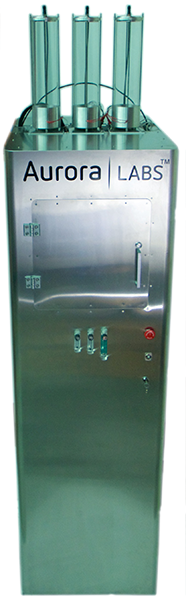
S-Titanium
One of the first companies to develop an affordable metal 3D printer was Aurora Labs, which launched a Kickstarter campaign two years ago for a metal 3D printer priced below $4,000 – an unheard-of cost. Unfortunately, due to an intellectual property dispute with Kickstarter, the project ultimately fell through, but it had already raised more than three times its funding goal at the time of cancellation.
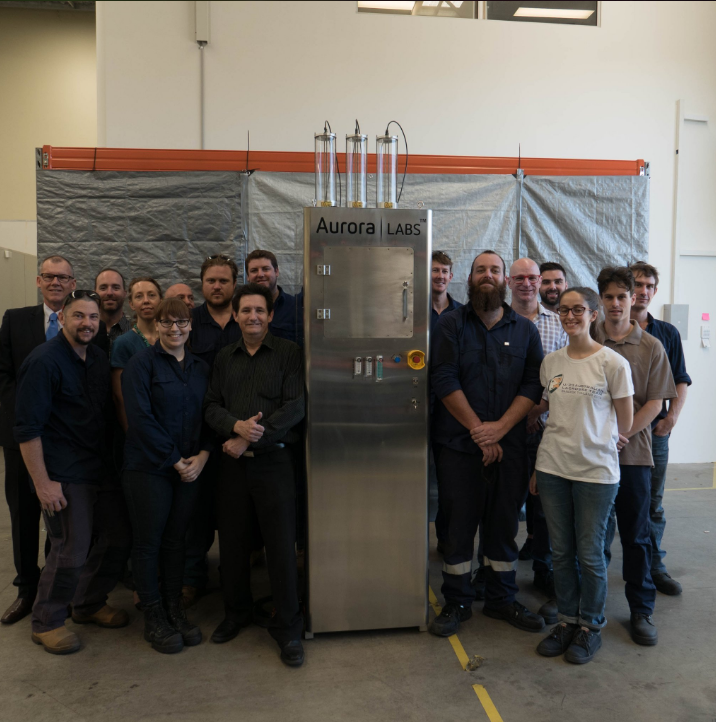
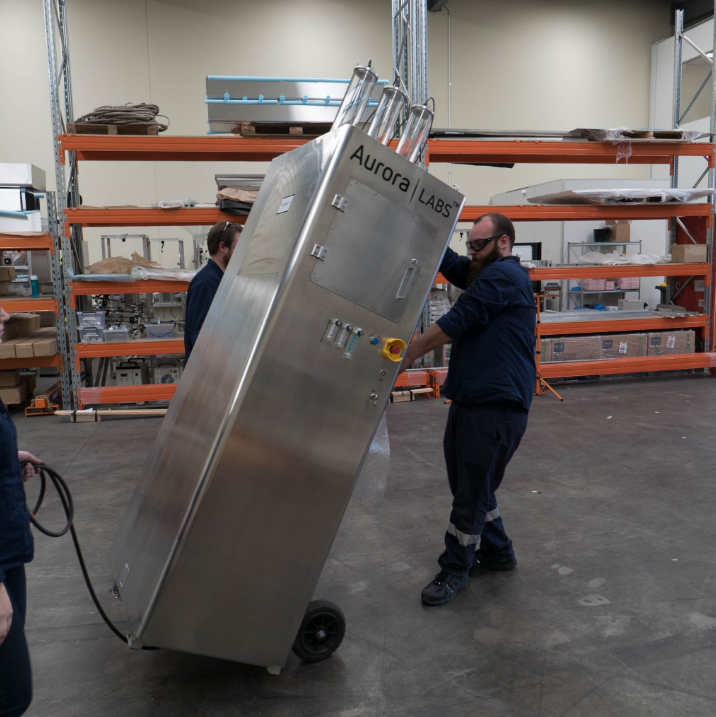
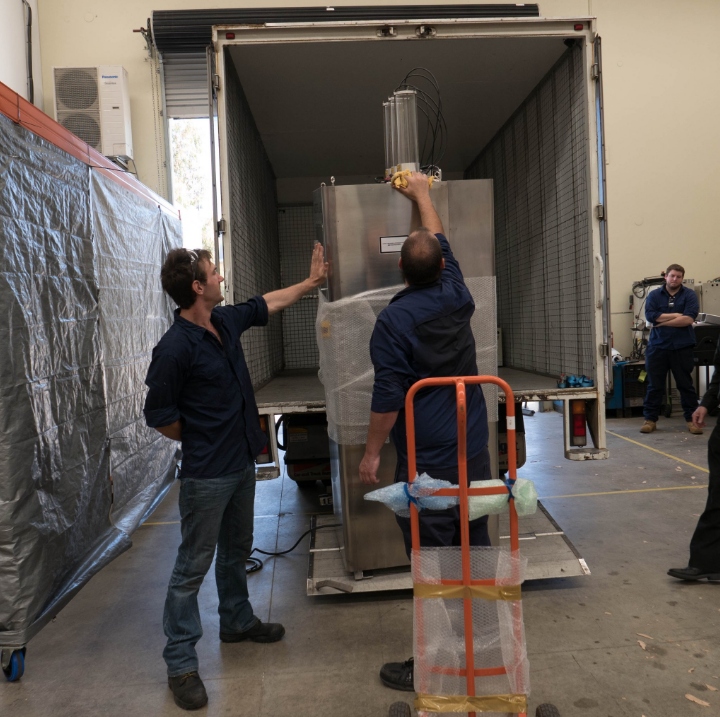
At that point, Aurora Labs moved on to the development of a large-scale metal printer that they claimed would be over 100 times faster than other machines on the market. The printer drew the interest of several large companies, as well as NASA, before its production was even completed, and now the Perth, Australia-based company has announced that they have shipped the first printer in their S-Titanium line, which includes the S-Titanium and S-Titanium Pro.
-

- The Aurora Labs team with their first 3D printer to ship
-

- [Photos: Aurora Labs via Twitter]
While the S-Titanium printers may not be under $4,000, they’re still extremely affordable for their class: the S-Titanium, which features a 200W laser, is priced at $39,999, while the S-Titanium Pro, featuring a 300W laser, costs $42,999. The patent-pending technology, according to Aurora Labs, allows for the printing of more metal materials than any other machine currently on the market. Currently available materials include Stainless Steel 316, Stainless Steel 420, Inconel 625, Inconel 718, Hastelloy C276, Stellite 1, Stellite 6, Stellite 21, NiBSi + WC60%, and Iron, and several other materials will soon be available, including Titanium Grade 1, Titanium Grade 2, Titanium Grade 4, Titanium Grade 6, Titanium Grade 12, Bronze, Brass, Gold, Silver, Aluminium AlSi7Mg, and Aluminium AlSi10Mg. The company additionally notes that third-party metal powders can be used, so long as they adhere to specific size and purity necessities.
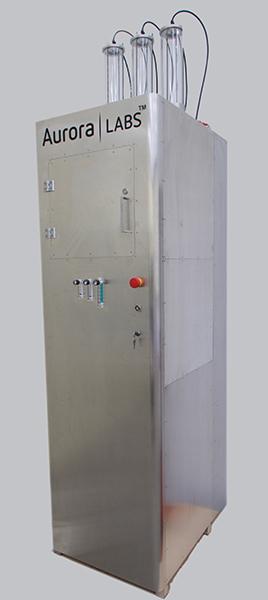
S-Titanium Pro
Each machine is also, essentially, three printers in one, capable of printing in three modes: selective laser sintering (SLS), selective laser melting (SLM), and directed energy deposition (DED). In DED mode, on-the-fly alloying and pseudo-alloying is an option thanks to three independently controllable powder hoppers.
It’s really an incredible pair of machines, and it’s no surprise that they’ve already drawn so much interest. Aurora Labs is now gearing up for full production, and they’re already dominating the Australian Securities Exchange (ASX), despite having only been listed on August 16. They’re now the top performing IPO on the ASX, with a massive gain of 1,540% in share price as of December 9.
According to Business Insider Australia, the IT sector has taken over the IPO market, pushing resources aside as the most active capital-raising sector on the ASX. (This news comes only a day after Robo made their debut on the ASX with a $6 million IPO.) The average gain for IPOs in the IT sector was 10.6%, further emphasizing how astronomical Aurora Labs’ success is. The company is now moving into regular production, getting set to fulfill pre-orders and begin taking regular orders for their remarkable machines. Discuss in the Aurora Labs forum at 3DPB.com.
Subscribe to Our Email Newsletter
Stay up-to-date on all the latest news from the 3D printing industry and receive information and offers from third party vendors.
Print Services
Upload your 3D Models and get them printed quickly and efficiently.











You May Also Like
AM Demand Signals: Global Grid Resilience
We’re one year and a few days removed from the DeepSeek meltdown that rocked U.S. equity markets, not to mention the de facto U.S. AI brain trust, with fears that...
Critical Alloy Powder Manufacturing: CAPP Prioritizes AM Feedstocks and Advances U.S. Materials Leadership
Scaling additive manufacturing (AM) supply chains, particularly for metal powder-based processes, depends on the economic viability of products. The development of critical high-temperature metal alloys in powder form requires customer...
3DPOD 290: 3D Printing Since 1993 with Rajeev Kulkarni, Axtra3D
Rajeev Kulkarni was an early 3D Systems employee. He would spend 29 years at 3D Systems and was their VP of Corporate Strategy, CPO Printer Products, Manager of their Desktop...
The AM Adoption Problem No One Models
Through its short history, Additive Manufacturing has been presented to the investment community as a classic high growth technology story. Manufacturing is a multi-trillion-dollar market. Even a small percentage looks...