EMS Uses Surphaser 100HSX to Scan Guy Lombardo’s Vintage Tempo V Hydroplane


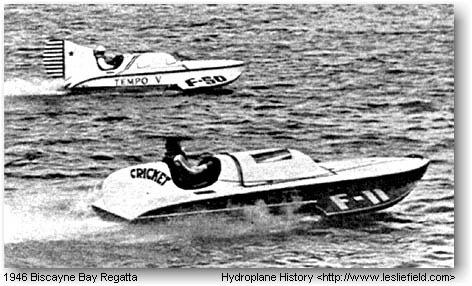
Guy Lombardo in 1946 Biscayne Bay Regatta in his Tempo V
3D scanning can be used to help create replicas of many things: the first all-metal passenger airplane, artifacts from the 1500s, and even a famous pig. Industrial 3D scanning and printing solutions company EMS helps clients in a variety of industries, including aerospace, military, consumer products, and automotive. But recently, they got the chance to 3D scan a piece of boat racing history: Guy Lombardo’s famous Tempo V 225 class hydroplane.
Lombardo was a famous big band leader who, from 1929 to 1976, helped ring in the New Year for millions of people all over the world with his band’s live performances. The Royal Canadians, made up of Lombardo and his three brothers, sold over 300 million records and had the opportunity to play at several presidential inaugural balls, including Franklin Roosevelt’s and Jimmy Carter’s.
He was also a hydroplane speedboat enthusiast and award-winning racer. He was the reigning US national champion from 1946 to 1949, and had won every trophy in the field by the time he retired, including the Gold Cup and the President’s Cup. Before WWII, Lombardo competed in the 225 Cubic Inch Class, with a hydroplane designed by acclaimed Ventnor Boat Works. He bought the boat from fellow APBA (American Power Boat Association) member Joe Taggert.
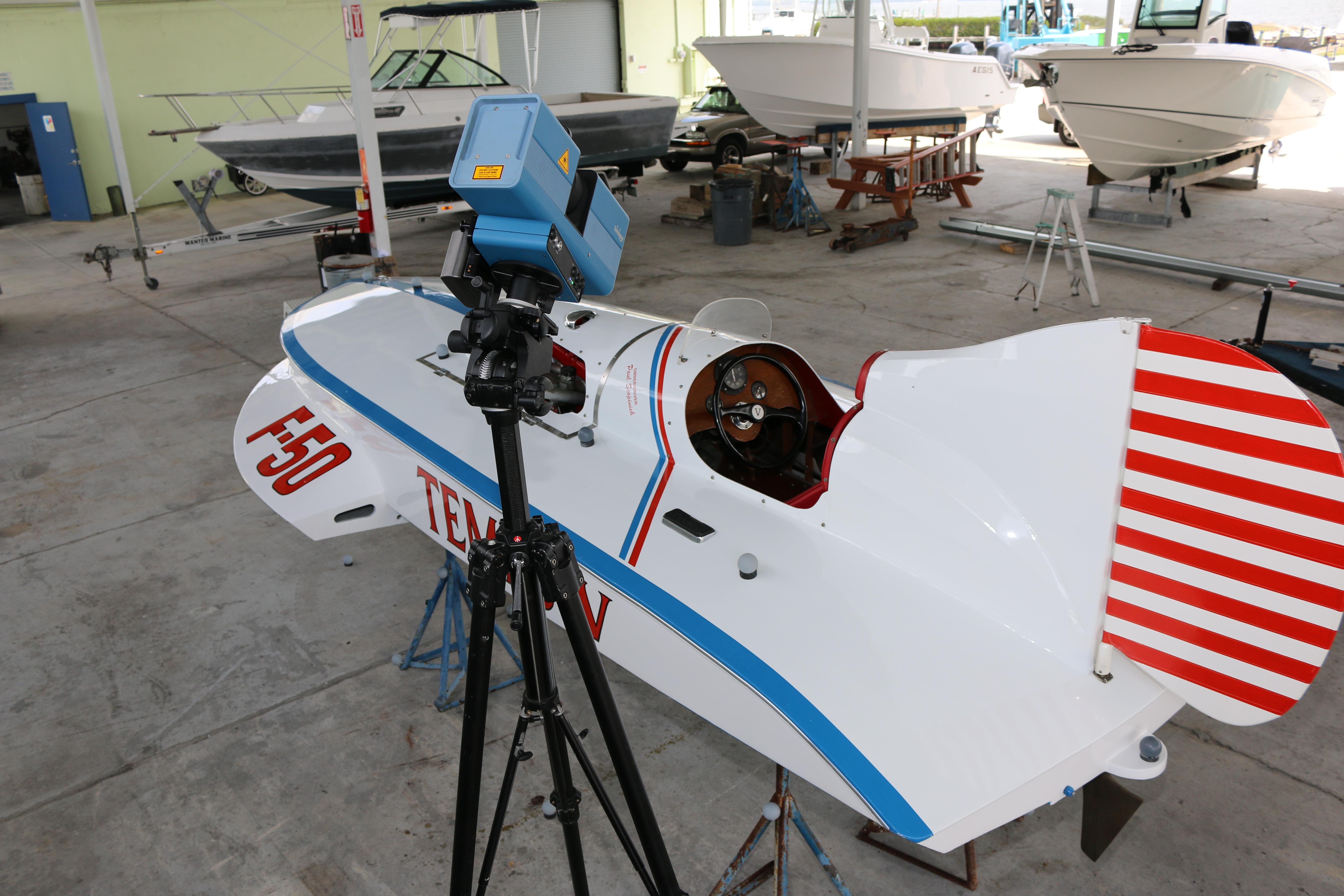
EMS Surphaser 3D Scans Restored Tempo V
The Scopinich family, owners of Scopinich Boat Works, fully restored the original Tempo V boat. Russ Sedlack, co-owner of Armstrong Nautical Products and a friend of the Scopinich family, wanted to build a replica of the famous boat. Being an avid hydroplane racer himself, Sedlack really wanted to race the Tempo V replica in the vintage class hydroplane series. He also had an idea for upgrading the replica, by modifying the existing classic mono seat cockpit to a driver + mechanic model. Since CAD files for the Tempo V did not exist, Sedlack was encouraged to contact EMS about using their 3D scanning technology to create the digital CAD models.
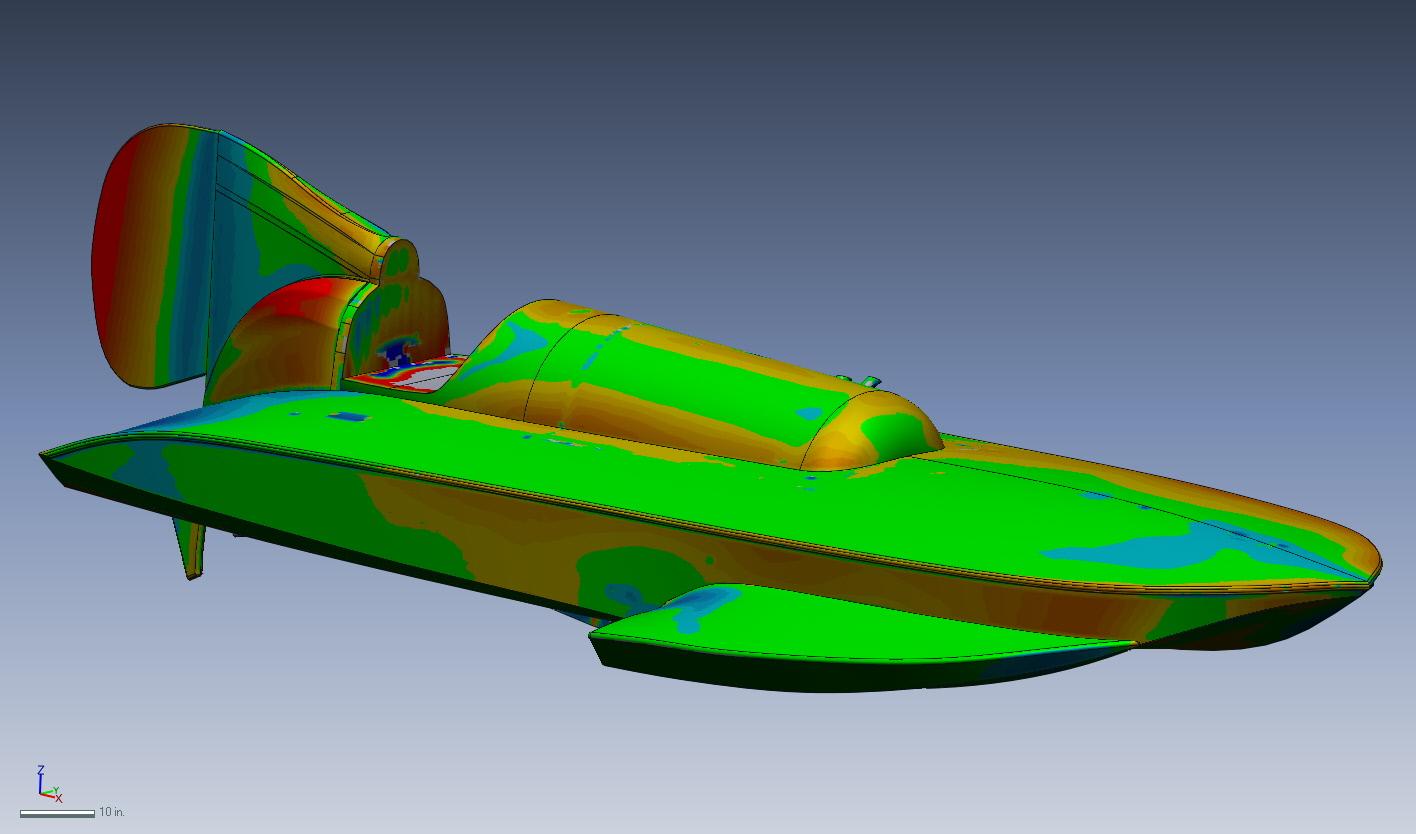
Comparison of CAD and Scan data
Sedlack and the EMS team spent a day 3D scanning the entire interior and exterior of the restored speedboat at the Florida marina where it’s located. EMS used a Surphaser 100HSX 3D laser scanner to capture images of the entire hull, the exterior detail, and the interior cockpit of the boat. The high-resolution long-range Surphaser is very portable, and is able to 3D scan in direct sunlight, which is extremely handy when you’re scanning large objects like boats!

Restored Tempo V hydroplane
Once they had completed all of the 3D scanning work, the EMS team returned to their Tampa headquarters, to process all of the raw 3D scan data. In less than a week, they were able to deliver Sedlack extremely detailed and accurate 3D CAD files of the Tempo V’s interior and exterior. Without the assistance of EMS, and their 3D scanning technology, it would have been almost impossible for Sedlack, due to time and cost, to manually measure the hydroplane accurately enough to create a detailed replica.
We eagerly await the second part of this success story from EMS, when the modified Tempo V replica is christened. Discuss in the Hydroplane forum at 3DPB.com.
https://youtu.be/_sS788qWFhk
Subscribe to Our Email Newsletter
Stay up-to-date on all the latest news from the 3D printing industry and receive information and offers from third party vendors.
Print Services
Upload your 3D Models and get them printed quickly and efficiently.













You May Also Like
3D Printing News Briefs, July 9, 2026: RIMPAC 2026, Software, Housing, & More
In today’s 3D Printing News Briefs, Massivit continues its focus on aerospace and defense manufacturing, and Meltio is collaborating with Phillips Corporation for RIMPAC 2026. Moving on to software, AMIS...
3DPOD 304: Precast Concrete AM with Greg Kerkstra, Mangrove
Greg Kerkstra is part of a family business that leads in the precast concrete industry. They’ve now turned to Progress Group’s large-format binder-jet concrete technology, which we covered here in...
3D Printing News Briefs, June 10, 2026: Grand Opening, Photoresins, Footwear, & More
We’re starting with some exciting news in today’s 3D Printing News Briefs: Stratasys just celebrated the opening of its new North American headquarters in Minnesota. Moving on, Nanoscribe is scaling...
Wells Fargo Backs ICON in Landmark Milestone for 3D Printed Housing
Qualification is an indispensable step on the path to legitimization for any new technology, but it’s still just one step: markets tend to remain unswayed without a co-sign from an...