Czech Researchers Use 3D Printing to Create Fully Functional Lung Model

 Often when we are sick or injured and seeking treatment from a medical professional, we do not consider all the background that actually goes into surgeries and the overall healing—much less the training that came before. Today, you might consider the impact that 3D printing is having on the medical field. Not only is bioprinting becoming a major focus in research labs around the world as research teams create 3D printed cellular structures, from that of the kidneys to the liver, but 3D printed medical models themselves are becoming more and more complex. And this is good for you if you are the patient.
3D printed models for training and exploration mean that when it comes to examining your particular health condition or preparing for surgery, both students and surgeons have been able to spend as much time as necessary in prepping. They may be able to use 3D printed models to examine tumors they’ve never seen before in a variety of places, confer on the best treatment and diagnosis, and then even use the models as surgical guides.
[Image: REUTERS/David W Cerny]
[Image: REUTERS/David W Cerny]
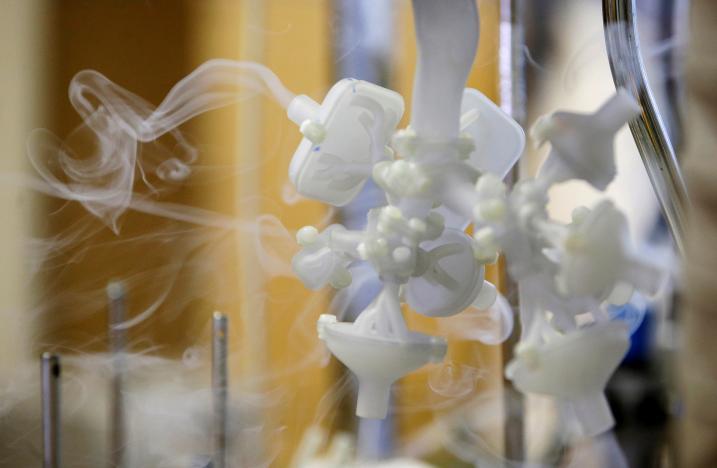
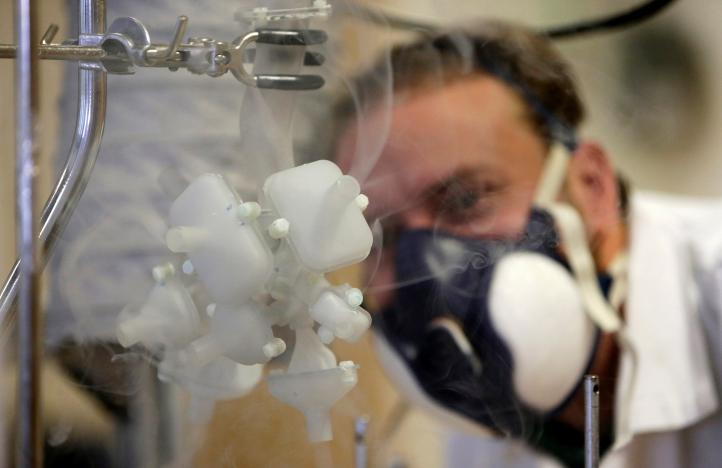
Not only will they be able to study the lungs and these often accompanying health issues in great detail, but it’s hoped that they may be able to test treatments and medications as well. Anyone who has ever experienced breathing problems or watched a loved one or friend experiencing such a thing should be in strong support of this innovative lung system that will be used as a prime reference model for creating inhaled drugs—often used in the treatment of asthma and other conditions that cause breathing challenges.
“This model will show whether an inhaled drug will settle in the concrete areas where we need it to,” said Miroslav Jicha, the head of the research team.
-
- Scientists Miroslav Jicha and Frantisek Lizal operate a model of a functioning human lung, November 22, 2016. [Image: REUTERS/David W Cerny]

-

- Scientist Frantisek Lizal operates a model of a functioning human lung, November 22, 2016. [Image: REUTERS/David W Cerny]
-
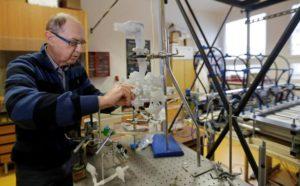
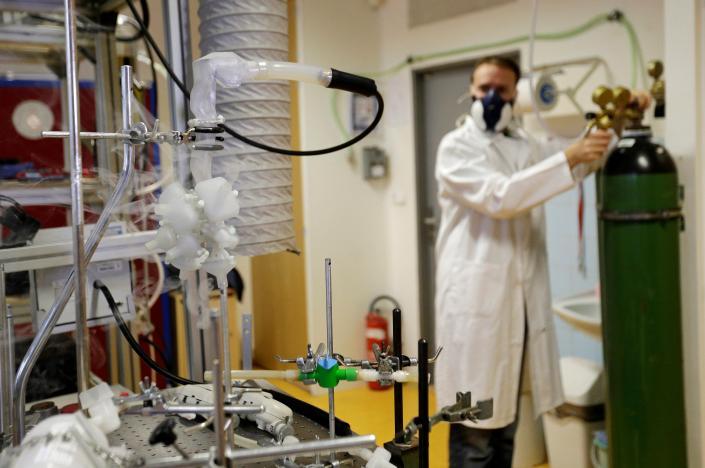
- Scientist Miroslav Jicha sets up a model of a functioning human lung, November 22, 2016. [Image: REUTERS/David W Cerny]
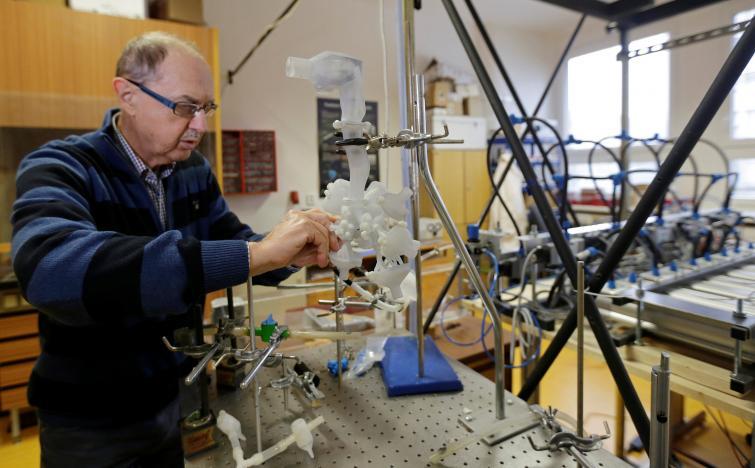
Hailing from the Brno University of Technology, this research team created the functioning lung with complex mechanical parts as well as a computer based model. They are able to experiment with and create numerous new treatment methods. Best of all, this allows for integration into the future of medicine, with patient-specific treatments. With three patents already received for its modeling, the researchers see it the lung as having the potential to become the standard for testing in Europe. Discuss in the 3D Printed Lung Model forum at 3DPB.com.
[Source / Images: Reuters]
Subscribe to Our Email Newsletter
Stay up-to-date on all the latest news from the 3D printing industry and receive information and offers from third party vendors.
Print Services
Upload your 3D Models and get them printed quickly and efficiently.











You May Also Like
nScrypt’s Ken Church on Why Additive Electronics Is Finally Finding Its Fit
For years, additive manufacturing (AM) has promised to reshape electronics. The idea has always been to print circuits directly where they are needed, add them into parts, and move beyond...
Harvard’s Jennifer Lewis Lab Is 3D Printing Artificial Muscles That Twist and Bend on Demand
Researchers at Harvard John A. Paulson School of Engineering and Applied Sciences (SEAS) have developed a new way to 3D print materials that can move on their own, bending, twisting,...
3D Printing News Briefs, May 2, 2026: Soft Robots, Agricultural Waste, & More
In this weekend’s 3D Printing News Briefs, we’ll start off with a multi-laser metal powder bed fusion 3D printer and post-processing news. We’ll end with research into soft robotics and...
Harvard SEAS Engineers Develop 3D Printing Method for Soft Robotic Components with Programmable Shapes
The world of soft robotics is still largely in its pure research phase, but the R&D landscape has started to produce examples of early-stage commercialization. Researchers have started to refine...