3D Scanned Footprints Reveal Secrets of Distant and Recent Past

Footprints aren’t as unique as fingerprints, but they still have a lot of fascinating information contained within them. Whether that information is anthropological or forensic in nature, it provides a tantalizing window into events and the possibility of reconstructing them in a unique manner. Thanks to 3D technologies, it has become easier than ever to record the information contained in a footprint and subject it to highly detailed analysis.
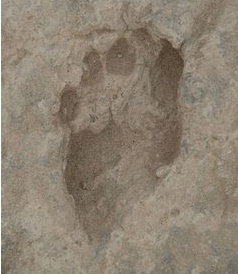
The world’s second oldest human footprint. [Image: Bennett and Budka]
“[The scanner] had been flown at great expense first to the Kenyan capital, Nairobi, and then on a small plane which landed on a dirt strip. But then, on its first day out, it was connected to a generator supposedly that had been repaired in a back street Nairobi shop – and the sparks flew. My colleagues had to infill the excavation and it was another six months before I was back out with a repaired scanner and a new generator.”
When scanning a footprint that has existed for 1.5 million years, a six-month delay is unremarkable. However, when footprint information is necessary to understand the dynamics of a crime scene, the urgency of easy information collection is more clearly visible. Unfortunately, it is an area in which 3D scanning technology has not yet been widely adopted. Instead, there is a great deal of reliance on more traditional physical molds or simply an abandonment of collection of the information contained in footprints at all.
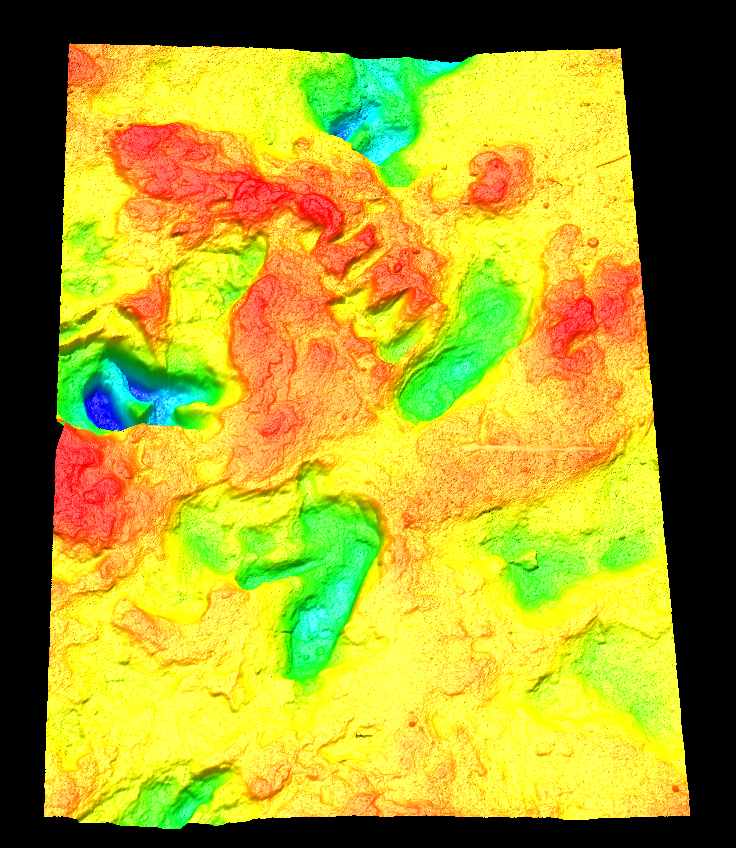
[Image: Bournemouth University]
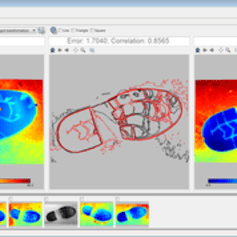
“Footwear impressions provide an important source of evidence from crime scenes. They can help to determine the sequence of events and – if distinctive due to the wear patterns – can link a suspect to multiple crime scenes. The value is not only as a tool in prosecution, but crucially in intelligence gathering often around petty crime…Working with a talented team of software developers, we have now translated academic know-how and software developed for research into a freeware package that puts 3D tools into the hands of everyone [into] DigTrace a bespoke software tool for footprint analysis.”
[Image: Bennett and Budka]
“As well as making new discoveries about our early ancestors, we can apply this science to help modern society combat crime. By digitising tracks at a crime scene we can preserve, share and study this evidence more easily,” said Morse.
Whether examining tracks left at a crime scene last Tuesday or those left in the Savannah over a million years ago, this type of robust data collection and ease of accessibility puts more information into the hands of those who need it, wherever they may be. Discuss in the 3D Scanned Footprints forum at 3DPB.com.
[Sources: The Conversation, Bournemouth University]
Subscribe to Our Email Newsletter
Stay up-to-date on all the latest news from the 3D printing industry and receive information and offers from third party vendors.
Print Services
Upload your 3D Models and get them printed quickly and efficiently.











You May Also Like
What the 2026 Post-Processing Survey Reveals About the Future of AM
As additive manufacturing (AM) continues its transition from prototyping to production, industry attention is shifting toward one of the most demanding but often overlooked parts of the workflow: post-processing. The...
At RAPID + TCT 2026, Executive Keynotes Break Down What’s Next for AM
While AI is expected to be a major focus at RAPID + TCT 2026, the event is also putting the spotlight on something just as important: leadership. This year’s Executive...
Sintavia Taps NVIDIA Blackwell for AI-Driven Additive Manufacturing Pipeline
Investors have become increasingly anxious about the sustainability of NVIDIA‘s growth trajectory, which is a rather natural outcome when a stock goes up infinity percent or so over the course...
Please Localize Your Supply Chains
Resilience is starting to feel like the only economic metric that matters, which is noteworthy, for one, because there is no defined metric that I know of that actually measures...