Bradley Rothenberg Brings Unique 3D Printed Textiles to NY Fashion Week

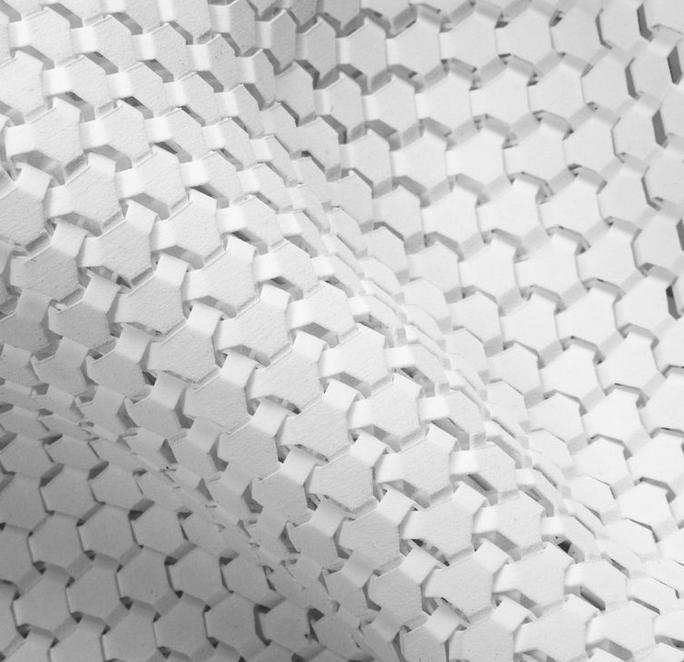
3D printed cellular structure
With the semi-annual New York Fashion Week coming to an end, there were a few particular designs which left many people quite intrigued. With 3D printing becoming more and more a part of fashion, at least on runways as of late, it was no surprise to see 3D printed textiles on display at one of the more popular fashion events in the world.
Fashion designer Bradley Rothenberg had quite the showing at this year’s event, with several new 3D printed garments. Some of the pieces included a fully wearable 3D printed tank-top that was designed in collaboration with designer Katie Gallagher, and was printed entirely in one piece. Rothenberg also 3D printed details for skirts, and jackets, as well as helped designer Katya Leonovich incorporate 3D printing into her SS15 line.
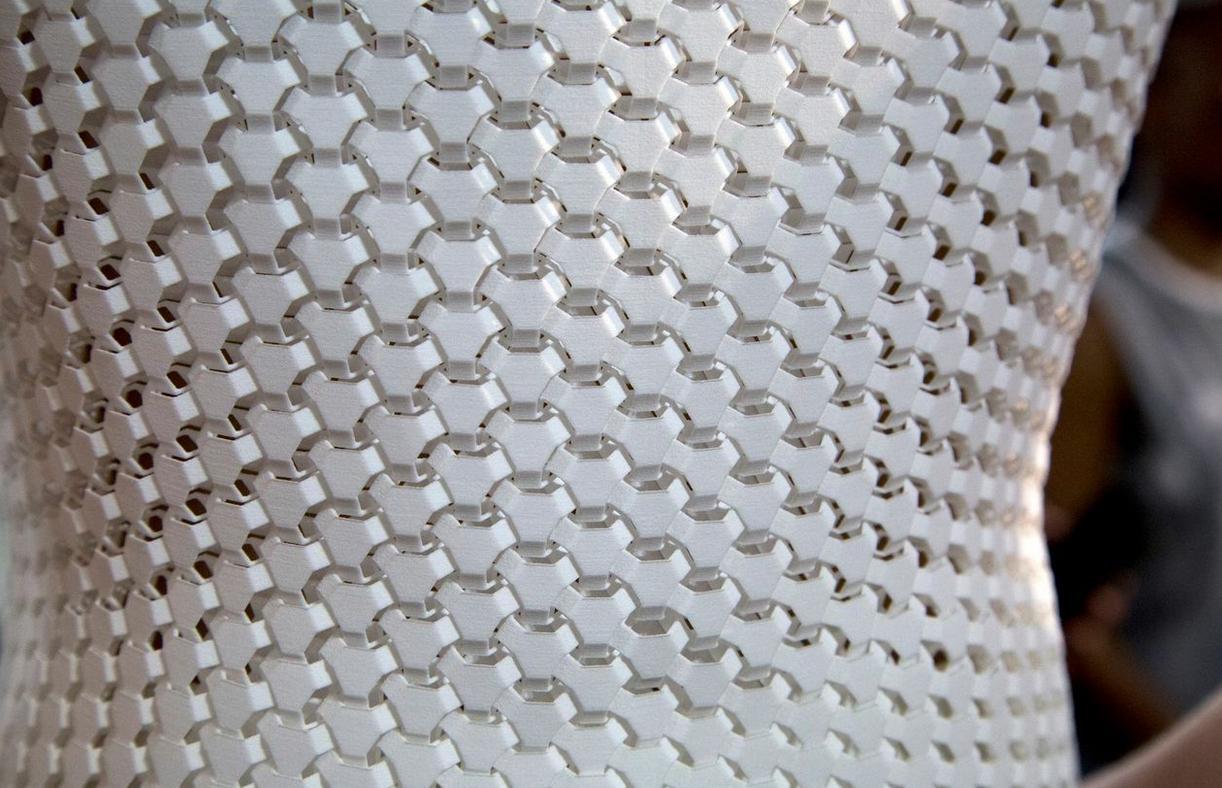
The 3D printed tank-top. Printed in SLS nylon in one piece.
The most talked about piece was the 3D printed cellular tank-top which incorporated a new textile pattern that Bradley has been working on, and has been very excited to see come to life. It is 3D printed using a selective laser sintering machine, that prints using a nylon powder. When the laser hits the powder, the nylon is solidified. This is done, one layer at a time, until the garment is completely printed. When finished, it comes off of the 3D printer fully assembled.

The cellular structure in the design makes for an interlocking pattern which provides flexibility and comfort. One very unique feature that this cellular structure provides is its ability to change the overall textile properties throughout the garment. The flexibility of each section can be different, simply by thinning or thickening parts of the individual cellular units.
“Bradley continues to push boundaries to create never before seen 3D Printed textiles and is focused on how changing the properties of a textile on a local level can create different performances throughout the entire textile such as opacity, flexibility, and stretch. The studio is also currently in the process of developing tools to grow textiles around any shape, be it a 3D scan or modeled dress,” explained Bradley Rothenberg’s PR firm.
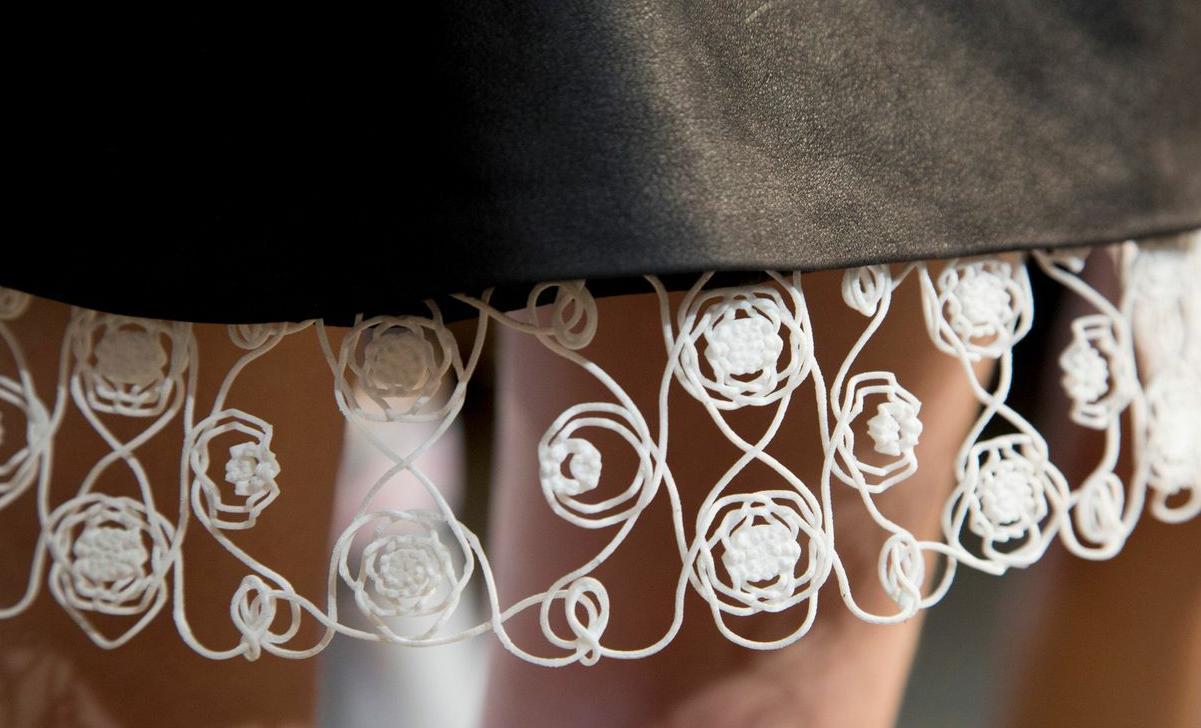
3D printed skirt details
It seems as though 3D printed textiles have become common among runway shows, and it is no longer surprising to see such pieces shown off by some of the most talented fashion designers on this planet. It seems as though 3D printed clothing was considered “futuristic” just a year ago, but now it appears to be on its way to becoming the ultimate fashion statement of the decade. It won’t surprise me to see this continue to become more of a trend as time goes on, with 3D printing becoming a norm within the industry.
What do you think about Bradley Rothenberg’s designs? Discuss in the Bradley Rothenberg 3D printed textile forum thread on 3DPB.com. Check out some more photos below:
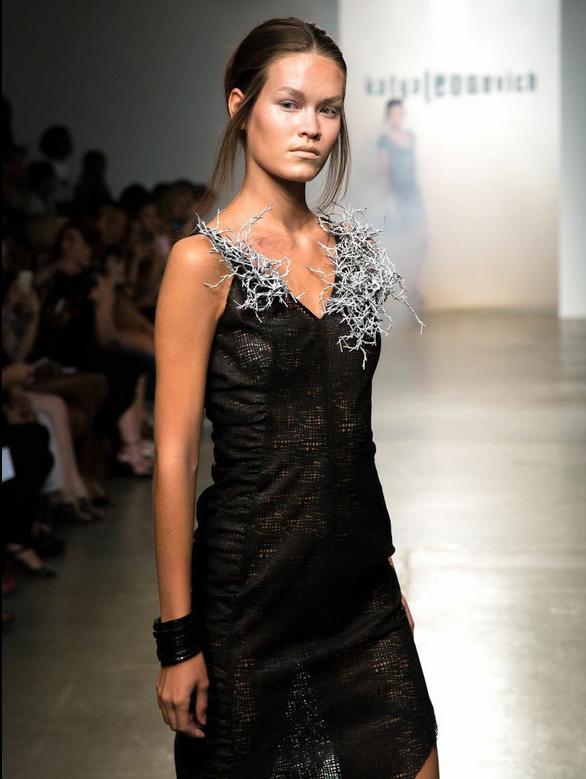
Katya Leonovich’s dress with 3D printed features
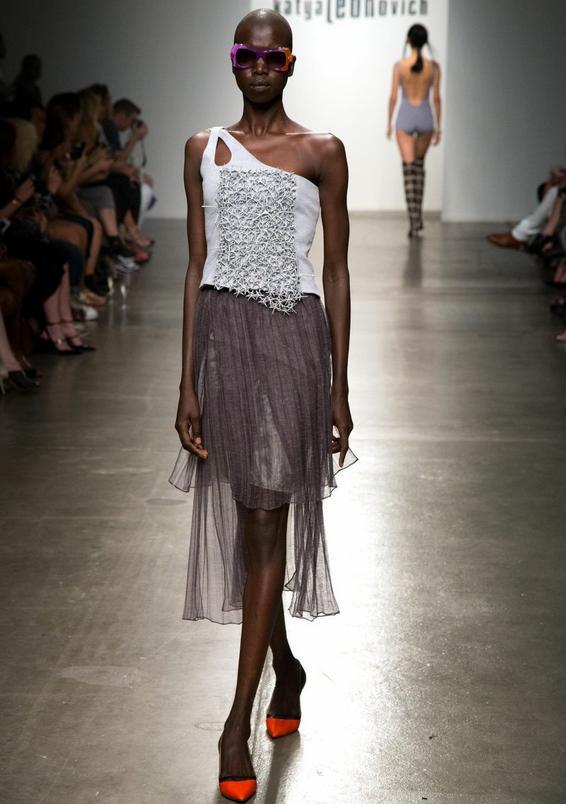
Katya Leonovich’s garment with 3D printed features
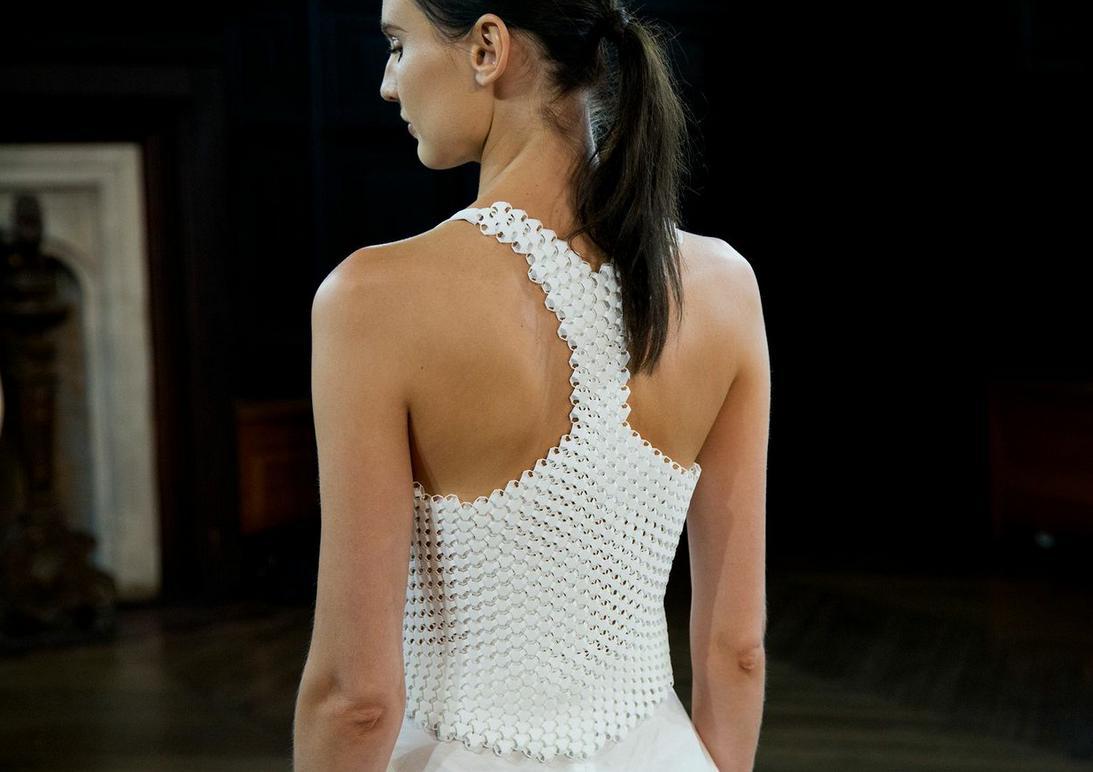
Bradley Rothernbergy & Katie Gallagher’s tank-top featuring the 3D printed cellular pattern.
Subscribe to Our Email Newsletter
Stay up-to-date on all the latest news from the 3D printing industry and receive information and offers from third party vendors.
Print Services
Upload your 3D Models and get them printed quickly and efficiently.











You May Also Like
ARC & ORNL Form Partnership to Accelerate AI-Enabled Manufacturing for Defense
Last year, Autonomous Resource Corporation (ARC) became the surprising owner of Desktop Metal’s (DM’s) assets following the bankruptcy of the one-time additive manufacturing (AM) unicorn, an acquisition that cost ARC...
RAPID 2026 in Pictures: The Coolest & Craziest Things on the Show Floor
Last week, North America’s premier 3D printing trade show, RAPID+TCT 2026, came to Boston. I spent two days trekking the show floor, trying to see as much as I could,...
Euler Viewer for Metal LPBF 3D Printing Released
Icelandic software startup Euler has released Euler Viewer, a real time build viewer for metal LPBF. The product does not need to be installed, and doesn’t require hardware to be...
3D Printing News Briefs, April 8, 2026: LiDAR Scanning, Vapor Smoothing, FDM Optimization, & More
We’ll kick off today’s 3D Printing News Briefs with some 3D scanning news from Artec 3D, and then move on to new America Makes Project Calls. Then, Raise3D and AMT...