3D Printing a Path to Sartorial Perfection: Tailors Mark Uses 3D Technology for Better Fit

 Even for people who are reasonably satisfied with their own bodies, clothes shopping can leave you with the impression that you are a malformed freak of nature. For those who have the opportunity to have clothing tailored, the realization that we are all beautiful if our clothes would just fit us right is very satisfying. Custom fit clothing and a bevy of personal stylists is all that stands between Hollywood stars and the hoi polloi.
It is becoming increasingly common for clothing to be available with an opportunity for a certain amount of custom tailoring built into the online purchase experience. Now, with the easy integration of 3D data into web experiences, one set of high-end suit tailors, Tailors Mark, is expanding their reach by offering to custom tailor their shirts and suits to an exact replica of their client’s body. What this means is that rather than having to be in Melbourne to go in for a fitting, your data can be sent from wherever you are and still get you a fully personalized fit.
One day this will probably be the norm, but for now it is extraordinary, especially given the nature of the specific scanning technology they have developed that allows them to offer this option. Using this patent pending technique, a client can use their smartphone to scan their own body and have that data sent to the factory floor, where a torso model will be 3D printed at full scale to be used as the stand-in for the tailoring experience.
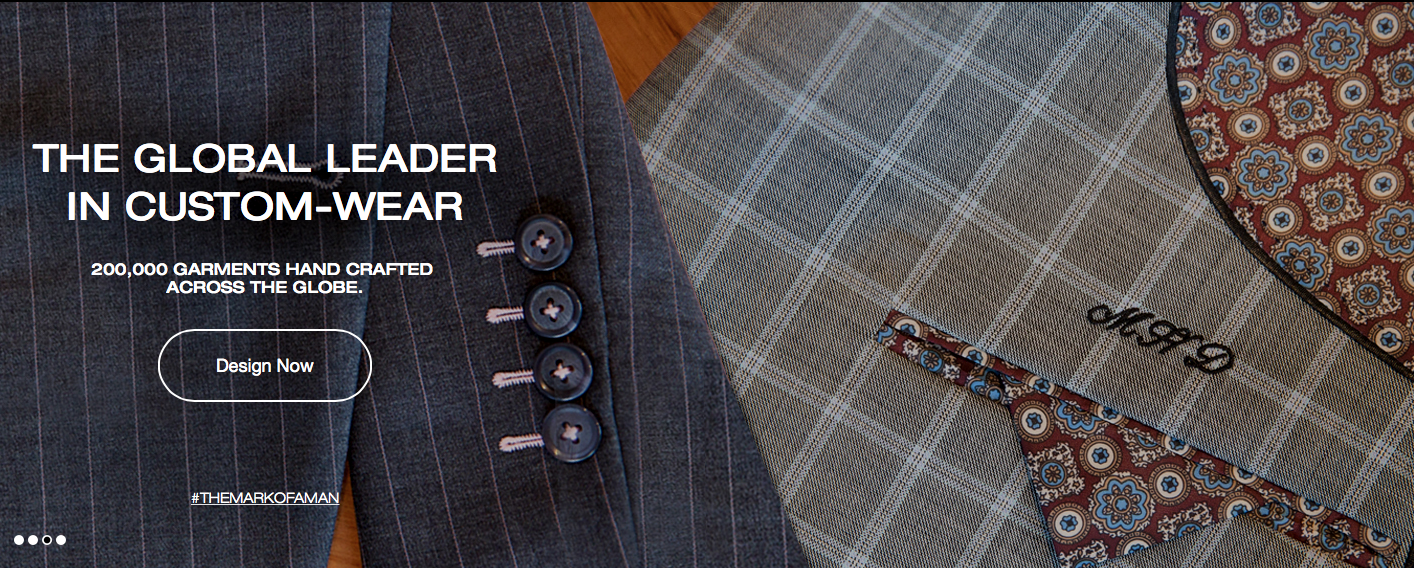
The torso not only provides the tailors with traditional online body profile information such as chest circumference and arm length, but lets them take into account posture and weight distribution.
Tailors Mark already has 17,000 clients worldwide, but with this sort of universal access option, that is certain to expand exponentially. Rather than facing the nightmare of torso storage needs, the models are printed out of a lightweight reusable plastic filament that can be crushed and re-fed into the machine in order to create the next person’s fitting dummy. Each stand-in will be created on a number of 4- or 5-meter-high 3D printers that can crank out a new torso in about two hours.
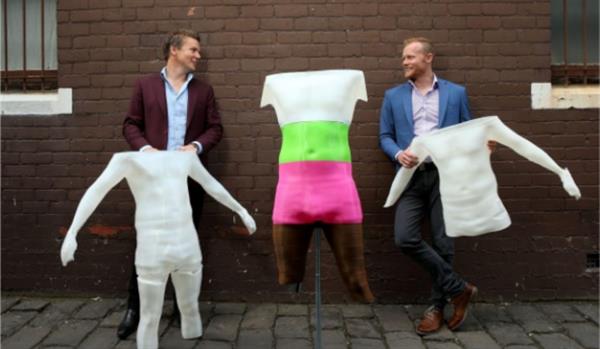
Tailors Mark co-founders Rob Fisher and Dave McLaughlin [Image: Pat Scala]
Subscribe to Our Email Newsletter
Stay up-to-date on all the latest news from the 3D printing industry and receive information and offers from third party vendors.
Print Services
Upload your 3D Models and get them printed quickly and efficiently.











You May Also Like
“A More Complete End-to-End Solution”: Stratasys Launches Post-Processing Partnership Program
I think it’s safe to say that post-processing is no longer considered the “dirty little secret” of 3D printing that it once was, with users realizing that finishing is just...
Why SiC-Dedicated Additive Manufacturing Is Gaining Industrial Relevance
Silicon carbide is not a material problem—it’s a manufacturing one. Silicon carbide (SiC) has become a critical material across semiconductors, aerospace, energy, and defense. Its exceptional thermal stability, chemical resistance,...
Championing a Made-in-America Future for Additive Manufacturing
As the additive manufacturing industry continues its rapid global evolution, one theme has risen to the top of strategic conversations: the importance of strengthening domestic production to support national competitiveness...
Friendshoring and Additive Manufacturing: Turning Australia’s Research Strength into Commercial Impact
Global supply chains are being re-written. After decades of globalisation driven primarily by cost efficiency, geopolitical tensions, trade disputes and pandemic-era disruptions have exposed the risks of concentrating manufacturing and...