Uruguay: No Te Va Gustar Features First 3D Printed Stop Motion Music Video



The nine members of NTVG.
With their name translating in English to an edgy, catchy ‘You Won’t Like It,’ Uruguayan rock group No Te Va Gustar has been around since 1994. The nine-piece band got together as teenagers, and they’ve stood quite the test of time so far, playing a range of music from rock to salsa and ska. The multi-faceted indie band really fills up a stage too—both musically and physically—offering an expansive sound with lots to focus on live as they play all the traditional instruments, plus trombone, sax, and trumpet. While they started as a trio, just several years later they began growing their sound further, along with members. Definitely not shy about trying new things, now they they’ve released a progressive new videoclip too.
 With over 10 albums, a number of DVDs, and concerts played all over the world, NTVG has already left a stamp on the music industry, but that’s about to become larger as they make history with the first 3D printed videoclip. Both the music and art are well worth a listen—and if you’re like me—you’ll enjoy it all more than once today. (I’ve been looking for some new tunes, and here they are!)
In ‘La Puerta de Atras,’ (translating to ‘The Back Door’) the band means to represent a new and different world—something like we’ve never seen. It’s powerful and a little dark too. The video is further compelling—taking you to another new realm. You definitely have to see the video to get it fully as you watch a dark figure, almost representative of an anatomical structure from an art class, stay in constant, frenetic activity via stop motion animation—a perfect match to the beat of the song. While not exactly upbeat, it definitely evokes emotion, and appreciation for both the musical artists and these extremely talented designers.

A still from the design process for the video.
The band hired two companies from Uruguay to work on the video: Fabrix 3D, a 3D printing and prototyping company in Uruguay, and digital animation company Enano Maldito.
With all of the design work created by Enano Maldito, Fabrix 3D then took after to create 300 3D microscopically different samples of the same character you see in the final video, all fabricated on Ultimaker 3D printers.
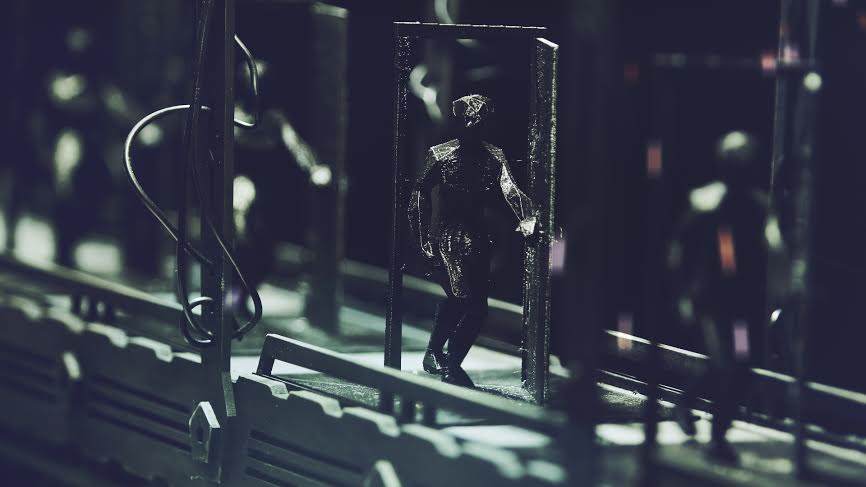
Stop motion animation of the 3D printed characters in the video.
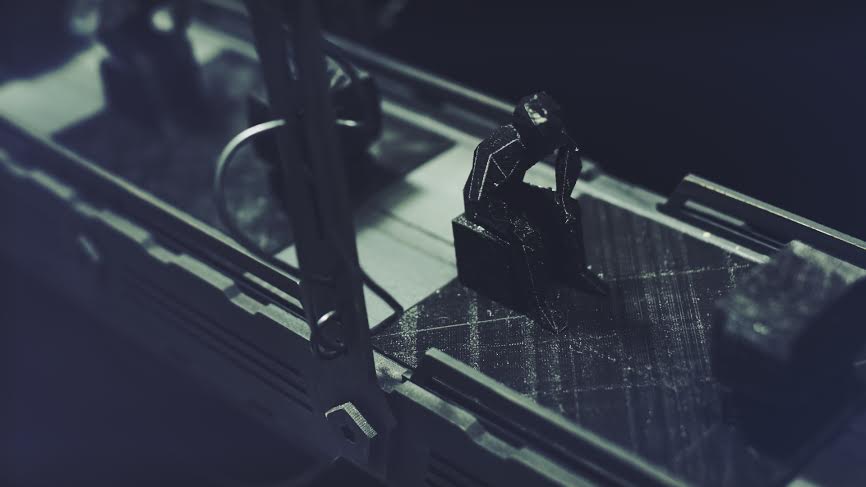
The rather grim 3D printed stop motion character takes a seat.
And while the song and video are fantastic, this is certainly a testament as to the quality provided by an Ultimaker, allowing for incredible artwork to be produced. They certainly could not have asked for a better advertisement for their versatile and certainly popular 3D printers, much appreciated by Fabrix 3D:
“It was utopia. No other way to define what happened,” said Federico Waldeck of Fabrix 3D in regards to the project, which he believes could not have been possible without Ultimaker’s machines.
“We printed 300 pieces, 30 hours long each (some of them took 100 hours) and we delivered the job in a month. It was a goal from side to side. If we had other 3D printers doing all wrong and failing constantly in their prints this would have been chaotic.”
 The stunning 300 prints were all put together by Enano Maldito in an ongoing stop motion sequence that is pretty astounding when you consider all the work that went into it. As Waldeck says quite accurately, ‘they got all the pieces together to make some magic, and there it is.’ The visuals are mesmerizing, displayed not only in the formal video from NTVG, but also the ‘how this was made’ video accompanying it.
Waldeck refers to this 3D printer as the best ever invented, and while you might wonder if that’s actually true, we’ve certainly followed many innovations created on the Ultimaker from 3D printed bones that will help in surgical pre-planning to that of a very unique recycling project in Europe. There are many examples, however, that attest to the versatility that Ultimaker offers their users.
Be sure to watch the two videos below, with the latter showing you how they drew, designed, and created the amazing figures. Discuss further in the 3D Printed Music Video Clip forum over at 3DPB.com.
Subscribe to Our Email Newsletter
Stay up-to-date on all the latest news from the 3D printing industry and receive information and offers from third party vendors.
Print Services
Upload your 3D Models and get them printed quickly and efficiently.













You May Also Like
Creality K3 Opens for Pre-Order at $849, Advancing Multi-Color 3D Printing
Creality has officially opened pre-orders for the Creality K3, its latest flagship K Series 3D printer, starting at $849 in the United States. Recognized as an IFA Innovation Awards 2026...
Prusa Core One L+: A Worthy Upgrade?
Disclosure: The Core One L+ was provided to me by Prusa3d free of charge for the purpose of this review. I have not received any other compensation. All opinions expressed...
Prusa Upgrades Its Lineup with CORE One+ (Gen 2), CORE One L+, and XL+
Prusa Research has updated its high-end desktop 3D printer lineup. The company is offering new and improved versions of the machines it targets at industrial and power users, with the...
Zaha Hadid Architects Print 6M Model with WASP’s Robotic Arm Solutions
Zaha Hadid Architects (ZHA) have successfully used WASP 3D printers to make a 6-meter-tall model of an aircraft control tower. Zaha Hadid Architects’ Tech Lab made the tower in-house for the ZHAviation...