Police Hope to Solve Murder by 3D Printing the Victim’s Fingers

 Sometimes life seems like a bizarre episode of Law & Order. In the latest episode of “life is stranger than fiction,” a computer science professor has been tasked with helping police to solve a murder – by 3D printing the victim’s fingers. Michigan State University professor Anil Jain specializes in the study of biometric identification, which is the science of identifying individuals by unique traits such as fingerprints, retina patterns, etc. with specialized computer programs. Jain’s focus is on making those programs as hack-proof as possible, and he was recently asked to put his own hacking skills to the test.
While not many details can be released about the murder as it’s an ongoing investigation, the police who approached Jain believe that they may be able to determine who murdered a man by studying information contained in the victim’s cell phone. However, they’re unable to access that information as the phone, like many newer models, is protected by a fingerprint identification system.
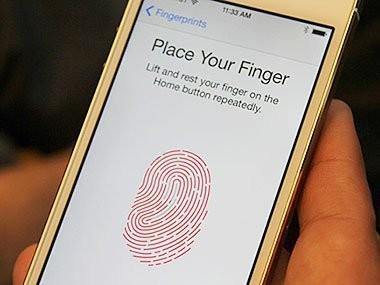 The police did have the victim’s fingerprints on file, though, as he had been arrested before, so they approached Jain and his PhD student Sunpreet Arora with a question – could they use the 2D fingerprints to create 3D printed replicas of the man’s fingers, fingerprints and all? Jain and Arora were willing to try.
An immediate challenge presented itself – one reason that fingerprints are such a secure way to protect information is that devices like phones react to the electrical conductivity of human skin, so a plastic replica, no matter how perfect, isn’t enough to unlock a device the way an actual finger can. However, metallic inks are also conductive – researchers have actually been experimenting with 3D printing with metallic inks at the nanoscale to make phones even more responsive to touch.
Arora reversed that idea by coating the fingerprints on the 3D printed fingers with a metallic, conductive material that should be able to react with the phone to unlock it the way an actual fingerprint would. He doesn’t have it fully perfected yet, but he’s working on refining the method and hopes to have the technology ready to give to the police in the next few weeks.
It’s a fascinating idea, especially if it does lead to information that will help the police solve the murder. It also poses several interesting legal and ethical conundrums, however – not necessarily in this case, but if the technology were to catch on, police could get into the phones of living suspects with just their fingerprints and a warrant. In this era of technology, in which so much of our personal information and, some would say, our very identities, are digitized, the laws are still hazy and often seemingly arbitrary when it comes to how information can be obtained.
 According to researcher Bryan Choi, who studies issues of technology and law, phones locked by fingerprints are considered fair game as evidence, while phone protected by passwords are not. In an interview with Fusion, Choi said that courts usually draw a distinction between “contents of the mind,” like passwords, which are protected under the Fifth Amendment, and “tangible bodily evidence,” i.e. DNA and fingerprints, which are not protected.
In this case, since the victim is deceased, the information in his phone can’t be used against him in any way, even if he did commit crimes in the past. If the murderer is apprehended, however, and the police want to get into his phone, it’s a very different story. Issues like this could be discussed for hours, with perhaps no real “right” answer – but looking at this from a purely objective standpoint, what Jain and Arora are doing is an amazing example of what technology can do. I suspect that, if the technique does lead to an arrest, we’ll be hearing a lot more about this case in the future. Discuss this amazing case further over in the 3D Printing Victim’s Fingers forum at 3DPB.com.
[Source: Fusion]
Subscribe to Our Email Newsletter
Stay up-to-date on all the latest news from the 3D printing industry and receive information and offers from third party vendors.
Print Services
Upload your 3D Models and get them printed quickly and efficiently.











You May Also Like
AM Demand Signals: Global Grid Resilience
We’re one year and a few days removed from the DeepSeek meltdown that rocked U.S. equity markets, not to mention the de facto U.S. AI brain trust, with fears that...
Critical Alloy Powder Manufacturing: CAPP Prioritizes AM Feedstocks and Advances U.S. Materials Leadership
Scaling additive manufacturing (AM) supply chains, particularly for metal powder-based processes, depends on the economic viability of products. The development of critical high-temperature metal alloys in powder form requires customer...
3DPOD 290: 3D Printing Since 1993 with Rajeev Kulkarni, Axtra3D
Rajeev Kulkarni was an early 3D Systems employee. He would spend 29 years at 3D Systems and was their VP of Corporate Strategy, CPO Printer Products, Manager of their Desktop...
The AM Adoption Problem No One Models
Through its short history, Additive Manufacturing has been presented to the investment community as a classic high growth technology story. Manufacturing is a multi-trillion-dollar market. Even a small percentage looks...