Breathe-3DP Releases Second 3D Printing Material: Tough, Strong Phoenix Nylon


 As the 3D printing industry has grown and evolved, material developers and manufacturers have been faced with entirely new challenges – and opportunities. The 3D printing materials market is growing faster than the printer market, which isn’t too sluggish itself, so material manufacturers are scrambling to keep up. Many older, well-established material development companies have found, in fact, that it’s not enough to offer 3D printing filament along with their other products, and have opened new branches dedicated entirely to 3D printing materials.
One of those companies is Universal Fibers, which has been producing polymer fibers since 1969. In 2014, the Virginia company decided to channel their expertise into 3D printing, resulting in the formation of filament manufacturer Breathe-3DP. The first filament to be produced by the young company was the strong, durable PLA++, and today Breathe-3DP has officially released their second material, Phoenix Nylon.
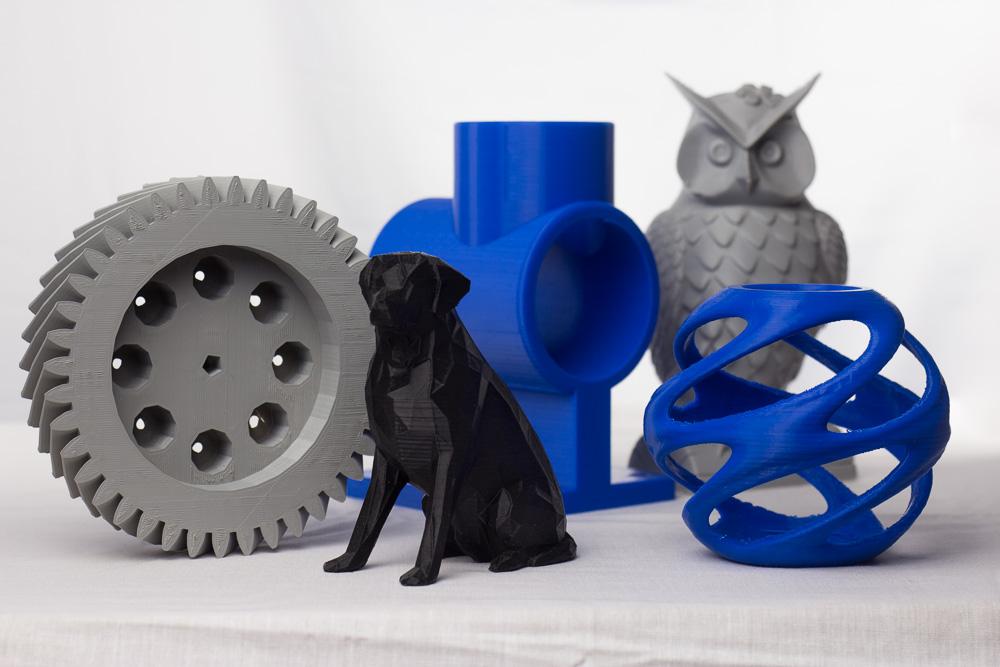
Fans of nylon rave about the material’s toughness, strength and heat resistance, and Phoenix Nylon delivers all of the above, in addition to being specially formulated for optimal 3D printing performance. According to Breathe-3DP, Phoenix is as easy to print as nylon materials get and produces prints with minimal shrinkage or warpage. Excellent bed adhesion, low odor, smooth extrusion, and overall print reliability make for painless printing, and the filament is ideal for printing overhangs and bridging.
“Phoenix™ is a great balance between user experience and the attractive strength/toughness characteristics typically associated with industrial nylons,” says Justin Shook of 3D printing bureau Shook Ideas. “Not to mention, this is the only industrial nylon on the market that you can buy in color!”
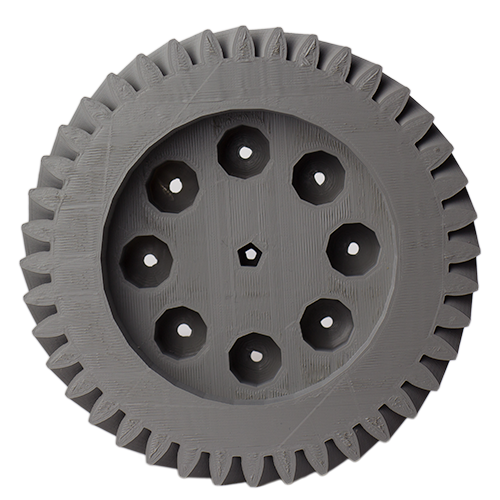 Six colors, to be exact: black, blue, gray, white, red and orange. Universal Fibers, a pioneer of nylon melt pigmentation, produces nylon in over 2,000 colors, and while that kind of variety isn’t available – or necessary – in Breathe-3DP’s filaments, the colors they do offer are rich, uniform, and carefully tested; the pigments are also compliant with FDA food-contact regulations.
Breathe-3DP’s lab in Bristol, Virginia houses around 40 3D printers from various manufacturers. Each of their materials is subjected to thorough ASTM testing, and printed parts are performance-tested with the intention of being used for end-use mechanical applications.
“Breathe-3DP is built on 46 years of specialized plastics formulation and extrusion experience,” Breathe-3DP co-lead Brendan McSheehy tells 3DPrint.com. “We are passionate about providing high quality 3D filament which offers great part performance, print reliability, ease of printing, and a range of vibrant colors.”
Phoenix Nylon is now available from Breathe-3DP’s website for $60 per 1kg spool. Both 2.85mm and 1.75mm are available, and Breathe-3DP states that additional colors will be available soon. Discuss further in the Phoenix Nylon 3D Printing Filament forum over at 3DPB.com.
Subscribe to Our Email Newsletter
Stay up-to-date on all the latest news from the 3D printing industry and receive information and offers from third party vendors.
Print Services
Upload your 3D Models and get them printed quickly and efficiently.













You May Also Like
Russia’s 3D Printed Missiles & Can NATO Get Its Act Together?
For most of US history, however much the two major parties differed on domestic policy (in some cases a lot, overall less than you’d think), there was always essentially a...
3D Printing News Briefs, October 21, 2026: Digital Twins, AI CAD Service, AR Smart Glasses, & More
In today’s 3D Printing News Briefs, America Makes announced the winners of its MIAMI Project Call, and AM Europe released a new report. Artec 3D launched its new Artec Twins...
3D Printing News Briefs, October 10, 2026: Drones, WAAM, Ceramics, & More
We have a packed 3D Printing News Briefs for you this weekend! First, America Makes celebrated the recent National Manufacturing Day with 3D printed drones, and then it’s on to...
The Manufacturing Race Behind the Drone Revolution
We are in the middle of a major manufacturing shift focused on the production speed and payload capacity of uncrewed aerial systems (UAS), or drones. A recent Manufacturing Dive article...