A 3D Virtual Tour is Underway for Recently Discovered Sunken Ship

 In 2008, an Australian ship called the HMAS Sydney was discovered in the Indian Ocean, about 200 km off Australia’s west coast. Why is this important? Well, of course, sunken ships always evoke images of found treasure chests and other loot. But in this case, some answers to a longtime mystery are coming closer to being solved. The HMAS Sydney sank in 1941, killing all 645 crewmen after a battle with the German raider Kormoran. What happened in the ship’s final moments? That’s the concern of researchers who collected the ship’s images and data, feeding them into a supercomputer named “Magnus” in order to recreate the ship’s final moments in 3D. But that’s not all: the goal here is that one day people will be able to do a complete virtual 3D tour of the underground ship.
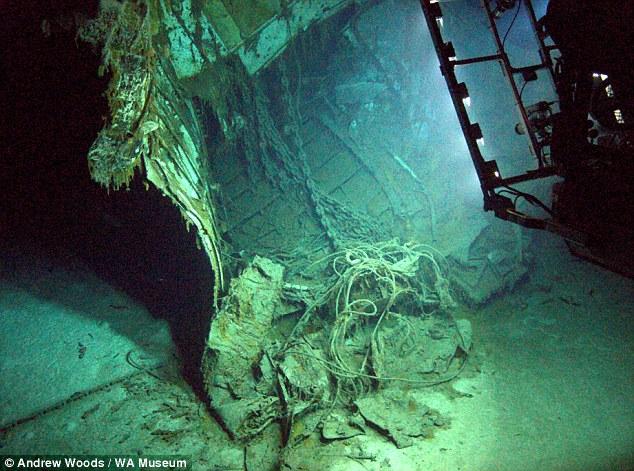
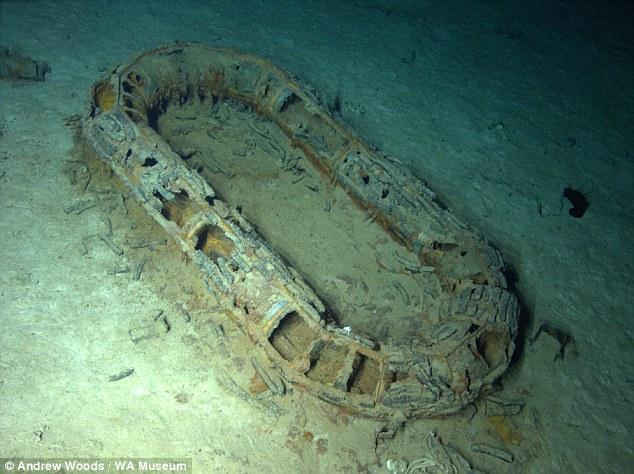
The ship’s location is difficult for the general public to access since it is 2.5 km underwater. This is why a research team took photos: lots of photos. About half a million photos were taken, according to Dr. Andrew Woods, a research engineer working on the project. In fact, this data volume was so large it created challenges for the team. Woods explains:
“The process of generating 3D models from the photographs we’ve taken is very computationally intensive. The time it would take to process half a million photographs using our conventional techniques, using our standard computers, would take about a thousand years, so we needed to do something to bring that time down to something achievable.”
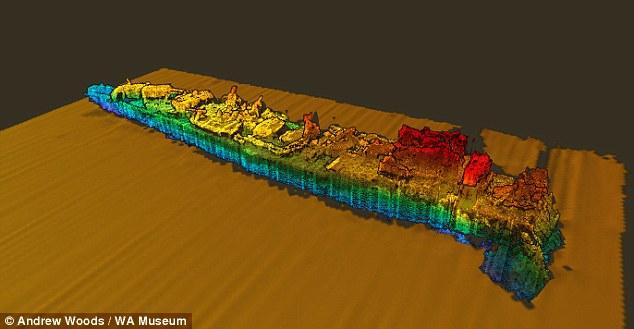
A thousand years is a long time to wait, so the team decided to use the Pawsey Supercomputing Centre’s most powerful computer in the Southern hemisphere: Magnus. Using the supercomputer, researchers ran the ship’s photos and videos through pattern recognition software, and these stitched-together photos are capable of showing the wreckage in 3D models.
Dr. Woods explains that fairly soon the public can tour the historic wreckage without getting into the water thanks to 3D modeling technology, which, he says, “will feed into a major exhibition at the Western Australia Museum in Geraldton, Perth and Fremantle as well as partner institutions including the Australian National Maritime Museum.”
 David Satterthwaite of the Pawsey Supercomputing Centre was happy to see Magnus used to benefit Australian culture and history in a project that is very appealing to researchers, computer scientists, military historians, and the general public. Satterthwaite states:
“You allow the ability for people to see or experience things they wouldn’t otherwise be able to either for physical restrictions, political restrictions or any other kind of restriction, and so it quite an interesting use of Magnus.”
Shipwreck geeks, get ready! You may soon be making your plans to head Down Under, but not underwater, to check out a 3D virtual tour of this historic wartime ship that got lost for decades, only to be discovered in time for new technology to share this treasure trove of information with the rest of Australia and the world. Discuss this amazing project in the 3D Models Help Recreate HMAS Sydney forum over at 3DPB.com.
Subscribe to Our Email Newsletter
Stay up-to-date on all the latest news from the 3D printing industry and receive information and offers from third party vendors.
Print Services
Upload your 3D Models and get them printed quickly and efficiently.













You May Also Like
3D Printing News Briefs, October 10, 2026: Drones, WAAM, Ceramics, & More
We have a packed 3D Printing News Briefs for you this weekend! First, America Makes celebrated the recent National Manufacturing Day with 3D printed drones, and then it’s on to...
10 Years of Multi Jet Fusion: Onsite at HP’s Vancouver, Washington Facility
At this year’s RAPID event in Boston, HP Additive Manufacturing Solutions celebrated ten years in the additive manufacturing (AM) market. The company ushered in the milestone with several innovations, including...
PharmaTher Plans U.S. Network to 3D Print Medicines on Demand
3D printing medicines has often been tied to the idea of personalization, basically making a pill in the right dose, shape, or drug combination for a patient. PharmaTher is now...
3D Printing News Briefs, September 17, 2026: 3D Printed Boat, UAS Development, & More
We’ll start with maritime manufacturing in this week’s 3D Printing News Briefs, and continue on to defense 3D printing. We’ll end with funding for Tripo AI. Read on for all...