Photographer Uses Drone to 3D Print Peruvian “Christ of the Pacific” Statue

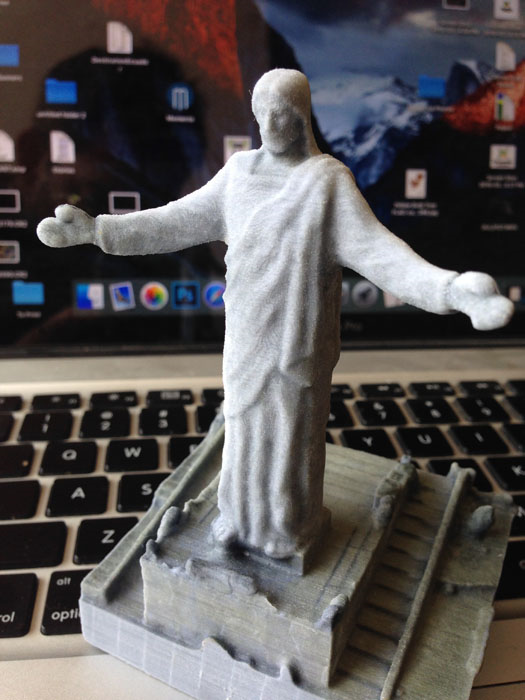 When I hear the word “drone,” often my mind wanders to the technology’s military applications. I have to remind myself that a drone is a flying remote controlled machine or “unmanned aerial vehicle” (UAV). Not only is there nothing inherently militaristic about the technology, many creative makers and engineers have been using drones for very different purposes than war. Here we have an excellent example of a wildlife photographer who used a drone (along with a camera and 3D modeling software) to create a 3D model of a huge Peruvian statue of Jesus Christ. This is a very creative use of drone technology and photogrammetry techniques to render a 3D printed replica.
The Jesus statue that stands in Lima, Peru, known as “Christo del Pacifico” or “Christ of the Pacific,” is huge. It is 122 feet tall (which includes the pedestal) and it is now considered one of the world’s largest statues of Jesus. Any religious public icon this large is bound to cause some controversy, and the statue has done just that. For one, it is seen by many as a rip-off of the famous Brazilian Jesus statue, the “Christ of Corcovado.” Also, some architects have suggested it violates building codes, while some historians dislike that it is placed at the location of a 19th century battle against Chile.
Controversy aside, wildlife photographer Jeff Cremer decided that it was the perfect statue with which to unveil his DJI Phantom 3 Pro drone skills. Familiarity with photogrammetry, which uses hundreds of photos to make accurate 3D scans, is useful here. Thankfully, Sculpteo has already provided a tutorial on the technique — and if you want to make your own drone, you can access this Make Magazine tutorial here.
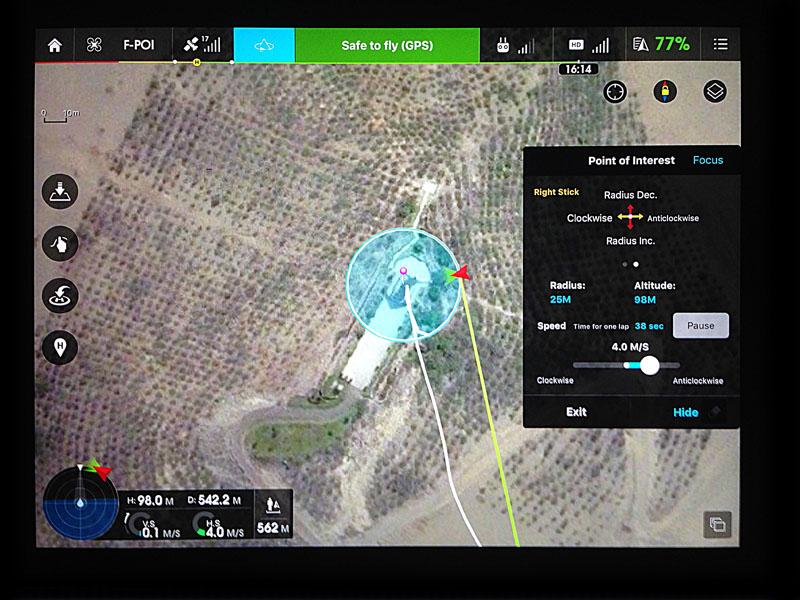
Now that you know about photogrammetry techniques and have access to a drone: what to do next? Cremer used his drone’s “point of interest” setting, set the center at the top of the statue’s head, and moved it back 82 feet. The drone’s camera took photos every 2-3 seconds, so one circular pass around the statue collected about 30-40 photos. (See above photo of the drone’s flight path.) Also, to ensure consistency of lighting, Cremer recommends an overcast or cloudy day. Blurring can be a problem with drone cameras, but Cremer explained to Sculpteo how blurring can be reduced:
“To reduce the blur that can occur in photos when using a drone make sure to check if your camera will allow you to turn off the image stabilization, if that cannot be done try to change your shutter speed to something like 1/1000th of a second to reduce the “noise” which causes the blurring effect.”
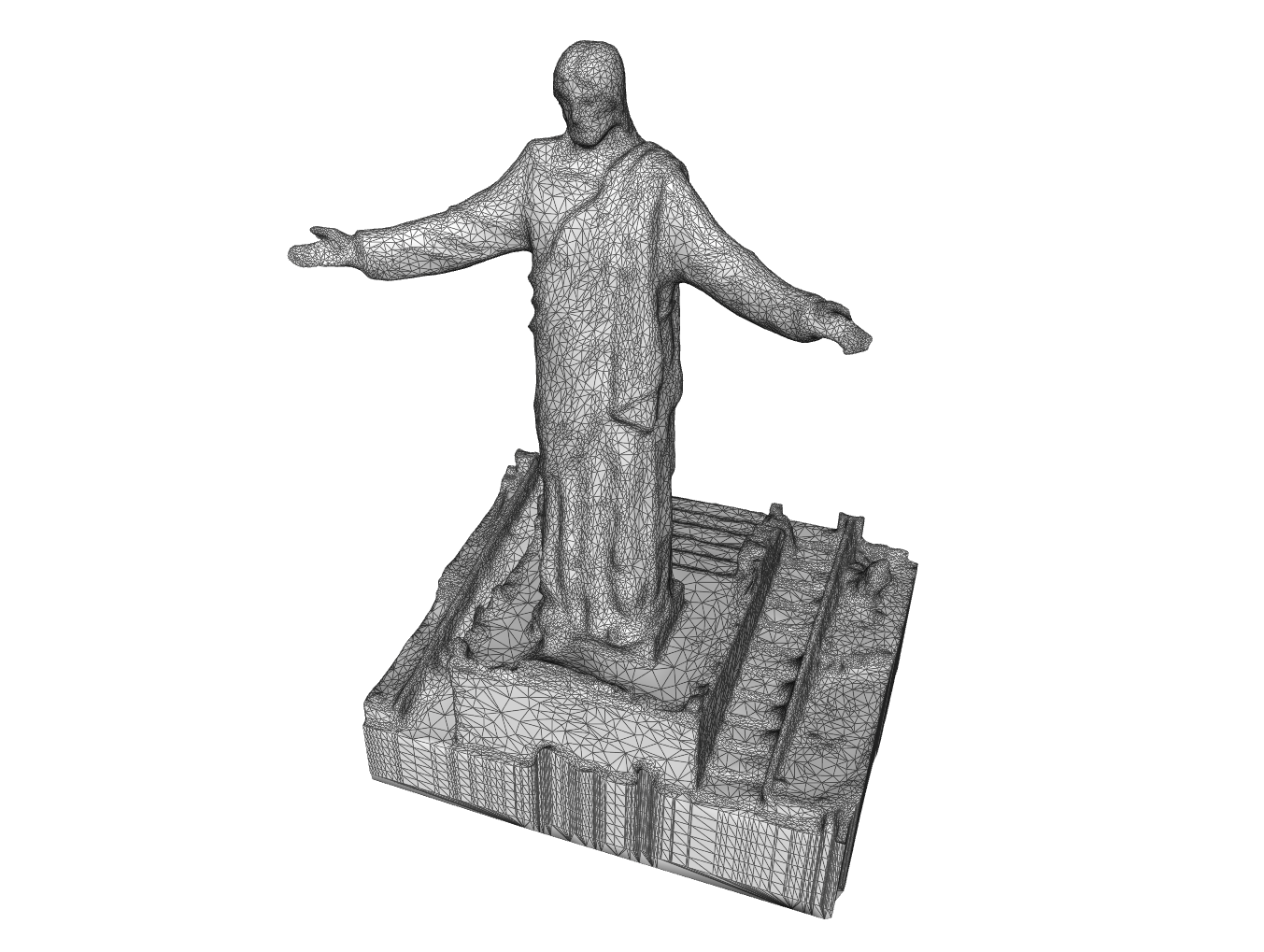 Once Cremer had more than 100 quality photos (which the photogrammetry technique requires), he used the Altizure
program to generate a 3D map from drone photos. For alternatives to Altizure, you can use Autodesk 123D Catch or a combination of Meshmixer and MeshLab. Cremer used Autodesk Memento to upload his images to the cloud server, and he used Memento’s slice tool to cut everything away but the statue and its base.
Finally, Cremer chose to 3D print the statue using Sculpteo, and here he explains why:
“I chose Sculpteo because I saw that they had full colour printing available. I also liked that their website does automatic analysis and repair of the uploaded files to make sure that the model prints ok. Shapeways.com or other services may have these options but Sculpteo looked the easiest.”
Now, after all that, Cremer enjoys his mini “Christ of the Pacific” 3D printed replica in the comfort of his own home! What do you think of this? Let’s talk in the 3D Printed Christ forum over at 3DPB.com.

Subscribe to Our Email Newsletter
Stay up-to-date on all the latest news from the 3D printing industry and receive information and offers from third party vendors.
Print Services
Upload your 3D Models and get them printed quickly and efficiently.













You May Also Like
AI Design and Point-of-Care Integration Headline ADDITIV Medical 2026
Medical additive manufacturing is expanding rapidly inside major healthcare institutions. In 2026 alone, hospital systems including Indiana University Health and Sheffield Teaching Hospitals launched dedicated point-of-care 3D printing facilities to...
GKN Aerospace’s UAV Demonstrator with 3D Printed Engine Avoids ITAR Regulations
The US CIA director recently made an unannounced visit to Moscow that has naturally raised much speculation, while the EU and NATO have now officially accused Russia of being behind...
The Business Case for 3D Printed Stents
A new 3D printed stent developed at New York University (NYU) does not look like the devices doctors typically use today. Instead of a simple tube, the prototype resembles a...
3D Printing Financials: 3D Systems, Prodways, and Align Build on Positive Momentum
The latest earnings from 3D Systems (NYSE: DDD), Prodways (EPA: ALPWG), and Align Technology (Nasdaq: ALGN) show that the 3D printing market continues to move forward. Some businesses are growing...