Completely Blind and Deaf Photographer Can Now ‘See’ His Own Work, Thanks to 3D Printing

It’s extremely difficult to imagine what it would be like to be blind. Everyday tasks, which you and I take for granted, are extraordinary mountains for a blind person to climb. Imagine being born with no vision, in addition to lacking the ability to hear. Relying solely on taste, touch, and smell as your only way to sense the environment you are within, seems like a daunting task, doesn’t it?
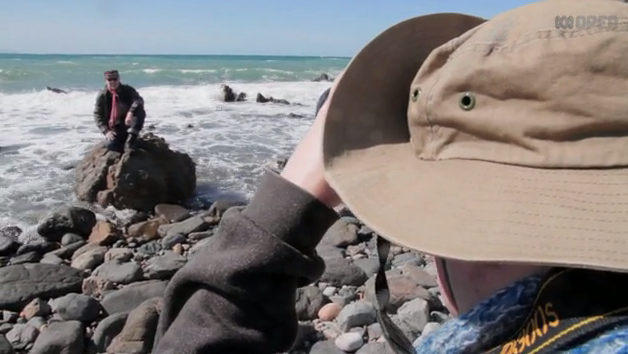 Australian-based photographer Brendon Borellini lacks both senses. He was unfortunately born with congenital deafness and partial blindness, which has since progressed into total blindness. Life for Borellini is certainly different than the life we all are used to. Growing up was difficult. Being unable to interact fully with the world around him, learning about the world he was in took time, but Borellini has overcome many obstacles in his life. In 1989 he was honored as the 1989 Australian of the Year for his academic excellence. Since then, he has gone on to college, and has taken a rather unexpected career path… Photography
Yes, I know it sounds quite impossible, but Borellini is anything but ordinary. What started out as a joke, after meeting Steve Mayer-Miller, the artistic director of Crossroads Arts, an organization which helps those with disabilities, Borellini picked up a camera and jokingly began snapping shots. Soon though, he began taking the process much more seriously, looking at it as a challenge rather than just a way to get a laugh.
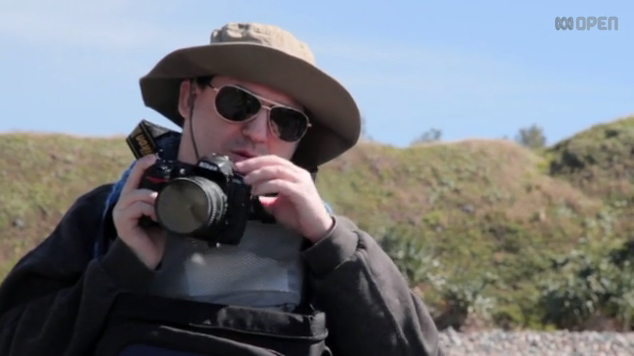
Borellini
Instead of using his eyes to see the subject of his photos, he has to rely on ‘feeling’ the subject with his available senses. Whether it’s the scent of the waves crashing on shore, the feeling of the stones and sand beneath his feet, or the mist felt on his face from the breeze blowing the caps of breaking waves towards him, Borellini seems at piece when he has a camera in his hands.
After taking numerous photographs, however, Borellini had no way of interpreting his work besides feedback he received from others via a device that can convert speech into braille. Mayer-Miller decided to do something about this.
“This led to researching devices that would enable a photograph, a two-dimensional photograph to become a three-dimensional photograph, and he would be able to at least interpret the textures in that photograph,” explained Mayer-Miller.
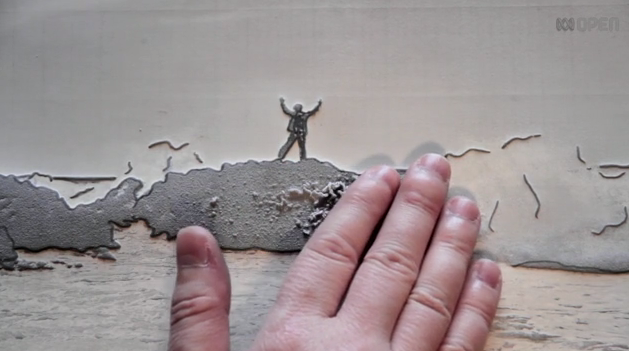
A 3D printed representation of one of Borellini’s photographs
Using a 3D topographic printer, Mayer-Miller was able to have the photos taken by Borellini 3D printed, allowing for the texture of the images to come through.
“I can recognize the elements of the image. I think it’s very impressive to be able to feel the images I am taking,” stated Borellini through a computer.
The tactile enhancements have allowed him to ‘see’ the photos in a very different way than those with vision would see them. For Borellini, however, it’s the experience of taking the photographs, and interacting with the environment around him that’s most important to him, as he no longer feels isolated from the world. Discuss this incredible use of a type of 3D printing in the blind photography forum thread on 3DPB.com. Check out the video provided below, a short documentary on Borellini.
Subscribe to Our Email Newsletter
Stay up-to-date on all the latest news from the 3D printing industry and receive information and offers from third party vendors.
Print Services
Upload your 3D Models and get them printed quickly and efficiently.












You May Also Like
Havaianas Collaborates with Zellerfeld to Launch 3D Printed Flip-Flops
The shoe of the summer is undoubtedly the flip-flop. Easy on, easy off, your feet won’t get sweaty because there’s not much material, and they’re available in a veritable rainbow...
UCLA Researchers Develop 3D Printed Pen that May Help Detect Parkinson’s Disease
Diagnosing Parkinson’s disease is difficult. Often, early symptoms of the progressive neurological condition may be overlooked, or mistaken for signs of aging. Early diagnosis can help save lives and improve...
Printing Money Episode 30: Q1 2025 Public 3D Printing Earnings Review with Troy Jensen, Cantor Fitzgerald
Printing Money is back with Episode 30, and it’s that quarterly time, so we are happy and thankful to welcome back Troy Jensen (Managing Director, Cantor Fitzgerald) to review the...
Heating Up: 3D Systems’ Scott Green Discusses 3D Printing’s Potential in the Data Center Industry
The relentless rise of NVIDIA, the steadily increasing pledges of major private and public investments in national infrastructure projects around the world, and the general cultural obsession with AI have...