Electronics Manufacturer Uses Optomec’s Aerosol Jet Technology to Develop 3D Direct Printing Method


 One piece of technology that we’re seeing less and less of – thankfully – is the antenna. Most people probably remember struggling with the so-called “rabbit ears” on old televisions, trying to find the magic positioning that would enable a picture to come through. Sometimes that required standing by the TV and holding the antennae in place long enough for a second person to make out the score on whatever game happened to be playing at the time. Though I’m a nostalgic person, those are days I definitely don’t miss.
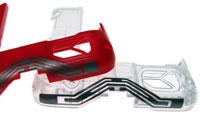 The disappearance of Stone Age technology like the TV antenna is thanks to better sensing technology in general, but also to the ability to embed things like antennae directly into electronics. We’ve written a lot about New Mexico company Optomec and their patented Aerosol Jet technology, which allows for electronic components – some as small as a human hair – to be 3D printed directly onto the surface of a part or product. Electronics manufacturer Lite-On Mobile Mechanical has licensed Aerosol Jet technology to develop what they call 3D Direct Printing (3DP), which allows functional electronics – such as antenna patterns – to be embedded into any mechanical structure or cover.
“With the flexibility provided by Aerosol Jet technology, our 3DP systems can print sensors, antennas, and other functional electronics onto plastic components and covers as well as metal die-cast insert-molded polymer frames and even onto glass panels and ceramic materials,” said Henrik Johansson, Senior Manager, Technology Development Antennas, at Lite-On. “We see Aerosol Jet as a strategic component of our 3DP solution, which has enabled us to expand into new markets.”
 Some of those markets include the automotive, personal care and communication device industries. Lite-On originally purchased Aerosol Jet technology for the purpose of developing prototypes for its OEM customers, but the success of the tech led them to start implementing it in the direct manufacture of consumer devices. The Aerosol Jet-driven 3DP process requires less material, less time, and enables more design flexibility. Devices can be made slimmer and more compact when things like antennae are incorporated directly into their surfaces.
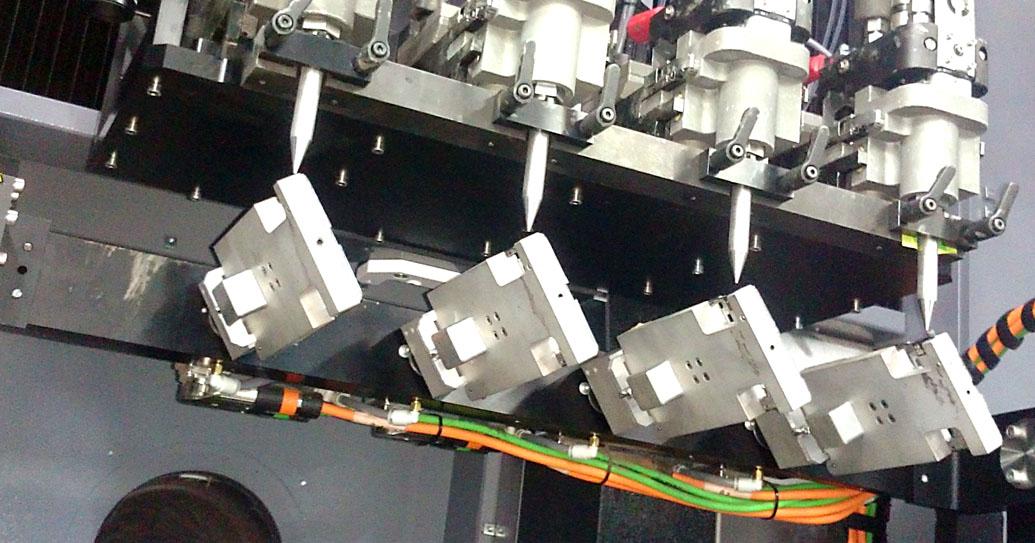
Lite-On now has several 3DP production machines at their manufacturing facility in Guangzhou, China. Those machines were developed by leveraging Aerosol Jet’s open architecture and configuring it into a 5-axis machine tool platform, optimized for the production of common smartphone and tablet forms. Each of those machines prints millions of units per year.
“LITE-ON has been an incredible strategic customer for Optomec. Their dedication and commitment was critical to proving the viability of Aerosol Jet technology in a real world 24/7 production setting,” said Dave Ramahi, Optomec President and CEO. “With its unique and in-depth process knowledge in Aerosol Jet printing, Optomec is pleased to recognize LITE-ON as a “Center of Excellence” for High Volume Production of 3D Printed Electronics.”
Optomec and Lite-On will both be at the IDTechEx Printed Electronics Show, which will be taking place from April 27-28 in Berlin. Discuss in the Optomec 3D Printing Technology forum over at 3DPB.com.
Subscribe to Our Email Newsletter
Stay up-to-date on all the latest news from the 3D printing industry and receive information and offers from third party vendors.
Print Services
Upload your 3D Models and get them printed quickly and efficiently.













You May Also Like
3D Printing News Briefs, October 21, 2026: Digital Twins, AI CAD Service, AR Smart Glasses, & More
In today’s 3D Printing News Briefs, America Makes announced the winners of its MIAMI Project Call, and AM Europe released a new report. Artec 3D launched its new Artec Twins...
3D Printing News Briefs: October 17, 2026: Affordable Housing, Bone Implants, Rubber Gloves, & More
In this weekend’s 3D Printing News Briefs, we’re starting off with quality assurance in metal additive manufacturing (AM), a new 3D printer, and 3D printed housing. We’ll finish up with...
3D Printing News Briefs, October 14, 2026: Bolus, Aerospace Tooling, Water Filter, & More
In today’s 3D Printing News Briefs, we’re starting with medical news, as Myrava has received FDA 510(k) clearance for its 3D printed bolus. Moving on to aerospace and metals, AML3D...
Can India’s AM Push Help Make it a Viable Supplement to China?
Diversifying manufacturing supply chains to locales outside of China has nothing to do with actually cultivating “substitutes” to the Chinese economy. The real stakes are these: China is an irreplaceable...