Artist Eyal Gever and Made In Space to Send 3D Printed Laughter into Orbit

 Have you ever wondered what laughter might look like? You may immediately think of an image of a person laughing, but what would laughter itself look like, if it could be given form? Perhaps it would look like an explosion, or a supernova. Maybe it would look like a flower, or like the sun. Now, another question: if you could choose one image or sound to represent humanity to someone unfamiliar with our species, what would it be?
Part of an artist’s job is to make the intangible visible, and to turn concepts into images. Artist Eyal Gever does this using a unique, self-designed software program and a 3D printer: he freezes moments in time and turns them into solid, permanent sculptures. Gever has 3D printed ocean waves, a kick, and other blink-and-you’ll-miss-it instances of motion. He’s also worked a bit with sound, creating digital images based on sound waves. Recently, he was contacted by Made In Space, the NASA partner responsible for sending the first 3D printer into space: How would he like to become the first artist to ever create art in zero gravity?
Made In Space’s Zero-G 3D printer was built and sent to the International Space Station mainly so that astronauts could print tools and parts as needed, without having to wait for supplies from Earth. It’s an unprecedented technological development that could allow for large-scale manufacturing in space, enabling humans to build structures on the moon or, ultimately, Mars. But it can also be used to transmit human creativity to other sentient species, if they exist.
“One of the areas that we are excited a lot about is art and how we can design new types of art that maybe we can’t even bring back to earth, because we’re building a sculpture that wouldn’t even survive in gravity,” said Made in Space CTO Jason Dunn.
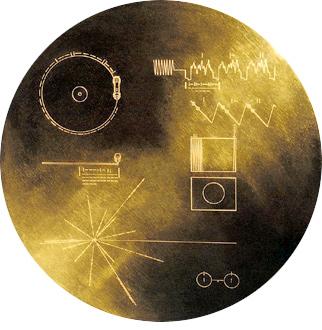
NASA’s Golden Record
Made In Space asked Gever to design a piece of art that would represent something fundamental about humanity, something that couldn’t exist in outer space, where sound can’t travel. Gever, wanting to avoid anything that “has a political connotation or culture or time or race,” eventually settled on something universal: laughter. He will take a recording of human laughter and send a digital image of its sound waves to the International Space Station, where it will be 3D printed and released into orbit, where it could potentially be discovered one day by some other race. It’s similar to the 1977 NASA Golden Record project, in which recordings of sounds and images from Earth were sent into space, potentially to be discovered by future astronauts or alien races.
“The earliest cave paintings were of human hands which were a way of proclaiming and celebrating the presence of humanity,” says Gever. “#Laugh will be the 21st century version of that — a mathematically-accurate encapsulation of human laughter, simply floating through space, waiting to be discovered.”
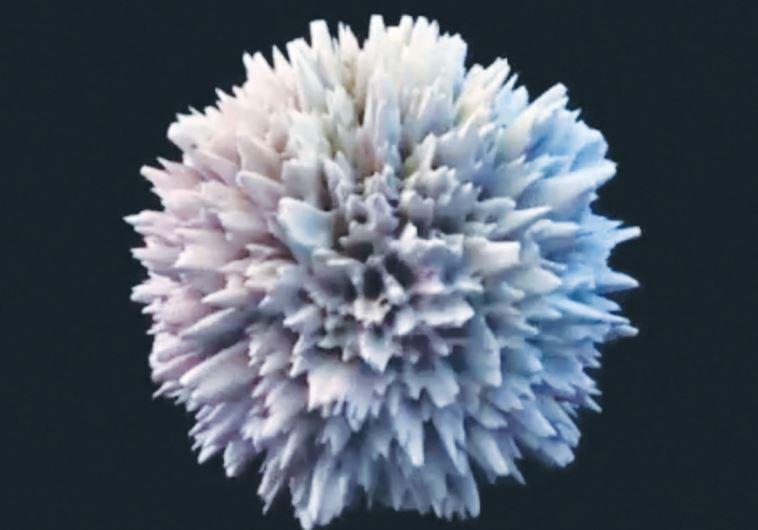
Now, here’s where you come in: your laugh could potentially be the one to represent the joy of mankind to other species. The project will be crowdsourced; anyone from around the world can record their laughter and submit it online, and after three months, the laughter with the most shares and retweets will be selected as the basis for the sculpture. For more details, to be released soon, follow Gever on Twitter: @eyalgever. Discuss in the 3D Printed Sound Sculptures forum over at 3DPB.com.
https://youtu.be/9E4OoqXFNGo
Subscribe to Our Email Newsletter
Stay up-to-date on all the latest news from the 3D printing industry and receive information and offers from third party vendors.
Print Services
Upload your 3D Models and get them printed quickly and efficiently.











You May Also Like
Getting Down to Business at AMS 2026: Desktop Revolution, Dental Market & More
At the recent Additive Manufacturing Strategies (AMS) 2026 in blizzard-stricken New York City, those who were able to make it through the wind and snow got right down to business....
AM Applications Expected to Reach $110B in 2034, New Report Finds
Additive manufacturing may still be a relatively young industry, but the number of real parts being produced with 3D printing is growing quickly. According to a new report from Additive...
AMR Webinar to Reveal 2025 3D Printing Market Data and What 2026 Will Really Look Like
On March 24, 2026, Additive Manufacturing Research (AM Research) will host a free webinar that many in the industry won’t want to miss. Titled “3DP/AM Market Insights: 2025 Review and...
Melotte Partners with amsight and Additive Center to Reduce CT Scanning for 3D Printed Semicap Parts
The first report for Additive Manufacturing Research (AMR) that I wrote solo was about the AM market opportunity in semiconductor capital equipment (semicap) components. Published in early 2024, the report...