Designer 3D Prints a Chair With Multiple Soft and Rigid Areas, Ideal for Comfort


Once in a while, a concept embodying a perfect blend of creative genius, visual flawlessness and modern-age wizardry comes along, leaving those who witness it in a sublime state of awe. One such item is the Biomimicry: 3D-printed soft seat, created by design graduate Lilian van Daal.
This conceptual gem was originally influenced by nature, more specifically plant cells, that could be 3D-printed from a single material, as an alternative to more conventional pieces of upholstered furniture, which require a number of different materials and processes to construct the frame, padding and covers. Van Daal’s chair foregoes all that – and then some.
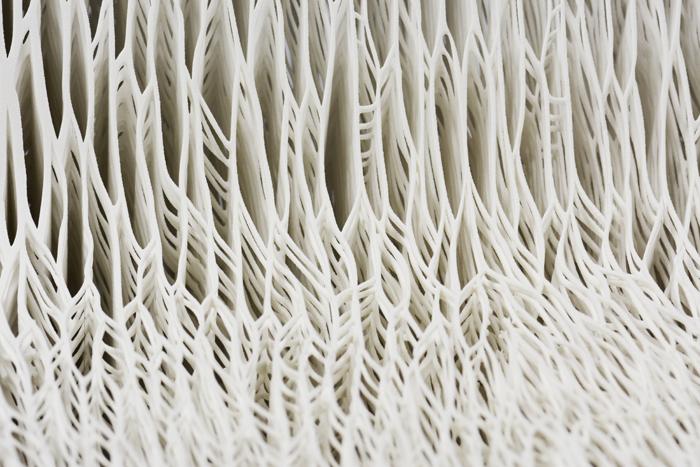
Soft, nature-friendly, 3D printed seat
Source: https://lilianvandaal.com
“A lot of materials are used in normal furniture production, including several types of foam, and it’s very difficult to recycle because everything is glued together,” says Van Daal.
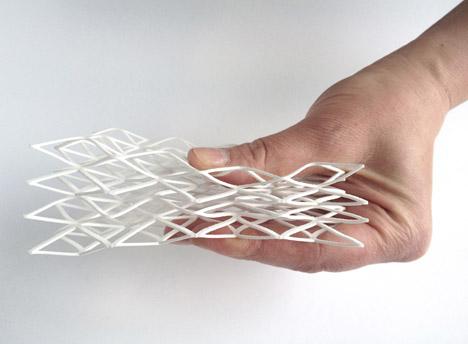
BIOMIMICRY: 3D PRINTED SOFT SEAT (2014): a closer look at the material Source: https://www.dezeen.com
“I was testing the flexibility and the stiffness you can get from one material by 3D-printing various structures,” she adds. “I did lots of experiments with different structures to identify the kind of properties each structure has.”
What she discovered was an intricate way of enabling some sections of the structures to be soft and others to be rigid, resulting in the use of reduced density material for flexible seating areas and upped amounts of material where greater structural strength was required. In other words, a comfy yet sturdy, yet pretty fabulous looking chair was created, that many of us would enjoy using, unlike some of the other 3D printed furniture we have profiled in the past.
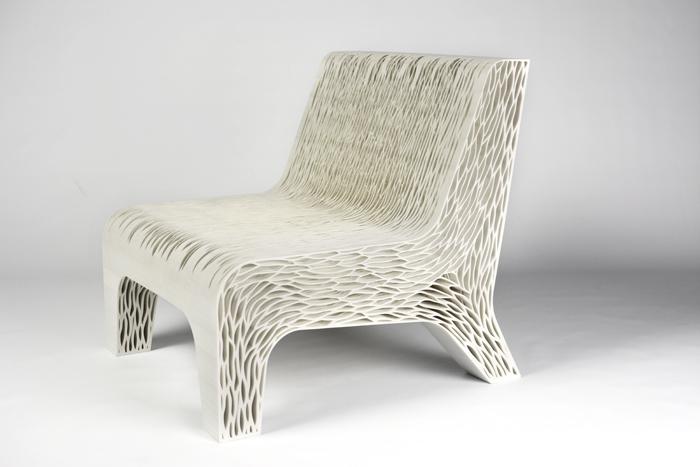
Break, anyone?
Source: www.dezeen.com
“When you adjust the structure a little bit you immediately get a different function,” says the designer, who created the chair as a graduation project from The Hague’s Royal Academy of Art. “In the strong parts I used as little material as possible but enough to still have the good stiffness.”
The chair’s unique shape was modeled manually using 3D computer modeling software – a process which Van Daal plans to upgrade to more sophisticated optimization and stress analysis software, ensuring that the forms she creates distribute material in the most efficient manner.
For now, she has produced a series of prototype structures printed from polyamide, but says that she is in the process of researching the potential use of biological materials that would be more sustainable. Switching to this option means the entire production would be tied to one place, consequently reducing emissions from transportation required to move materials and products around during the production process. It looks like the environment may be another fan of this chair – the topic Van Daal is sure to touch on during her current talks with leading furniture brands, regarding further project development.
Could 3D printing finally have reached a point where it is feasible to print furniture for everyday use? Let’s hear your thoughts in the 3D printed chair forum thread on 3DPB.com.
Subscribe to Our Email Newsletter
Stay up-to-date on all the latest news from the 3D printing industry and receive information and offers from third party vendors.
Print Services
Upload your 3D Models and get them printed quickly and efficiently.













You May Also Like
50,000 Orders and Counting: EPlus3D & Chinese AM Services Provider Are Scaling Liquid Cooling Solutions for AI Servers
An under-appreciated story driving the additive manufacturing (AM) industry this year has been the divergence between what’s driving the market in China and what’s driving it everywhere else. Let’s start...
Additive Manufacturing Has a Major Growth Opportunity; Trust Will Decide Who Captures It
After years of overpromising, the next phase of AM growth will be won by companies that consistently deliver what they say. When I entered additive manufacturing in 2014, after 15...
Seven Trends Reveal What’s Next for 3D Printing at TCT Shenzhen 2026
TCT Shenzhen 2026 opened on October 14 in Hall 15 of the Shenzhen World Exhibition & Convention Center in Bao’an, and ran through October 16. The event brought together equipment...
AM Investment Strategies 2026 Sets the Stage for AMS 2027
AM Investment Strategies 2026 Nov. 5 · 12 p.m. ET · Free online event RESERVE YOUR SPOT ↗ A one-hour online discussion featuring some of the biggest names in 3D...