Paralyzed Kitten Gets a 3D Printed Wheelchair Courtesy of Hacker Collective SubProto


[Image: wpde.com]
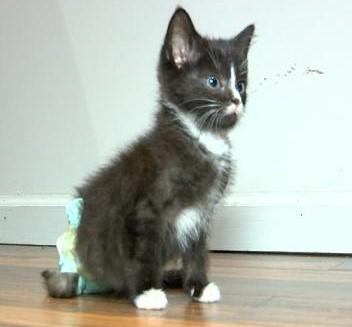
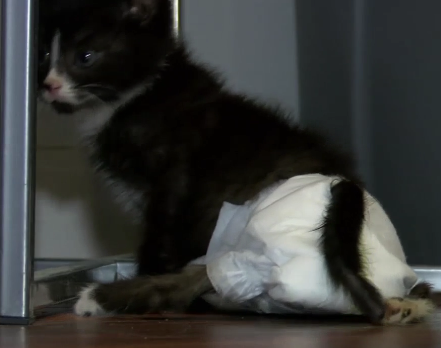
Tiny Tim was only about a week old when he and his siblings were rescued from the euthanasia list at the Horry County Animal Care Center in South Carolina. An organization called Friends of Horry County Animal Care Center was started in 2012 as a backup to the animal shelter, taking pets bound for euthanasia and finding permanent or foster homes for them. Not long after Tiny Tim and his litter were rescued, it was discovered that the kitten’s back legs were paralyzed. Tiny Tim doesn’t seem too bothered; using his front legs, he’s able to shoot around the floor so fast that his human friends can hardly keep up with him. Dragging his back legs behind him, however, will inevitably cause problems.
“Now that he is growing, his legs are tending to stay a little bit irritated too,” said Cathy Salmons, a volunteer with Friends of HCACC. “It’d be like dragging your own feet along, you know…So they knew from the beginning that he would need a little wheelchair.”
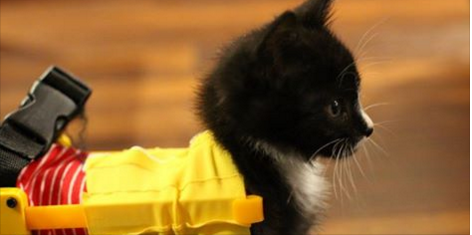
In stepped SubProto. The Myrtle Beach organization describes itself as “a social club for makers, hackers, and anyone with a passion for building and hacking software and hardware.” When they heard about Tiny Tim, they wanted to help him. According to Joe Stewart, SubProto’s founder, there are plenty of wheelchairs for pets that can be purchased online, but nothing small enough to fit a tiny kitten. So the group offered to make one for Tiny Tim.
“We’re from the internet – we’re all about the cats, right?” said Stewart. “We said yes we’re going to do it, bring him in, and we’ll start taking the measurements and we’ll start doing the design.”
[Image: SubProto]
“All we have to do is go back to the CAD program, scale it up to match his new size, and then we can print out a new prototype or we can just go straight to the laser cutter and print out a new template, take that plastic out, heat bend it, and we’ve got a new, finished product basically within an hour,” he said.
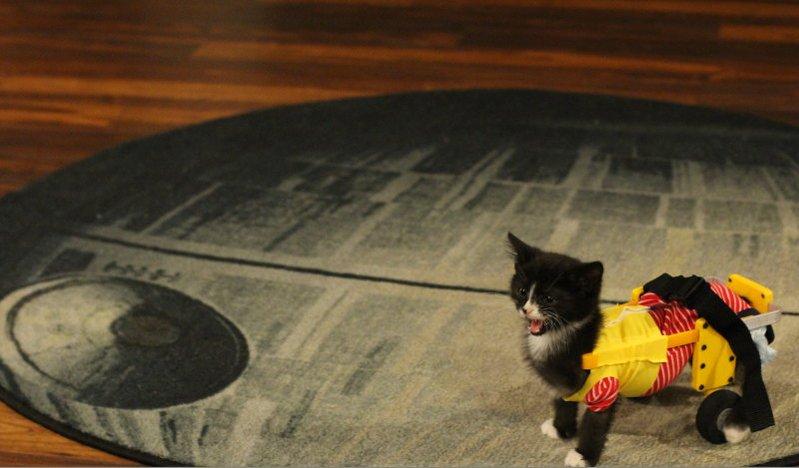
Tiny Tim is even ready to take on the Death Star. [Image: SubProto]
Subscribe to Our Email Newsletter
Stay up-to-date on all the latest news from the 3D printing industry and receive information and offers from third party vendors.
Print Services
Upload your 3D Models and get them printed quickly and efficiently.













You May Also Like
Creality K3 Opens for Pre-Order at $849, Advancing Multi-Color 3D Printing
Creality has officially opened pre-orders for the Creality K3, its latest flagship K Series 3D printer, starting at $849 in the United States. Recognized as an IFA Innovation Awards 2026...
Prusa Core One L+: A Worthy Upgrade?
Disclosure: The Core One L+ was provided to me by Prusa3d free of charge for the purpose of this review. I have not received any other compensation. All opinions expressed...
Prusa Upgrades Its Lineup with CORE One+ (Gen 2), CORE One L+, and XL+
Prusa Research has updated its high-end desktop 3D printer lineup. The company is offering new and improved versions of the machines it targets at industrial and power users, with the...
Zaha Hadid Architects Print 6M Model with WASP’s Robotic Arm Solutions
Zaha Hadid Architects (ZHA) have successfully used WASP 3D printers to make a 6-meter-tall model of an aircraft control tower. Zaha Hadid Architects’ Tech Lab made the tower in-house for the ZHAviation...