Jay Leno’s Garage Sees More 3D Printing, Repairing Handmade Car Thanks to 3DS’ Geomagic Design X & Quickparts

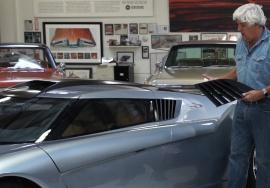 Jay Leno is obviously a big fan of 3D printing, especially when it concerns cars. Just yesterday we wrote about Leno’s feature on the Strati, the world’s first 3D printed car, as part of his show Jay Leno’s Garage. That was not, though, Leno’s only 3D printing feature. He has used 3D printed parts to repair many of his cars, and in his latest episode, he enlisted the help of 3D Systems to repair a 650 horsepower EcoJet concept car that he built himself.
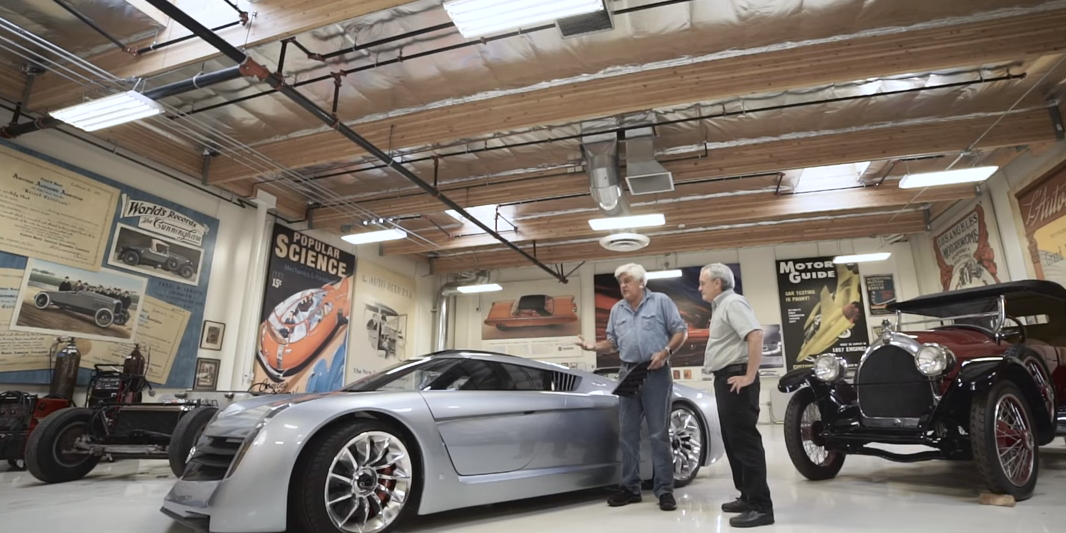
Leno built the EcoJet, which is powered by biodiesel and jet fuel, in 2009. Recently, a problem arose: while the car was being removed from the workshop, its delicate vents, which enable sufficient airflow to reach the jet engine, broke. Unfortunately, Leno, along with the mechanics and engineers who had worked on the car’s design, did not have access to the original CAD file that had been used, so replacing the custom-made vents was going to be difficult. 3D Systems, however, knew how to help.
First, Leno’s team laser scanned the broken parts, and then used 3D Systems’ Geomagic Design X reverse engineering software to convert the 3D scan data from the broken vents to CAD models, which could then be edited and digitally reconstructed. The digital rebuilding took less than half an hour, whereas a hand-modeled reconstruction could have taken weeks.
 The files were then sent to Quickparts, a service provided by 3D Systems that manufactures parts on demand. Quickparts printed the new vents using SLS technology, and was able to make them better than before, significantly improving their strength-to-weight ratio.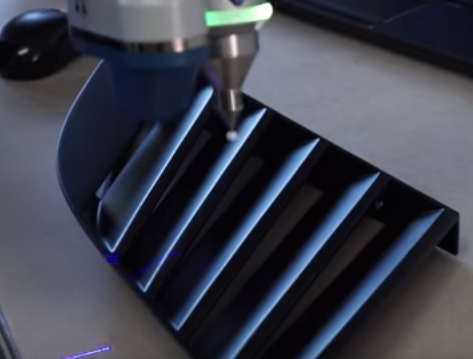
“It’s huge,” said Leno’s chief engineer, Jim Hall, on the technology. “Otherwise, I would have to go over to the machine shop, I’d have to take metal, I’d have to try to shape metal, and then fit it into this thing, and it would probably take me weeks to do that. This ability to turn things around quickly and go from a test part to a hard part that we can use on the part is just incredible. It’s life-changing for us, and we really need it around here, because we’ve got a lot of cars that we’ve got to take care of.”
Leno agrees. He has been using 3D scanning and printing for years to repair and replace parts that are no longer manufactured or were custom made for certain vehicles. He described the recent 3D printing-aided repair of his car as “magic,” and believes the technology is the future of manufacturing.
“It is amazing, how we just take 3D scans and come back with end-use parts that fit perfectly,” he said. “With 3D printing, the automotive industry has changed more in the last decade than it previously did in the last century.”
Have you watched this episode? Let us know your thoughts in the Jay Leno’s Garage forum on 3DPB.com.
Subscribe to Our Email Newsletter
Stay up-to-date on all the latest news from the 3D printing industry and receive information and offers from third party vendors.
Print Services
Upload your 3D Models and get them printed quickly and efficiently.













You May Also Like
3D Printing News Briefs, August 22, 2026: Polymers for CubeSats, Animal Mobility Devices, & More
We’re starting with defense news in this weekend’s 3D Printing News Briefs, before moving on to polymers for CubeSats and 3D printed prosthetics. We’ll end with a story about engineering...
Pusan National University & ORNL Develop Elastomeric Liquid Crystal Actuators
Researchers from Korea’s Pusan National University and Oak Ridge National Laboratory (ORNL) have developed 3D printed elastomeric actuators. In a paper published in Nature, the team used elastomeric liquid crystal...
Scientists Use BMF to 3D Print Seal Whiskers That Track Prey Long After It’s Gone
Seals use their whiskers to hunt. Not Navy Seals, although they may in some way also, but this article is about lowercase seals. Not Seal the musician either; as far...
Harvard’s Jennifer Lewis Lab Is 3D Printing Artificial Muscles That Twist and Bend on Demand
Researchers at Harvard John A. Paulson School of Engineering and Applied Sciences (SEAS) have developed a new way to 3D print materials that can move on their own, bending, twisting,...