
3D Printed GoLapse Timelapse Trolley Makes Videography Easier

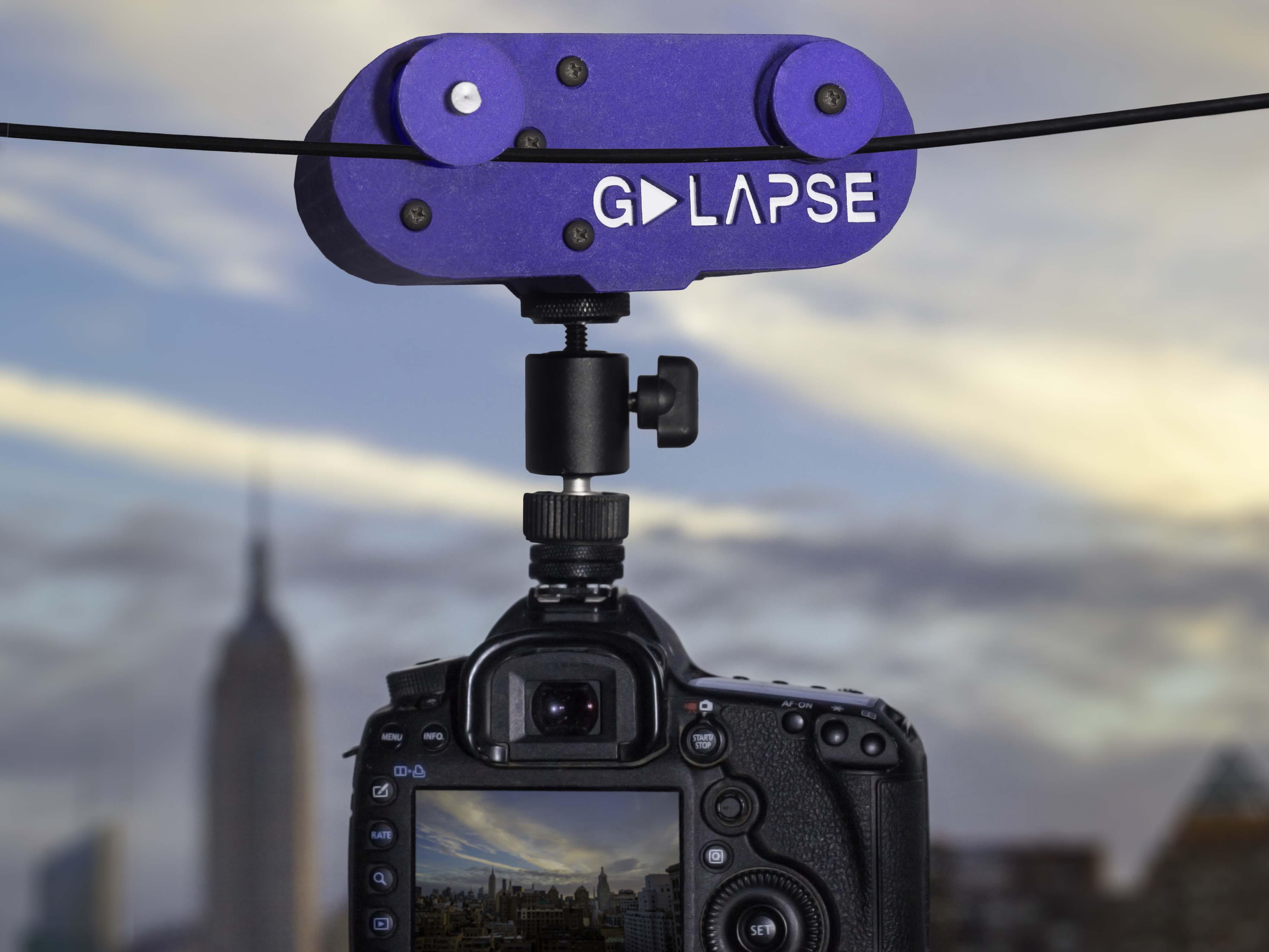 NYU student Joe Fabiani makes time lapse videos in his spare time, a pastime he began indulging in five years ago. He discovered fairly quickly that his chosen hobby was not an inexpensive one, so the creative young student combined ingenuity and 3D designing and printing know-how and came up with a solution to a problem he had encountered in the process of making his videos. Fabiani wanted to shoot time lapse videos with a moving camera but moving his video camera smoothly from one place to another was challenging.
Rather than using a static camera, Fabiani prefers making motion or moving time lapse videos and, when investigating the cost of systems that would enable him to work dynamically, he discovered that what was out there — complicated rail systems that hold cameras and move them along a particular trajectory — was pretty expensive. He couldn’t afford to spend thousands to get his camera moving, so Fabiani decided to design his own system that would be just as efficient but also affordable.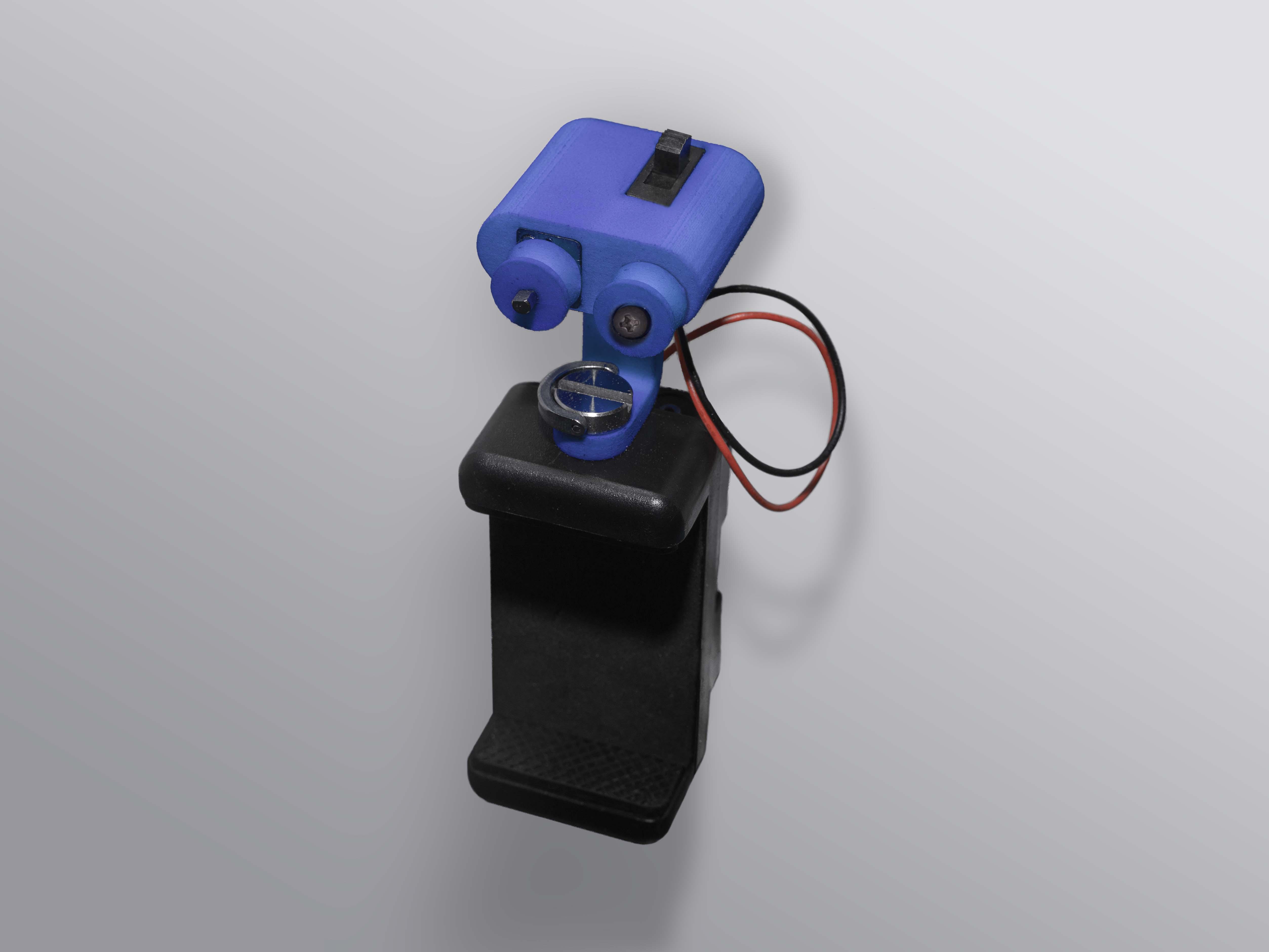
GoLapse was the result of Fabiani’s endeavor, an affordable and pretty ingenious solution to moving a camera from place to place.
“GoLapse is a project designed to allow people to make moving time lapses easily and affordably,” Fabiani described. “It is a timelapse system that allows the camera to act as a trolley, so it lets photographers do away with heavy, cumbersome rails and lets them focus on getting a good shot at a fraction of the price.”
GoLapse is impressively basic but why make something more complicated than it needs to be? With Fabiani’s system, you “string a cord between two trees” or other supports and then you start shooting. The pocket-size gadget clamps onto your GoPro, your point-and-shoot camera, or your smartphone and then onto the cord and you’re ready to go. Fabiani designed the GoLapse so that a “slider on the bottom” accommodates even heavier cameras and lenses.
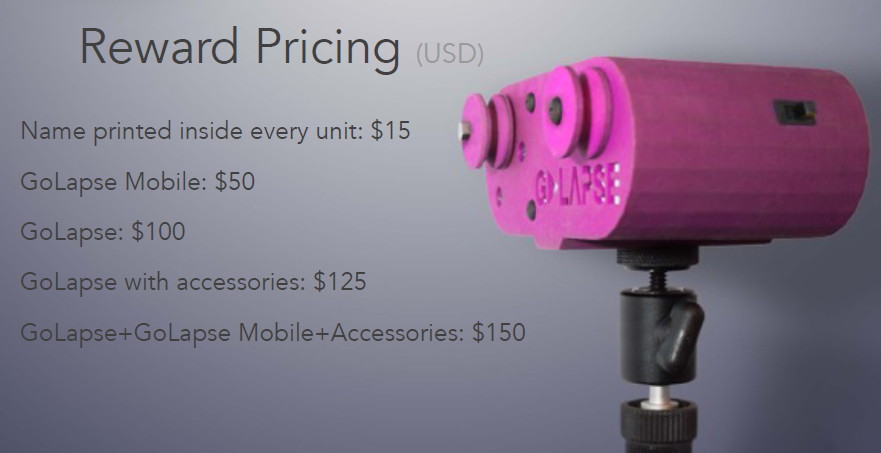 Fabiani originally intended to design the device only for himself, but, he says, “now it has the potential to be so much more than that.” As he developed and refined the GoLapse, he realized that he was definitely onto something. That’s when he decided to try to raise some money to move the project along, putting the GoLapse on Kickstarter. He’s providing various offers to supporters, including the opportunity to download the .stl files and print the body of the GoLapse at home on their own 3D printers. There’s an additional electronics kit that DIYers can get if they print on their own.
Fabiani could use the support for his GoLapse project and is willing to reward supporters with everything from recognition to the device plus the necessary cord. See his Kickstarter site for specifics about rewards for various levels of support. The campaign, seeking to raise $6,000 (and already more than one-third of the way to that goal), runs through January 7th. Discuss this design in the 3D Printed GoLapse Trolly forum on 3DPB.com.
Podcast: Play in new window | Download
Subscribe to Our Email Newsletter
Stay up-to-date on all the latest news from the 3D printing industry and receive information and offers from third party vendors.
Print Services
Upload your 3D Models and get them printed quickly and efficiently.













You May Also Like
10 Years of Multi Jet Fusion: Onsite at HP’s Vancouver, Washington Facility
At this year’s RAPID event in Boston, HP Additive Manufacturing Solutions celebrated ten years in the additive manufacturing (AM) market. The company ushered in the milestone with several innovations, including...
These 3D Printed Lattices Can Sense Damage Before Failure
A new paper, “Full-Field Damage Monitoring in Architected Lattices Using In situ Electrical Impedance Tomography,” points to lattices being able to detect damage. This could really help composites in critical...
3D Printing News Briefs, October 3, 2026: Hypersonics, Hotends, & More
We’re starting off with defense in this weekend’s 3D Printing News Briefs, as Titomic was awarded a $5 million U.S. defense contract, and VulcanForms announced a partnership with Specter Aerospace...
3D Printing News Briefs, October 1, 2026: Defense, Enclosures, & More
In today’s 3D Printing News Briefs, we’re starting with defense news, first from Massivit and then from AML3D. Then we’ll move on to U.S. manufacturing of a new large-format LPBF...

























































