
3D Printed Assistive Technology Gets Boost from UC Berkeley Designathon

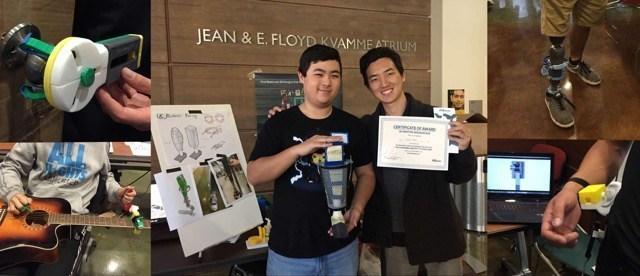
Awarded works at 3D Printing Designathon (PRNewsFoto/Shapetizer Internet Technology)
If you haven’t heard the phrase “assistive technology,” it’s a term referring to any technology-driven devices designed to assist people facing mental or physical challenges. In our swirling world of 3D printed plastic knick-knacks and doo-dads that sit idly on shelves, the intersection of 3D printing with the design of assistive devices is humbling indeed. We have seen more Maker 3D printing events focusing on assistive devices, and on November 14-15, 2015, UC Berkeley held a 3D Printing Designathon for assistive technology as well.
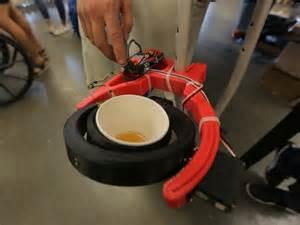
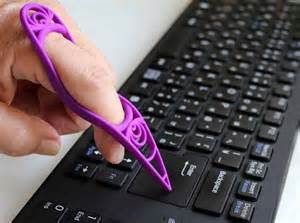 3D printed assistive technology is becoming more of a focus for designers and engineers, as they see the overwhelming need for innovative assistive devices, and the amazing transformation that can occur to people’s daily lives from relatively easy-to-make devices. For example, 3D printing heavyweight MakerBot just ended an Assistive Technology Challenge on Thingiverse November 1. Just to give an idea of the types of devices we are talking about when we talk about conjoining assistive technology and 3D printing, inventions can include things as simple as a pill crusher that doesn’t waste medication or a grabber that moves objects with the mouth. If you attach a cup holder to a crutch, it makes that person’s life a whole lot easier. Then there are the more complicated inventions, like a wheelchair seat with sensors that can shift a person’s weight so they don’t have pain or develop ulcers or sores (life-saving stuff, truly).
So it’s great to hear that more universities are throwing resources toward the further development of assistive devices. The UC Berkeley Designathon was hosted by several engineering and design organizations including the 3D Modeling Club, EnableTech, Shapetizer, and the Biomedical Engineering Society. Held at the school’s Sutardja Dai Hall, the event commemorated the 25th anniversary of the Americans with Disabilities Act (ADA). This groundbreaking legislation set the optimal path for public, health, and infrastructure service improvements aimed at improving the lives of people with disabilities. (Now, this doesn’t mean that all aspects of the legislation have been honored by public and private entities, but the legislation is still very important to commemorate, as it establishes disability as a civil rights issue.) What better way to commemorate the ADA than to show how new technology can help realize the ADA’s original vision of total access for all?
Twenty-seven teams participated in the Designathon, double the number that participated in UC Berkeley’s first Designathon earlier this year. and by 10:00 AM on the second morning, prototypes were presented at the 3D Printing Designathon showcase. Northrop Grumman, Pocketme, Eucl3D, Autodesk, Shapetizer, and you3Dit all supplied judges for the event, and prizes like 3D printers, full scans and prints, and cash prizes were awarded to winning groups. You can read a list of all the participating and winning groups here.
It is important for research institutions to galvanize resources to aid much needed social issues, like disability access, and the Designathon is just one more example of how 3D printed assistive technology is being embraced by people as an essential focus. Discuss this story in the 3D Printed Assitive Tech forum thread on 3DPB.com.
Subscribe to Our Email Newsletter
Stay up-to-date on all the latest news from the 3D printing industry and receive information and offers from third party vendors.
Print Services
Upload your 3D Models and get them printed quickly and efficiently.













You May Also Like
Foundation Alloy Raises $22M in Series A for Solid State Molybdenum
Foundation Alloy has just raised $22 million in Series A financing. The alloy company is trying to create a platform that will enable the solid state manufacturing of alloys. In...
Aerospace Giant IHI Bets on Freemelt E-Beam 3D Printing for Next-Gen Turbine Alloys
IHI Europe has purchased a Freemelt electron-beam powder-bed fusion (E-PBF) system. Previously, parent IHI bought two Freemelt systems, bringing the total to three. IHI is a Japanese engineering conglomerate. The...
Goldilocks’ Flywheel: Refractory Complex Concentrated Alloys (RCCAs) & The Race for the Future
Recently, Metalysis, Skyrora, and Thermo-Calc Solutions started to try to commercialize Tanbium. This alloy has been created for use in combustion chambers and rocket nozzles. Tanbium is a Refractory Complex...
3DPOD 236: AM Materials Science & Applications with Nick Sonnentag, Sunnyday Technologies & Oshkosh Corporation
Nick Sonnentag is a Senior Principal Engineer at Oshkosh, where he contributes to the development of some of the world’s toughest vehicles using additive manufacturing (AM). Drawing on experience from...























































