Canadian Mom Uses 3D Printing to Sweeten a Bitter Pill


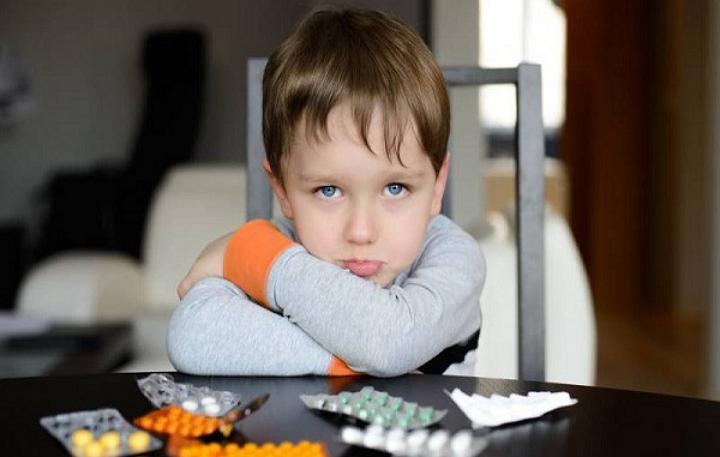 The cause of Crohn’s disease is unknown, and as a result, there are no curative treatments available to end the disease. There are, however, several drug treatments which are effective in inducing remission and delaying flare-ups, but those treatment regimens require a course of immunomodulatory drugs taken orally.
And as we all know, pills don’t always taste particularly pleasant.
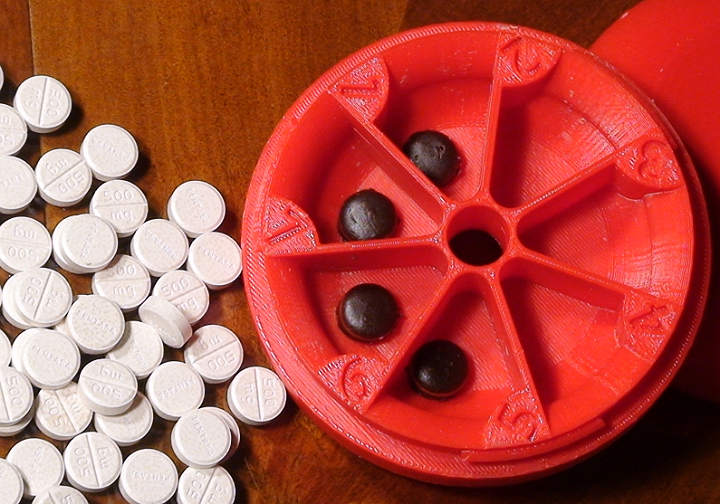
That’s why one mother wanted to help ease her son’s suffering from Crohn’s Disease, and to make taking those pills considerably more tasty by inventing a ‘Pill Coater‘ and using 3D printing to build a prototype. She also plans to raise funds to put the coater into production via a Kickstarter campaign.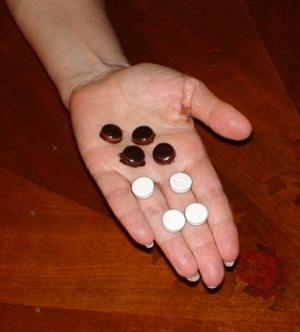
Canadian mom Dalia Katzeff has lived on three continents, worked in a variety of industries, and published a book and now manages a technology company with her husband and a group of others. She’s also a mother of three, and of all her experiences, she says the hardest is dealing with “the helplessness that has been consuming my motherly heart ever since my son was diagnosed with a chronic disease.”
Katzeff says she was initially “broken” by the news that her eleven-year-old son was diagnosed with Crohn’s disease. As a result, he needed to take a lot of medication, and he had a hard time swallowing that many pills without discomfort, so she began looking for ways to “sweeten the pill” for him.
In that way kids have, Katzeff says her son suggested covering the medication with chocolate. After she checked out that practice with a pharmacist and found out it would have no effect on the medications, she uses her invention to cover his daily dose of medication in chocolate a day ahead, and not surprisingly, he swallowed them like they were candies.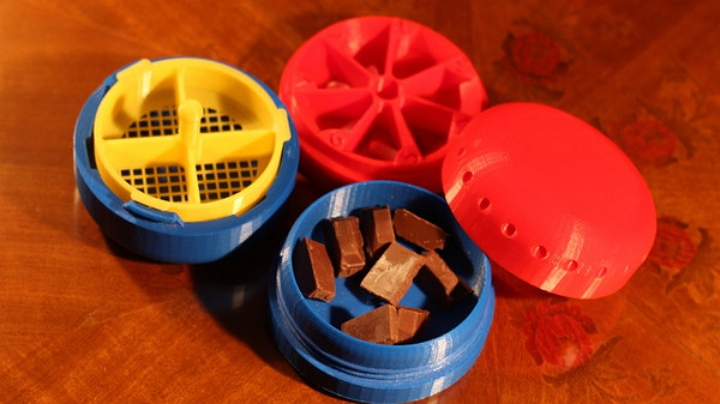 That inspired her to invent a product that she named the “Pill Coater” to easily and safely cover the medication in chocolate at home.
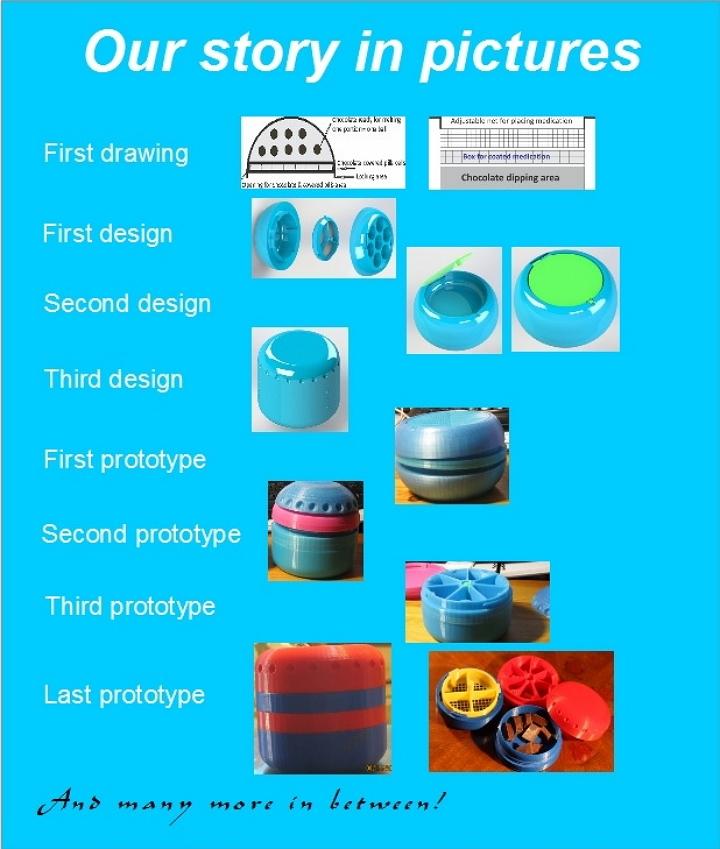
Katzeff decided to use 3D printing to build a prototype of the coater, and she paid a visit to MatterThings, a 3D print shop, to make it happen.
After going through a number of design iterations and prototype prints on a MakerBot Replicator 1 & 2, the team settled on using polypropylene, as it’s food-, microwave- and dishwasher-safe.
You can check out the Pill Coater on Kickstarter here–where she hopes to raise $50,000 CAD (about $38,000 USD), and you can receive or donate a Pill Coater or two or more as a backer–and you can see more about the project on the Pill Coater Facebook page here.
What do you think of the Pill Coater? Will you be supporting the campaign on Kickstarter? Let us know in the Pill Coater forum thread on 3DPB.com. Check out the Kickstarter video and a closer look at the Pill Coater below:
Subscribe to Our Email Newsletter
Stay up-to-date on all the latest news from the 3D printing industry and receive information and offers from third party vendors.
Print Services
Upload your 3D Models and get them printed quickly and efficiently.












You May Also Like
Excellent Desktop Injection Molding, Made in Italy by Robot Factory
I was captivated when I saw my first Robot Factory 3D printer. The robust, precise machine was built to last. And this was in an era of very flimsy, disposable,...
Pogačar & Fairlight Cycles Show Us Low Cost 3D Printed Components for Bikes
There has been a lot going on in 3D printing for bicycles over the years. The most successful implementation so far is in bicycle seats. Carbon 3D printed seats are...
3D Printing News Briefs, June 18, 2026: Reseller, Relocation, Metal Space Powder, & More
We’ll start with business news in today’s 3D Printing News Briefs, as XJet appointed a value-added reseller in Germany, BIO INX is expanding its presence in the Italian market, and...
Researchers Combine AI and Bioprinting to Create Tiny Blood Vessel Networks
If 2026 has a theme in bioprinting, it may be blood vessels. Researchers can already print incredibly sophisticated tissues. The harder part is keeping those tissues alive. Without a network...