Norsk Appoints Boley to Lead First US Industrial-Scale 3D Print Facility

 Hønefoss, Norway based company Norsk Titanium AS (NTi) announced Sunday that it has appointed former Aerojet President, Mr. Warren Boley, Jr. to the Board of Directors in concert with Norsk’s plans to spearhead the first industrial-scale 3D printing facility in the United States.
John Andersen, Jr., Executive Chairmen of Norsk Titanium referenced the experience of NTi’s new leadership in a statement:
“Warren [Boley] has a wealth of experience in aerospace and defense. His client-focus and drive for growth are uniquely suited to support NTi’s expansion in the United States.”
Mr. Boley has led additive manufacturing operations for the aerospace industry in past engagements. At Aerojet, he’s led $1B in operations in manufacturing of propulsion devices. Aerojet used 3D printed technology to fabricate rocket engines in just three parts: the entire injector and dome assembly; the combustion chamber; and a throat and nozzle section.
NTi’s state-of-the-art 3D printing facility is funded as a part of a private-public partnership, and it will cover a 200,000-square-foot factory area. According to Mr. Boley, the number and scale of 3D printers in the facility will continue to increase. Norsk uses Direct Metal Deposition (DMD) technology to produce high quality Titanium parts for industrial and aerospace industries.
The company announced in July that RTI International Metals, Inc. (NYSE: RTI), a supplier of titanium and specialty metals, has become an investor and partner. Direct Metal Deposition (DMD) is Norsk’s patented process.
Norsk has plans to work with other companies to develop parts for the aerospace industry as well, and NTi is talking with Lockheed Martin Corp about building components for the F-35 fighter jet.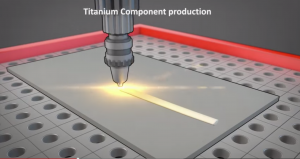
3Dprint.com’s Michelle Matisons discusses the DMD process and RTI partnership in her post earlier this month. Proponents of 3D printing, or additive manufacturing, say it can cut the cost of titanium aircraft parts, which ordinarily cost seven times more than their aluminum counterparts. The process conserves more titanium and produces parts cheaper and in less time than traditional methods.
Mr. Boley said the following about the new technology and NTi’s manufacturing plans:
“We’re going to make history…this is part of the next industrial revolution. The project involved hundreds of millions of dollars of investment over the past seven to eight years. Its goal is to build large-scale components for commercial aircraft. To be part of the commercial introduction of a game changing technology that will drive affordability and speed of production in components for the commercial aerospace and defense sectors is an honor.”
Norsk expects the U.S. Federal Aviation Administration (FAA) to certify the direct metal deposition process this year, leaving the individual parts to be approved by aircraft manufacturers. Mr. Boley says orders will be ready for launch by the first quarter of 2016.
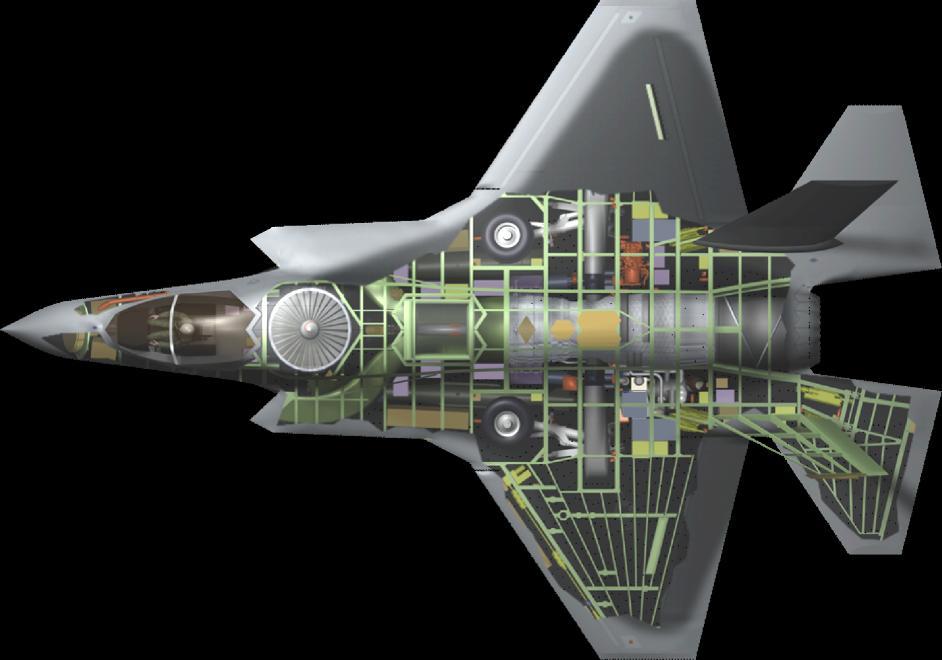
F-35B Cutaway Diagram with Liftfan. Norsk is Collaborating with Lockheed Martin to 3D Print Titanium Parts
Subscribe to Our Email Newsletter
Stay up-to-date on all the latest news from the 3D printing industry and receive information and offers from third party vendors.
Print Services
Upload your 3D Models and get them printed quickly and efficiently.











You May Also Like
Goldilocks’ Flywheel: Refractory Complex Concentrated Alloys (RCCAs) & The Race for the Future
Recently, Metalysis, Skyrora, and Thermo-Calc Solutions started to try to commercialize Tanbium. This alloy has been created for use in combustion chambers and rocket nozzles. Tanbium is a Refractory Complex...
QuesTek’s Space Bet: New Alloys Built for 3D Printing, Not for the Old Rules
If you ask most people what’s holding back 3D printing in aerospace, they usually think the answer is better hardware; mainly faster machines, bigger build chambers, and tighter process control....
Japanese Aerospace Leader Invests in 3DEO and Its Metal 3D Printing Tech
Los Angeles-based metal 3D printing startup 3DEO has announced a key investment from IHI Aerospace Co., Ltd. (IA), a subsidiary of Japanese manufacturing leader IHI. This collaboration marks a significant...
3D Printed Electrodes Could Make Lithium Batteries Cheaper
Now that additive manufacturing (AM) is being applied to an increasing number of energy applications, the technology has truly begun demonstrating the potential for revolutionizing the efficiency of power generation....