These 3D Printed Electronic Headphones are the Next Wave in Manufacturing

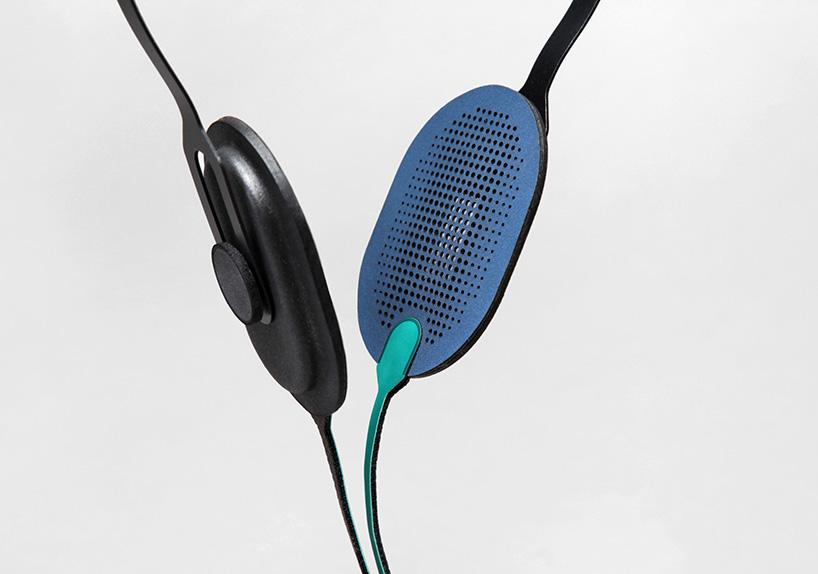
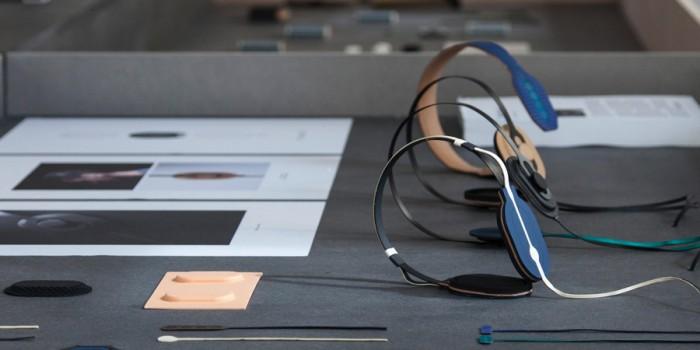 These headphones designed by Maxime Loiseau are much more than simply an aesthetic statement, they’re constructed with a printed electronics manufacturing technology which obviates the need for separate wiring and injection molding processes.
Building Loiseau’s headphones uses what’s called roll to roll manufacturing, and the process means they’re very thin and require just eight parts – rather than the standard 40-50 pieces – to make a complete pair of headphones.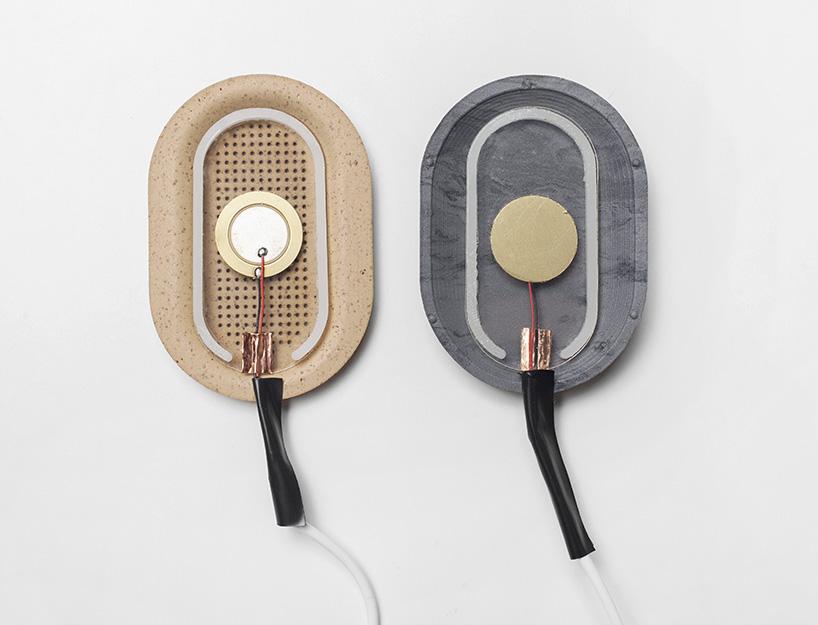
The use of printed electronics means a single wire connected to each as the necessary hardware is printed in the material itself. The process also allows the headphones to be just 1mm thick, and the speaker itself is a set of piezoelectric cells which are capable of outputting audio equal to the quality of conventional headphones.
Powered by Bluetooth and a lithium-ion battery, the battery was itself printed into the design.
A prototype of the headphones was unveiled at Wanted Design as part of the ENSCI- Diplorama+ exhibition during New York Design Week 2015, and Loiseau says he plans to make improvements to the overall design prior to production.
The exhibition was meant to “spark a dialogue between technology and aesthetics, make sophistication familiar, reveal technology in a bid to better domesticate it and to generate new practices,” and the designs, eight student projects in all, were supported by the Cultural Services of the French Embassy.
“The purpose here is to offer a reflection about producing electronic devices in a smarter way. The more materials are advanced, the more they are paradoxically easy to work,” Loiseau says. “Through one production process, we can then use less process, less material, energy and pieces. At the same time, I tried to use the possibilities of the process to create an aesthetic result from it…with no superfluous parts.”
 Loiseau’s miniaturized audio device method results in a streamlined product, and by using the inner construction as a design feature, the patterns of the printed circuitry become aesthetic elements of the look and feel.
Another feature of the design is using “welded” plastics and metals as junctions to form part of the graphic composition of the overall product.
The headphones are built in a single production line, no injection molding necessary, and though it “doesn’t change the way we will use headphones,” the designer does say that the purpose is to consider ways in which electronic devices can be produced “in a smarter way.”
What do you think of these streamlined, lightweight headphones that use 3D printed electronics and a roll-to-roll production method to create? You can let us know in the Streamlined 3D Printed Headphones forum thread on 3DPB.com. Below is a video and more images of the project.

– – –
Maxime Loiseau designed some ultra-thin, ultra-light headphones which are much more than simply an aesthetic statement. The headphones are built with printed electronics manufacturing technology and what’s called roll to roll manufacturing, a process which means they require just eight parts – rather than 40-50 pieces – to make a complete pair of headphones. The process means the audio component, the speaker itself, is a set of piezoelectric cells just 1mm thick which are capable of outputting audio equal to the quality of conventional headphones. You can read the whole story here: https://3dprint.com/77276/printed-electronic-headphones/
Below is a look at the headphones:
https://3dprint.com/wp-content/uploads/2015/06/headphones.jpg
Subscribe to Our Email Newsletter
Stay up-to-date on all the latest news from the 3D printing industry and receive information and offers from third party vendors.
Print Services
Upload your 3D Models and get them printed quickly and efficiently.











You May Also Like
Reuniting ExOne and voxeljet: An Investor’s View on Building a Global Industrial Sand Printing Leader
Authored by Whitney Haring-Smith, Chair of the Board, ExOne Global Holdings & Managing Partner, Anzu Partners At Anzu Partners, we invest with conviction in industrial technologies that create categories—and then...
Adoption of Advanced Powder Metal Manufacturing in the Global Small Arms Space – SHOT Show 2026 Additive Manufacturing Analysis
Back in 2013, I remember being completely blown away when a company called Solid Concepts reportedly additively manufactured nearly a complete firearm as a proof of concept. Although desktop polymer...
AM-Europe, operated by CECIMO: Positioning Additive Manufacturing at the Core of Europe’s Industrial Competitiveness
As European industries face growing pressure to strengthen resilience, reduce supply chain risks, and meet sustainability objectives, additive manufacturing (AM) is emerging as a practical and strategic solution. Closely align...
Five Imperatives for CAD and PDM In The Additive Era
Additive manufacturing has reached an inflection point. Hardware capabilities continue to advance, materials portfolios are expanding rapidly, and automation is reshaping post‑processing and production workflows. Yet many additive programs still...