South Korean Researchers 3D Print Structures Thinner Than a Red Blood Cell

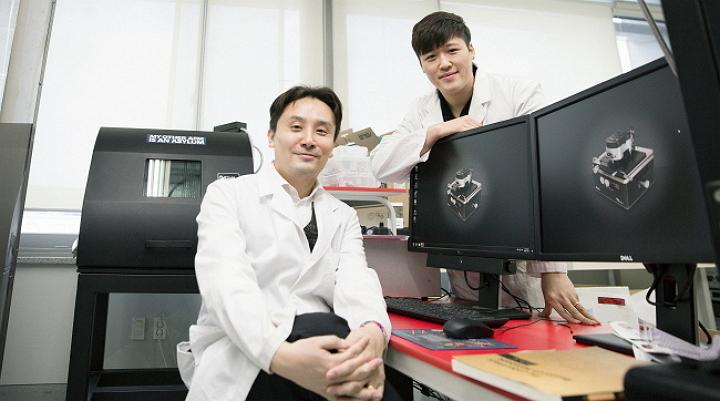
Jang-Ung Park
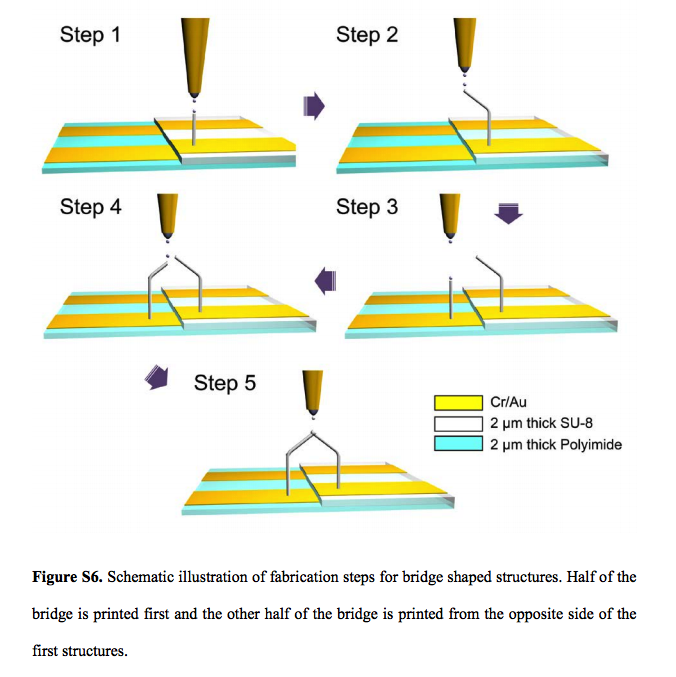
Researchers at the Ulsan National Institute of Science and Technology, led by Jang-Ung Park, a Professor of Material Science and Engineering, have developed a fine-resolution printing technology they call “electrohydrodynamic inkjet printing” capable of creating tiny 3D structures such as helix-like pillars which are thinner than a red blood cell.
At dimensions down to 0.001 mm, this 3D printing technology can work under normal room temperature limits and may result in a process which can be used with a broad range of materials and applications such as electronic circuits for wearable devices.
Park says the technique “will provide a new paradigm in the research field of 3D printing.” The process can produce ultra-fine, 3D patterns currently beyond the realm of other printing processes.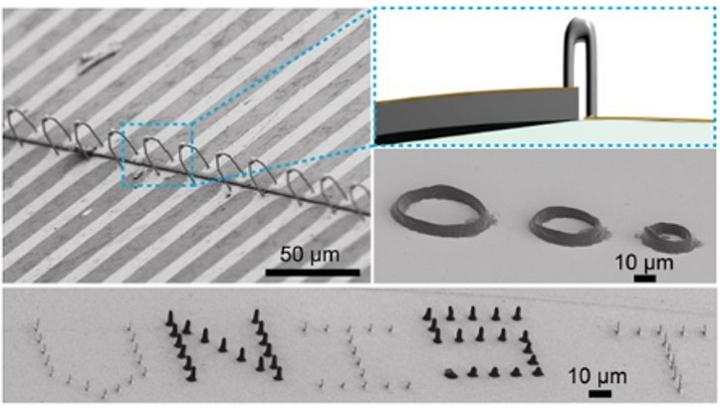
According to Park, the process will have obvious applications in the the electronics industry and allow for the production of 3D electronic circuits of more delicate designs, which have proven difficult to create using existing photolithographic technology. In doing so the industry could drastically reduce costs while miniaturizing components in a variety of applications. In a world where everyone seems to want thinner smartphones, TVs, and laptops, as well as more energy efficient, lighter gadgets, this research could have a major impact across the board.
“The existing ultrafine pattern production methods in semiconductor manufacturing procedure had difficulties in reproducing 3D patterns,” Park says. “But this new technology can realize those in high resolution. We believe the technology has set a new paradigm for research using 3D printing and wearable electronic devices.”
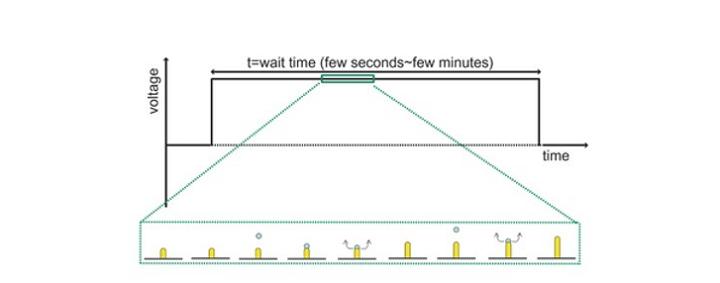 Part of what Park considers the breakthrough is the fact that these ultrafine patterns – thinner than 0.01 mm – have been difficult if not impossible to imprint on metallic or plastic materials. He says the process–as it works at room temperature–is superior, as photolithographic procedures must be done within a high temperature environment.
According to the Korean team, the maximum printing resolution represents an improvement of more than 50 times over the previous levels of object resolution. Park adds that the parameters of the process bring textile, fiber, plastic and even a variety of more exotic materials into the picture as substrates.
The research was published in Advanced Materials, and certainly has me excited as 3D printing may have just found numerous new applications.
Have you read about any other examples where electrohydrodynamic inkjet printing is breaking through boundaries in materials and 3D printing development? Let us know in the 3D Printing Thinner Than a Red Blood Cell forum thread on 3DPB.com.
Subscribe to Our Email Newsletter
Stay up-to-date on all the latest news from the 3D printing industry and receive information and offers from third party vendors.
Print Services
Upload your 3D Models and get them printed quickly and efficiently.











You May Also Like
Next-Gen CAD/CAM Tool Accelerates Development of Innovative AM Electronics Applications
3D-printed electronics is an emerging field that combines additive manufacturing techniques with the integration of electronic components to produce previously unachievable results. It enables the creation of complex, customized electronic...
3D Printing News Briefs: February 19, 2026: Market Data, Africa, Metal Parts for Defense, & More
We’re starting with some business news for you in today’s 3D Printing News Briefs! The Wohlers Report 2026 is now available, Carbon announced its new Chief Technology Officer, and Farsoon...
From “Magic” to Metal: How Intrepid Automation Wants to Make 3D Printing Matter at Scale
Ben Wynne still talks about 3D printing the way people do when they’ve felt that “wow” moment up close. Back in the early 2000s, he was working at HP’s advanced...
From Vision to Volume: The Next Chapter for Additive Manufacturing
Additive manufacturing has spent years navigating skepticism, hype cycles, and industrial validation. Now, the industry finds itself at a decisive turning point. The conversation has shifted away from futuristic possibilities...