Shapeways Teams with Google to Allow Girls to Design and 3D Print Bracelets for Free

 When most people think of computer programmers, they probably picture a bearded young man with nerdy glasses sitting at a desk wearing a ‘Super Mario Brothers’ t-shirt. At least that’s the image I usually see when I try to imagine what the person that created the software I use each and every day, looks like. Unfortunately, and perhaps unfairly, the profession and hobby of programming is not one that many young girls and women have aspirations of aiming towards. Perhaps the reason is, in part, because of this very image which we all have, of who the prototypical programmer should be.
Google, hopes to change this, with a project they have been running, called ‘Made with Code‘. Through various activities, they try to make coding fun for young women, in hopes turning them into the world’s future software engineers. For one of their latest projects, they have teamed with Shapeways, the largest 3D printing marketplace in the world.
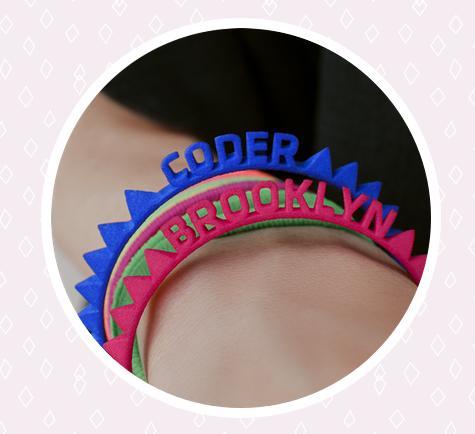
Through the partnership, they are allowing young women (although it doesn’t appear as though they have any upper age limits or limits on sex), to create their own personalized bracelets, using Blockly – a visual programming editor. Once they finish with the design of the bracelet, which can take as little as 2 minutes, there is the option to have it 3D printed and shipped to them, free of charge.
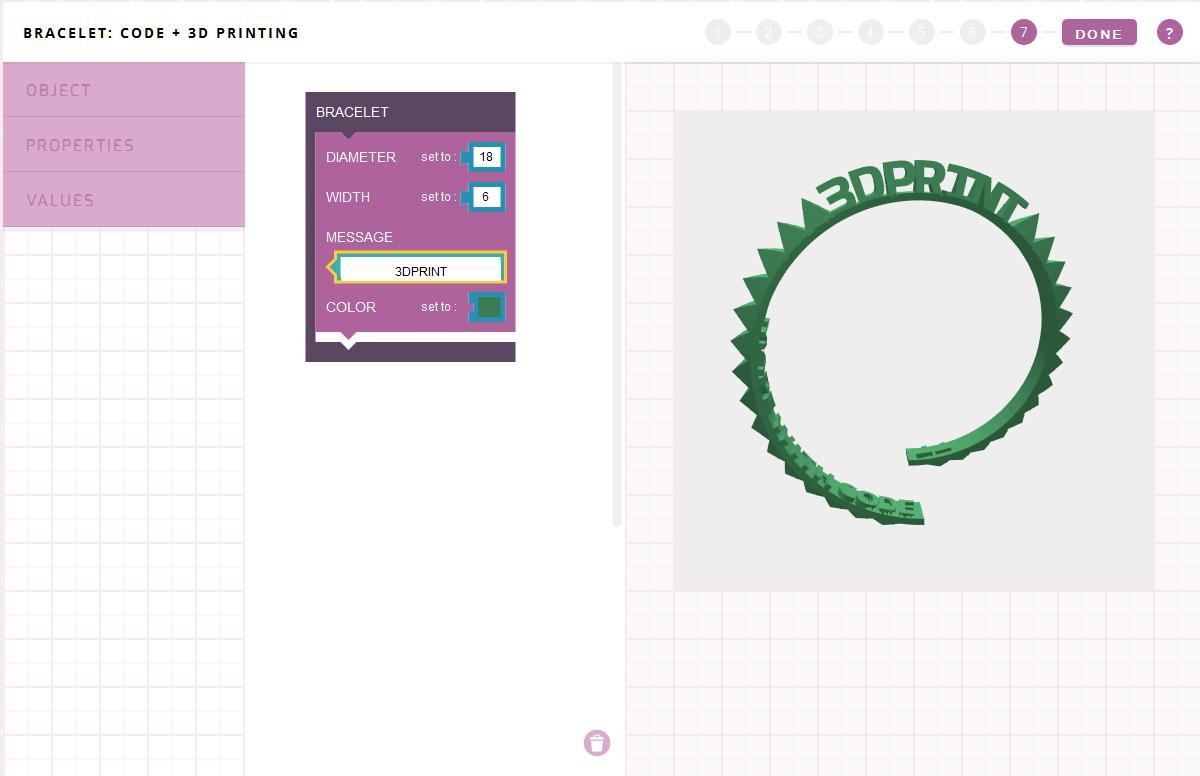
The Made with Code / Blockly interface
“Our goal has always been to give everyone access to the best technology in 3D printing, and we’re now investing in that access for girls — a group that has historically been underrepresented in science and technology,” explained Pete Weijmarshausen, Co-Founder & CEO, Shapeways. “We need more people from all backgrounds to become interested in Science, Technology, Engineering, and Math (STEM). Our society is increasingly powered by science and tech, and diverse thinking will help us solve the hard problems.”
The designing of the bracelet is extremely simplified, and when it comes down to it, really doesn’t utilize much coding at all. However, Google and Shapeways believe that presenting girls with a fun and basic way of using a form of coding to produce results that they want to see, will go a long way in introducing them to a field of technology which is not typically at the top of their list of things to do. “Some of the core coding concepts that are covered in the projects using Blockly include variables, coordinates, statements, strings, and sequence,” explains Google.
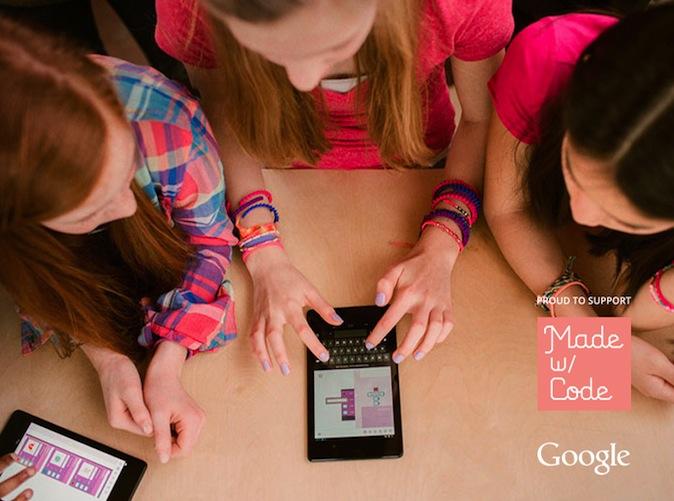
Once the designs for the bracelets have been completed and sent to Shapeways, electronically through the Made with Code website, they will put them into their computer systems and print them out on their massive EOS P7 printers. These printers are able to print out up to 1,000 products in 1 single print run. They utilize selective laser sintering technology, whereas a powder substance is hit with a laser in order to fabricate each design. Check out the video below for more details on this project and how the process works.
Creators of bracelets must be at least 13 years of age to have them 3D printed, due to U.S. laws and regulations.
This partnership between Google and Shapeways just proves how popular 3D printing is becoming, in a society that appears to be ready to fully begin to integrate this technology into our everyday lives.
“We’re thrilled to support the mission of inspiring girls to learn how to code and create, and we’re doubly excited that we can invest in game-changing innovations along the way that will benefit our growing community,” said Weijmarshausen.
Have you made a bracelet using Made With Code? Share your designs in the Free Shapeways Bracelet forum thread on 3DPB.com
Subscribe to Our Email Newsletter
Stay up-to-date on all the latest news from the 3D printing industry and receive information and offers from third party vendors.
Print Services
Upload your 3D Models and get them printed quickly and efficiently.











You May Also Like
A Year in 3D Prints: A Visual Journey Through 2025 in AM
2025 was a year of milestones and experimentation in additive manufacturing (AM), marked not only by technical progress but also by the mergers, acquisitions, and restructurings that reshaped the industry,...
U.S. Congress Holds Hearing on Cutting Healthcare Costs and Points to 3D Printing
A U.S. House subcommittee held a hearing this week on how technology can help lower the rising cost of healthcare for Americans. Lawmakers pointed to 3D printing as a key...
Surgeons Test Fast, Low-Cost 3D Printed Template to Improve Custom Stent-Grafts
A team of vascular surgeons in Medellín, Colombia, has shown that combining AI-assisted imaging with low-cost 3D printing can make it easier and safer to build patient-specific stent grafts. Their...
Campbell’s Exec Fired After “3D Printed Chicken” Claim — But What’s Really Going On?
Campbell’s is dealing with an unusual crisis this week, and somehow 3D printing ended up in the middle of it. It all began when a former employee, Robert Garza, released...