Mark Bern Takes His 2-Dimensional Pixel Art and Prints it in 3D

 When most of us speak of visual art, we usually get a picture of a painting or a sculpture in our heads. Perhaps we visualize Michelangelo’s paintings that cover the ceiling of the Sistine Chapel, or one of the most famous painting of them all, the Mona Lisa, by Leonardo da Vinci. No matter what it is we envision, more than likely it isn’t a piece of 3D printed art work.
While 3D printing has been around for decades, it is now only beginning to become accessible to the masses, and this is leading to us seeing all sort of interesting, unique, and innovative things being brought to life.
For one man, named Mark Bern, he is looking to use the technology for the creation of a unique art form.
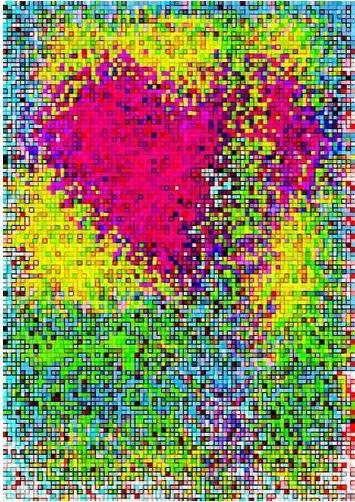
Bern’s 2D Pixel Art
Bern has been investigating various methods of digital image processing for over 20 years now, dating back to his days with a Commodore 64 computer, and he has created many very unique works of pixelated art over the years.
Using several different digital processes, he is able to generate abstract works which resemble photos that have been highly pixelated. All of his art pieces are basically photos that have been edited on the pixel level, leaving quite an interesting finished product.
Hailing from Zurich, Switzerland, Bern has been keeping to himself for the past 20+ years. He hasn’t really be too keen on showing his artwork off to the public, as he does what he does for the simple joy of it. He first began showing his work in 2013. Up until recently, he had been creating 2-dimensional representations of his works. He has since received a lot of coverage from various media outlets that find his work to be something fascinating.
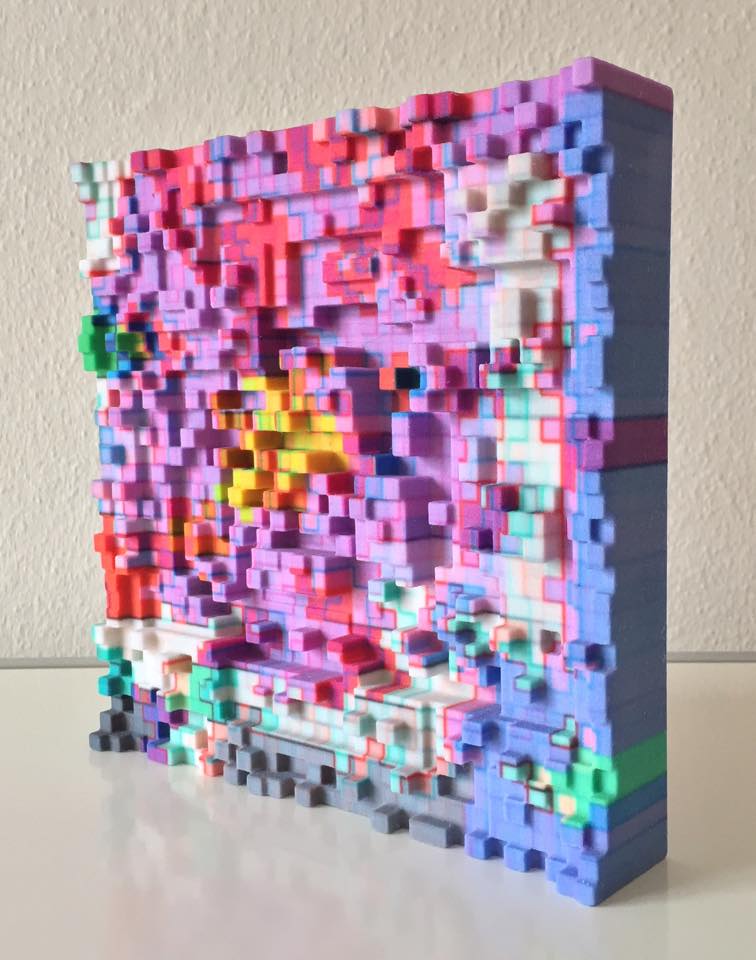
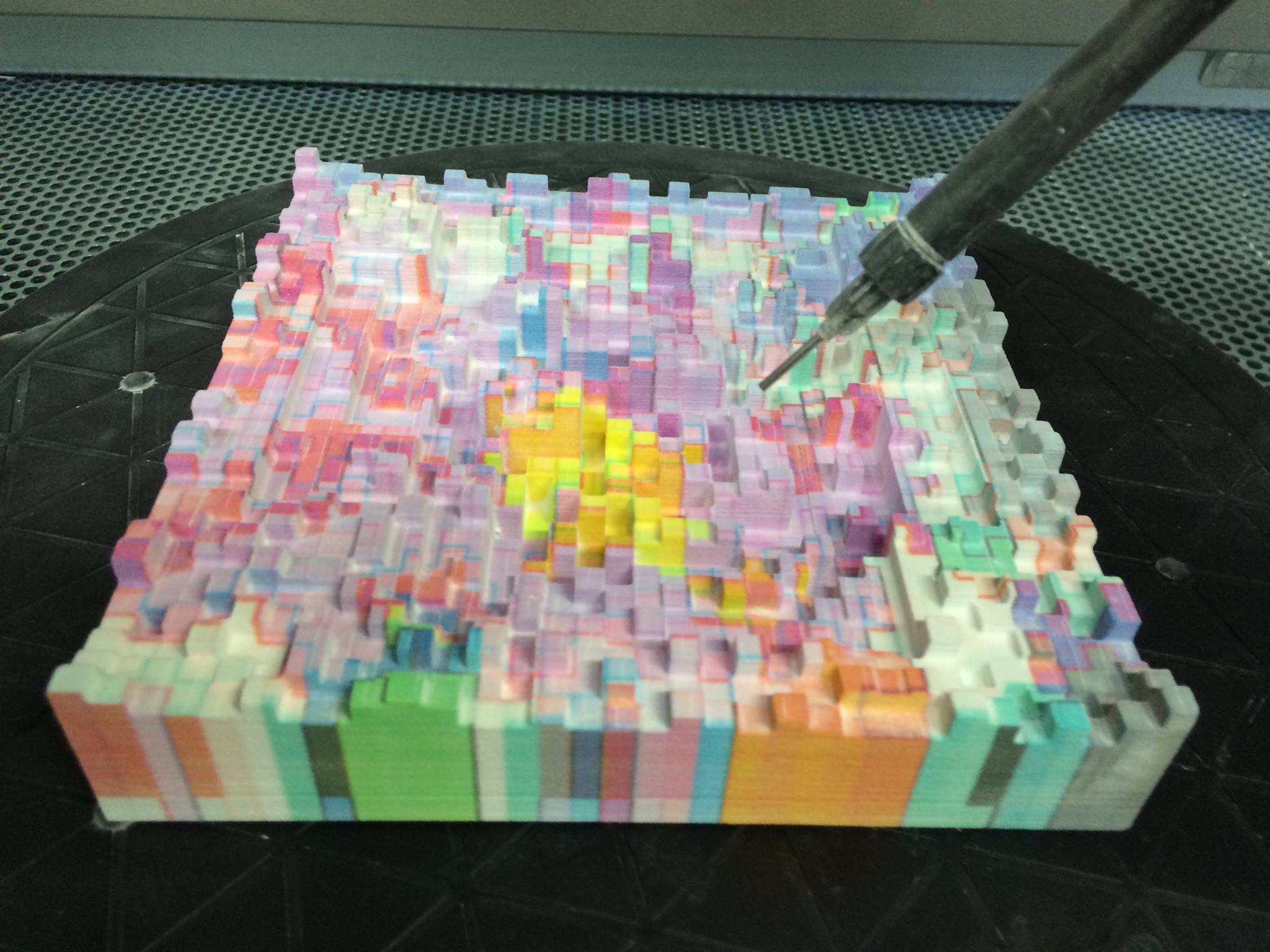
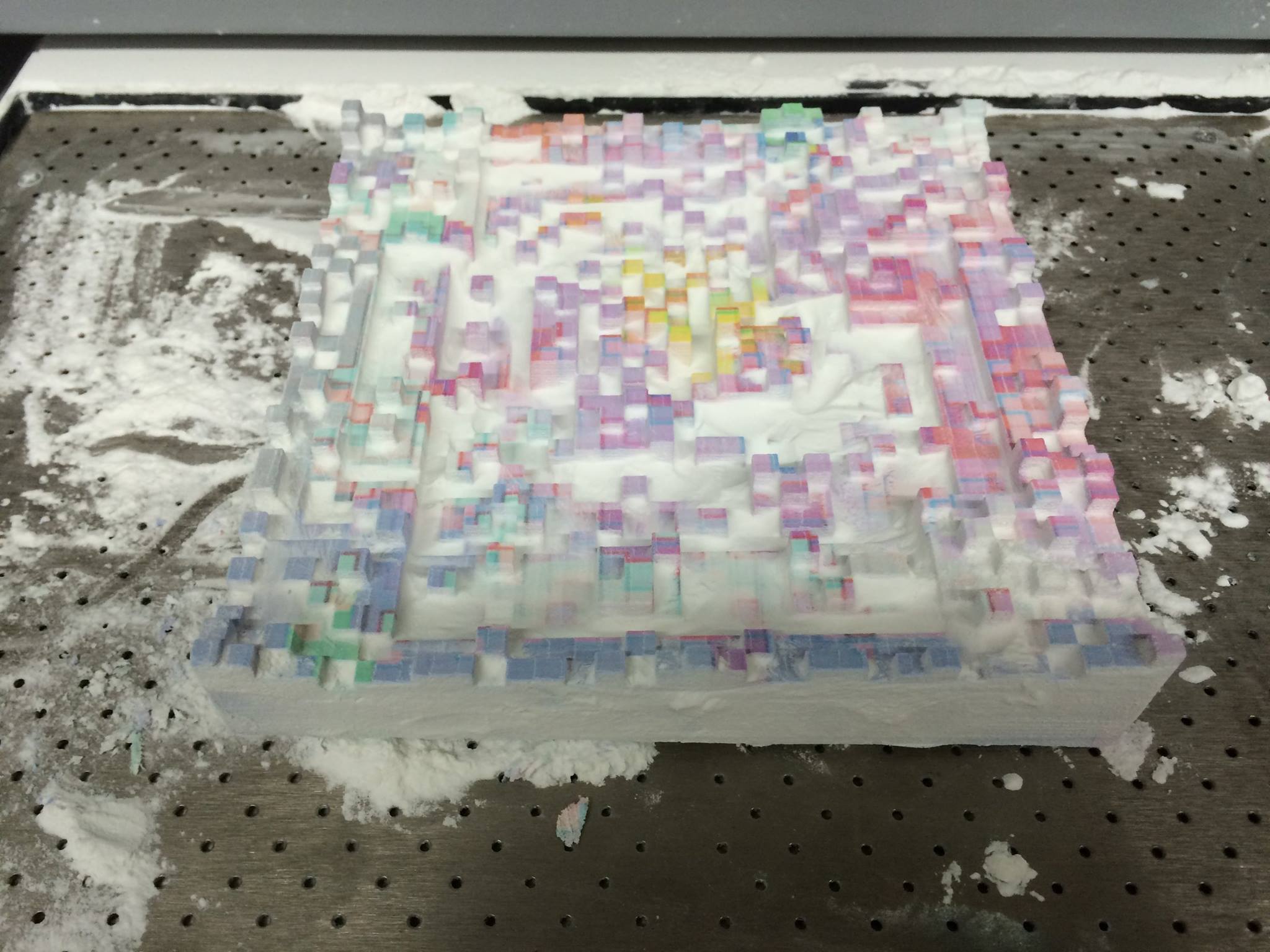
Recently though, Bern decided to attempt to 3D print one of his works using a 3D printer capable of printing in 540,000 different colors and the results were quite spectacular.
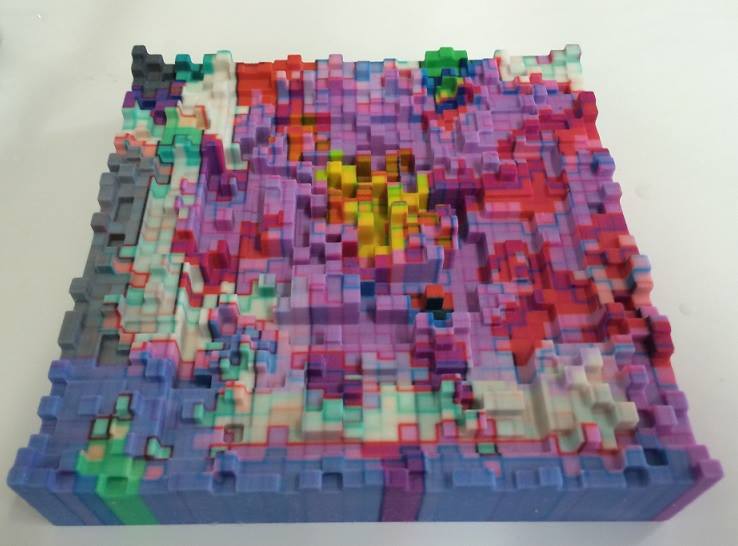
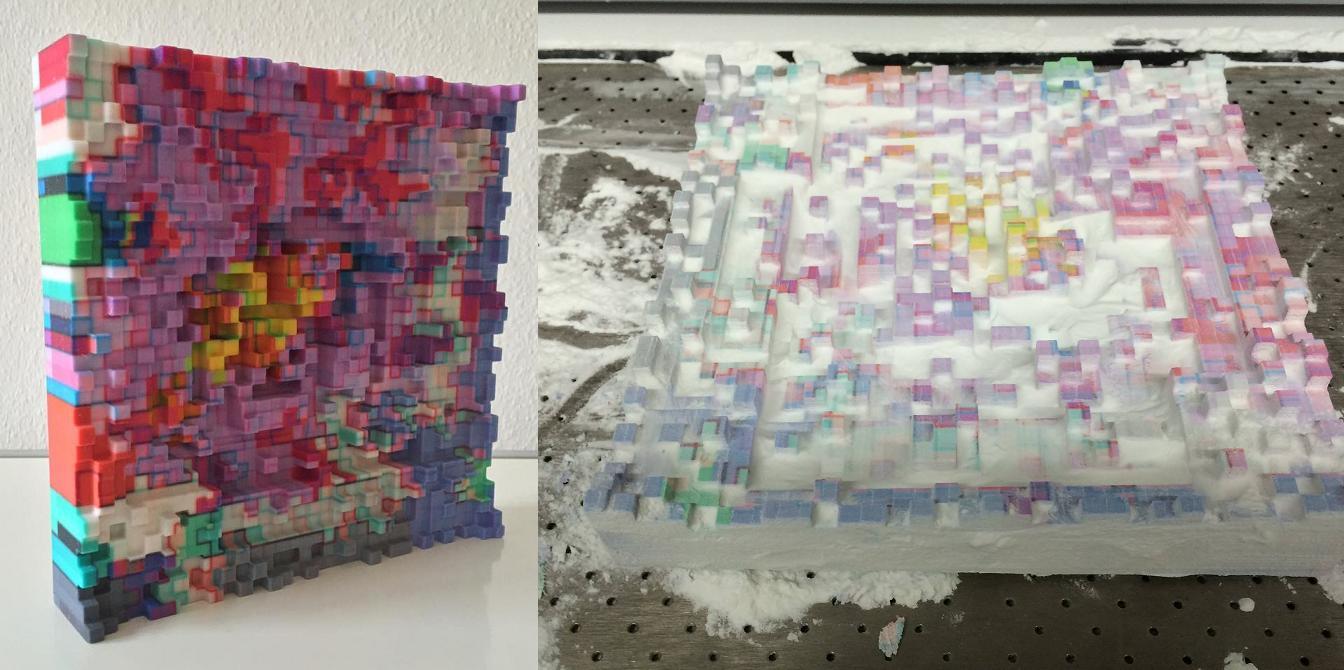
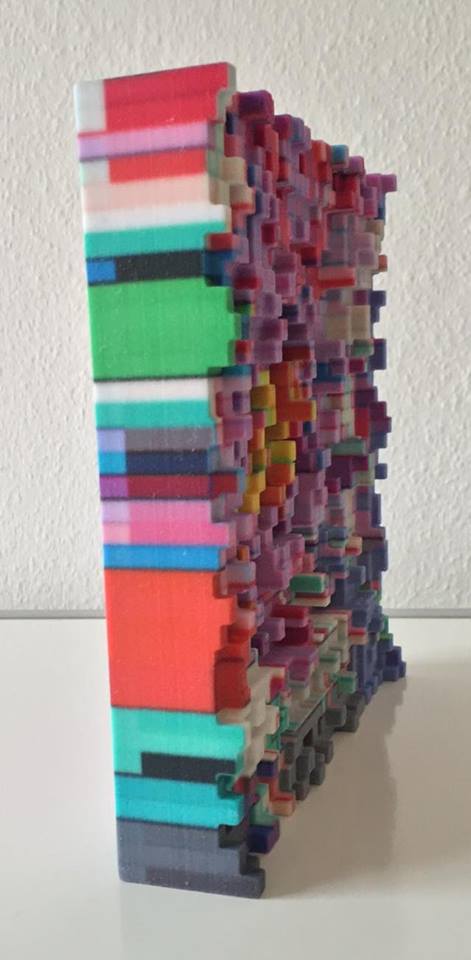
Using the 3D printer, which prints using composite raw materials, Bern printed out a 3-dimensional representation of one of his works. It measured 16 x 16 x 3.3 cm in dimensions and weighed just 0.8kg. While this is just what he considers to be a prototype, we would expect to see more like it from him in the future.
This goes to show you that 3D printing has the ability to lead to some new types of art forms while at the same time, turning yesterday’s 2-dimensional creations into today’s 3D works of art. What do you think about Mark Bern’s 3D printed pixel art? Discuss in the 3D Printed Pixel Art forum thread on 3DPB.com. Bern can be found on social media via: Facebook markbernart; Twitter markbernart; Instagram markbernart.
Check out some more photos below.
Subscribe to Our Email Newsletter
Stay up-to-date on all the latest news from the 3D printing industry and receive information and offers from third party vendors.
Print Services
Upload your 3D Models and get them printed quickly and efficiently.











You May Also Like
Next-Gen CAD/CAM Tool Accelerates Development of Innovative AM Electronics Applications
3D-printed electronics is an emerging field that combines additive manufacturing techniques with the integration of electronic components to produce previously unachievable results. It enables the creation of complex, customized electronic...
3D Printing News Briefs: February 19, 2026: Market Data, Africa, Metal Parts for Defense, & More
We’re starting with some business news for you in today’s 3D Printing News Briefs! The Wohlers Report 2026 is now available, Carbon announced its new Chief Technology Officer, and Farsoon...
From “Magic” to Metal: How Intrepid Automation Wants to Make 3D Printing Matter at Scale
Ben Wynne still talks about 3D printing the way people do when they’ve felt that “wow” moment up close. Back in the early 2000s, he was working at HP’s advanced...
From Vision to Volume: The Next Chapter for Additive Manufacturing
Additive manufacturing has spent years navigating skepticism, hype cycles, and industrial validation. Now, the industry finds itself at a decisive turning point. The conversation has shifted away from futuristic possibilities...