Qingdao Unique to Begin Animal Testing on 3D Printed Skin & Corneas Within 1 Year, Other Organs in 2 Years


 While 3D printing has been making its mark for a couple decades within the field of rapid prototyping, it is now just beginning to break the surface when it comes to medical uses. One Chinese company, called Qingdao Unique has been working in the field of bioprinting for some time now. Now Qingdao Unique tells 3DPrint.com that they plan to 3D print corneas and skin within just one year.
“Cornea and skin printing make the biggest progress, and it will enter the research phase of animal testing within a year”, said Wang Hong CEO of Qingdao Unique Technology Co., Ltd. ” As one management guru always said, any new things always find their markets when true innovators never expected them to. Usually its application is always different than its original purpose. In my opinion, this is the case with 3D printing”
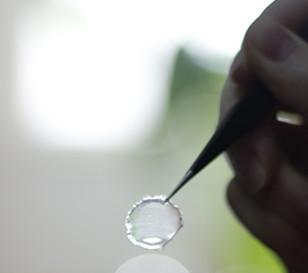
Currently inside of Wang Hong’s Chinese office sits several sophisticated looking plastic bottles filled with nutrient solutions. Within these solutions, if you look closely, you will see transparent film-like objects floating about.
“This is our first 3D printed cornea sample using biological material, only 100 microns thick,” Hong explained.
Melody Wu of Qingdao Unique tells 3DPrint.com that in the beginning of February, a man by the name of Dai Ke-Rong from the Chinese Academy of Engineering, came to Qingdao Unique for a two day visit. During that time, he signed a contract regarding the development of biomedical engineering and “industry-university-research” with the company.
“Prior to the signing ceremony, Qingdao Unique had cooperated with a number of the most cutting-edge hospitals in the medical field in Beijing and Shanghai, involving meniscus, skin, nerve, cornea, blood vessels and other organs and tissues,” Wu tells us.
Some of these collaborative projects that Qingdao has worked on, include cooperation with the Chinese Academy of Engineering to research bone joint printing, a partnership with the Beijing 301 Hospital’s orthopedic department for research into 3D meniscus printing, and a cooperative effort taken on with Shanghai Changha Hospital to study skin, blood vessel printing and neural printing.
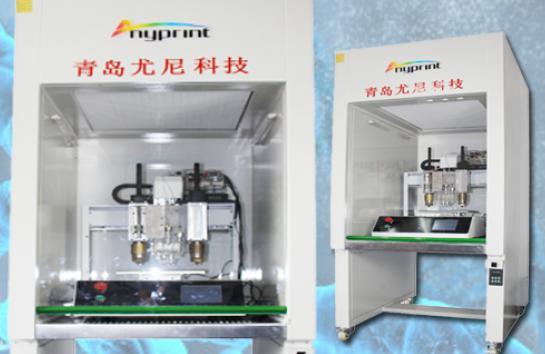 Late last week, Wang Hong told reporters confidently, that the preparation for her 3D printer hardware and software are ready, and according to her optimistic estimates, these human organs and tissues will go into the animal testing stage in one to two years. Additionally their cornea and skin printing research has been making the most progress, and these could enter the animal experimental stage within just 1 year.
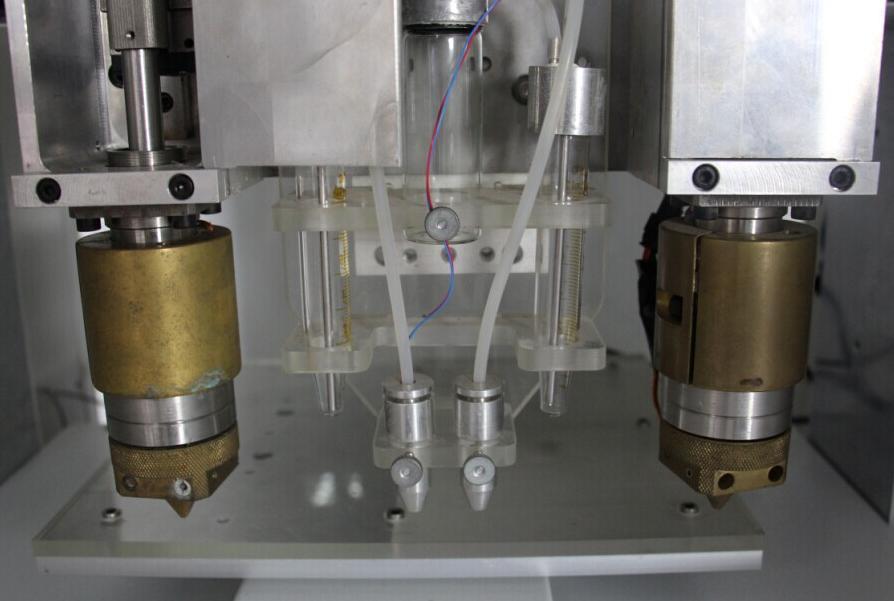
Wu tells us that while the most advanced bio printers in the United States feature only two print heads, Qingdao Unique’s bio printers have four heads, allowing them to complete the printing of four sample items in the same time that other printers would take to complete just one or two.
“Unlike normal 3D printers, bio printers require very high accuracy,” Wu tells us. “Currently, the third generation of the Unique 3D bio printer has achieved printing with biomaterials and cells under sterile conditions. Ambient temperature adjustment ranges for its sterile temperature studio is 0-50 ℃, relative humidity adjustment range is 80% – 98%, PH value is adjusted by carbon dioxide intake, air quantity is 7.0-7.5, and the operating temperature range of the new micro-syringe-type electric sprinkler is -20 ℃ ~ 240 ℃. This means the bio printer supports the printing of a variety of biological materials that melt from -20 ℃ ~ 240 ℃. More importantly, the nozzle accuracy of the bio printer has been reduced to 5 micro liters to ensure that the 3D print tissue slice thickness can be controlled down to 5-100 microns”
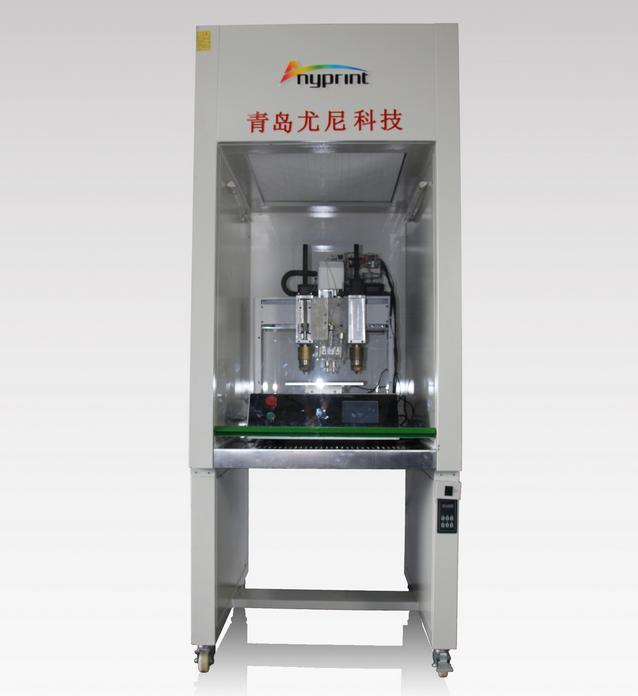 While the company’s 3D bioprinters are built to print a lot more than just corneas and skin, these are the two parts of the human body that are the most simplistic to print.
“With the guidance of clinical medical experts, the skin we printed with biological materials has the same structure as real skin, 3D network structure and jagged bite staggered structure,” explained Hong. “Once it enters clinical trials, it will be able to benefit patients with extensive burns.”
It should be interesting to see how much attention Qingdao Unique’s bio printers get, not just from China and the rest of Asia, but from hospitals and doctors around the world as well. What do you think? Will we see animal testing of 3D printed skin and corneas from Qingdao Unique in less than a year? Discuss in the 3D printed skin and cornea forum thread on 3DPB.com.
Subscribe to Our Email Newsletter
Stay up-to-date on all the latest news from the 3D printing industry and receive information and offers from third party vendors.
Print Services
Upload your 3D Models and get them printed quickly and efficiently.













You May Also Like
Project Peculiar Document & Other AM-Relevant Signs of a New War Economy
According to the Pentagon, “We will not defeat our adversaries with compliance checklists; we will defeat them by rapidly fielding superior capabilities produced by an expanded, resilient American industrial base.”...
3D Printing Financials: Aerospace and Defense Help Materialise Manufacturing Rebound
Materialise (Nasdaq: MTLS) grew revenue and profit in the second quarter of 2026, as its Medical business continued to expand, and stronger aerospace and defense demand helped its Manufacturing segment...
3D Printing Financials: Creality Posts H1 Loss, Plans $80M AM Headquarters
Creality (HKG: 3388) sold more products in the first half of 2026, but lower margins and higher spending pushed the consumer 3D printing company into the red. At the same...
3D Printed Propulsion Specialist Ursa Major Plans to Go Public via SPAC in Q1 2027
The Special Purpose Acquisition Company (SPAC) boom was devastating for the additive manufacturing (AM) industry. Peaking in 2021 — and, of course, subsuming companies from industries far beyond AM —...