
Japan’s B1 Terra Drone to Be Mass Produced

Despite its industrial might and precision engineering excellence, Japan has been rather aloof to 3D printing over the past decades. Even with an early start by companies such as Teijin Seiki (now part of Nabtesco), Mitsubishi, NTT Data, Mitsui Zosen, Kira, and Sony, the country seemed to have lost interest. That’s a shame, given the nation’s pioneering work and the fact that the first Japanese 3D Printer, the CMET SOUP, came out in 1998.
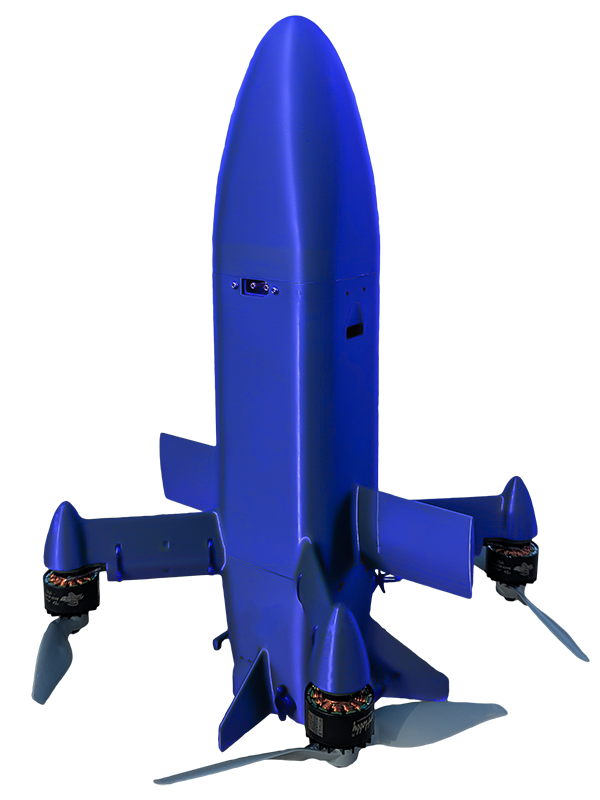
But we are seeing a resurgence of 3D printing by Japan Inc. Japanese machine tool manufacturers persist, while TDK bought Fabric8Labs and Sodick bought Prima, which is now called Altform. Now we’re seeing Japanese firms move into 3D printing drones as well. Terra Drone is to deliver its Terra B1 for Japan’s Acquisition, Technology & Logistics Agency (ATLA). Under the Interceptor Drone Early Acquisition Program, the drones are to be mass produced.
The firm says that,
“In the Middle East, low-cost attack unmanned aerial vehicles such as Shahed-type drones have been widely used, while defenders have often been forced to rely on expensive interceptor missiles. This has exposed challenges including the depletion of interceptor missiles and a growing imbalance in cost-effectiveness. In Ukraine, by contrast, the use of low-cost interceptor drones against Shahed-type and other attack UAVs has advanced rapidly and achieved high interception rates. Based on these operational lessons, Japan is also placing greater importance on using more cost-effective means to counter low-cost aerial threats.”
Terra Drone won out over 38 other firms, and the program is specifically aimed at low-cost, large-scale drone interception. Specifically, this drone is aimed at long-range loitering munitions and Shaheds. The Japanese government is really stepping on the gas too, going from the initial demo to mass production in three months. Many of these crafts can be operated in concert, and testing also included recovery, integration, maneuverability, range, and speed. In addition to producing the drone, the company wants to further localize its supply chain by producing batteries and controls locally. The drones will then be integrated into vehicles and facilities.
Terra Drone is actively engaged in Ukraine and produces drones there locally as well. The firm has acquired and integrated a few local subsidiaries, and its A1 model has been successfully intercepting Shaheds since last year. This involvement in Ukraine is sure to give the company a well-defined edge over competitors who lack exposure to that fast-evolving conflict. The A1 has “a maximum speed of about 300 kilometers per hour, an operational range of up to 32 kilometers and an endurance of approximately 15 minutes,” and costs around $2,500 to $3,000.
What is also remarkable is that Terra Drone is no svelte startup; it’s a listed 650-employee firm that’s over a decade old. Far from becoming more entrenched or downplaying Ukrainian drone innovation, it engaged with Ukrainian firms, traveled to Ukraine to learn, and is now reaping the rewards of its forward-thinking, daring actions. It could be good for Japan if the 38 losing firms do the same. Indeed, every nation should do the same. Ukraine is where the future of warfare is being invented every single day. Cost-effective Ukrainian weapons are innovative, up-to-date, lean, and developed quickly. Rather than shiny White Elephants, Ukrainian weapons are effective and cost-effective. Every nation needs to work on drone defense and offense. The reality is that a lot of military defenses are completely useless, and an utter near-total revolution has taken place in warfare. And with this move, Japan is sweeping ahead and catching up. Excellent stuff.
Subscribe to Our Email Newsletter
Stay up-to-date on all the latest news from the 3D printing industry and receive information and offers from third party vendors.
Print Services
Upload your 3D Models and get them printed quickly and efficiently.













You May Also Like
Oerlikon Adds ATLIX’s xBUILD 5000, Plans More for 2027
Oerlikon has installed a new ATLIX xBUILD 5000 metal 3D printer at its facility in Huntersville, North Carolina, marking the first production deployment of the system worldwide. The machine will...
The Manufacturing Race Behind the Drone Revolution
We are in the middle of a major manufacturing shift focused on the production speed and payload capacity of uncrewed aerial systems (UAS), or drones. A recent Manufacturing Dive article...
Stratasys vs. Bambu Lab: Why Europe and the U.S. Reached Different Results, Part II
Editor’s note: This is Part 2 of a two-part series by Xu Fanglei examining the technology and patent issues behind the Stratasys-Bambu Lab dispute. Part 1 looked at the $27.6...
3D Printing News Briefs, October 1, 2026: Defense, Enclosures, & More
In today’s 3D Printing News Briefs, we’re starting with defense news, first from Massivit and then from AML3D. Then we’ll move on to U.S. manufacturing of a new large-format LPBF...

























































