Chinese Company 3D Prints a Full-size Working Car for Just $1770


 3D printing is going big, not just in a metaphorical sense. We have seen 3D printed buildings and cars begin to emerge as innovators look to the potential that this technology could have in the future. We saw the world’s first 3D printed car, the Urbee created in 2013. Then last year, a company called Local Motors surprised us all by 3D printing their Strati car in record time. Since then, Local Motors has been quickly iterating upon the processes they use and have already accomplished the full 3D printing of the Strati in just 44 hours flat. They are now in the process of opening up microfactories worldwide in hopes of 3D printing custom vehicles for clients.
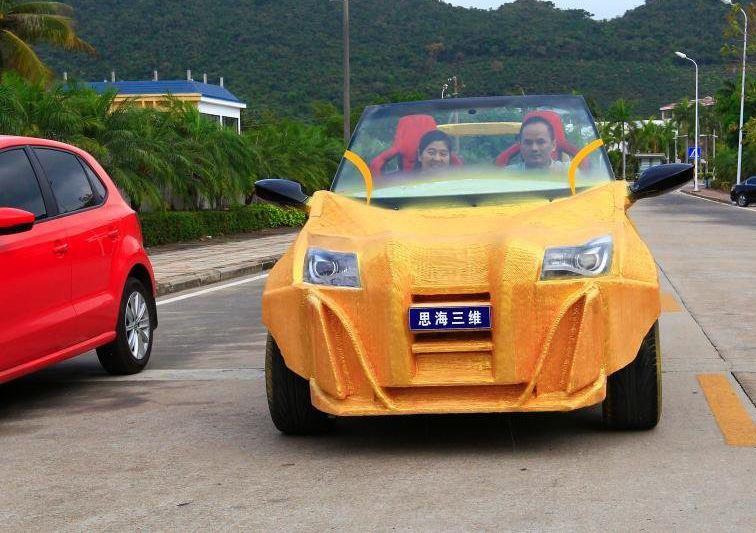
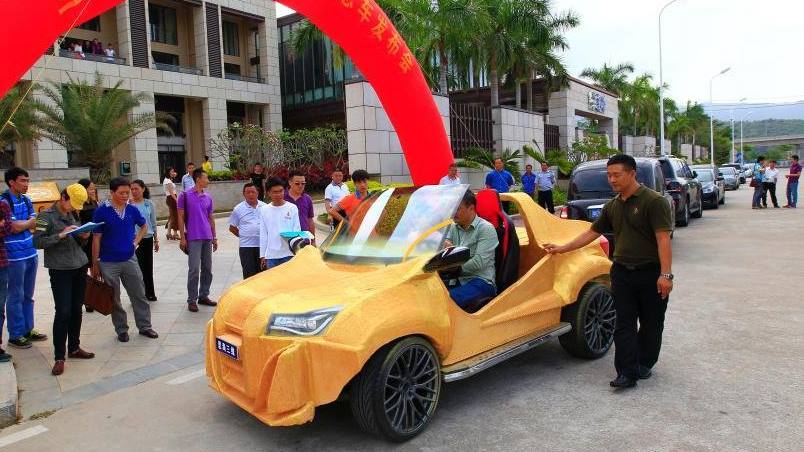
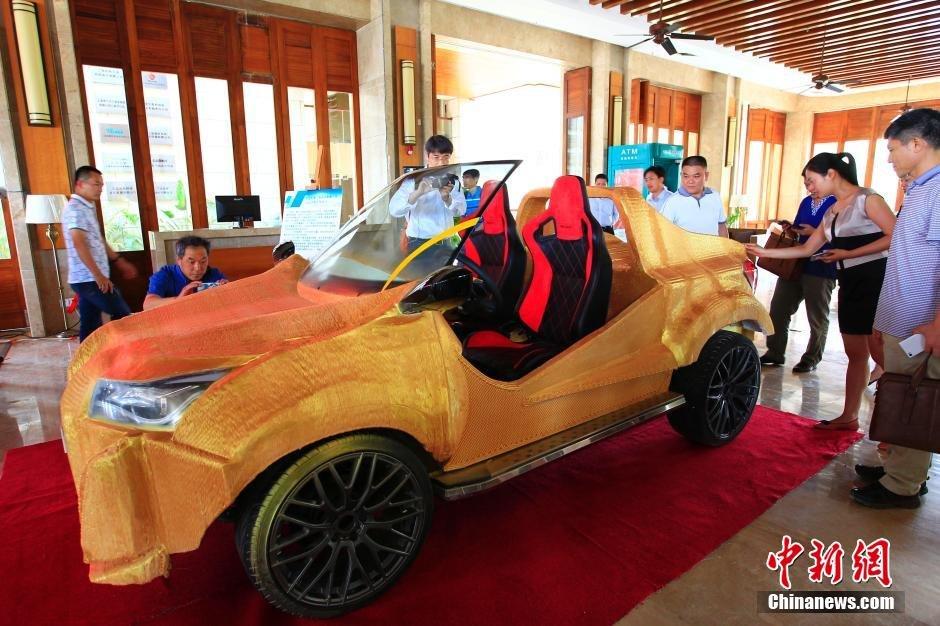
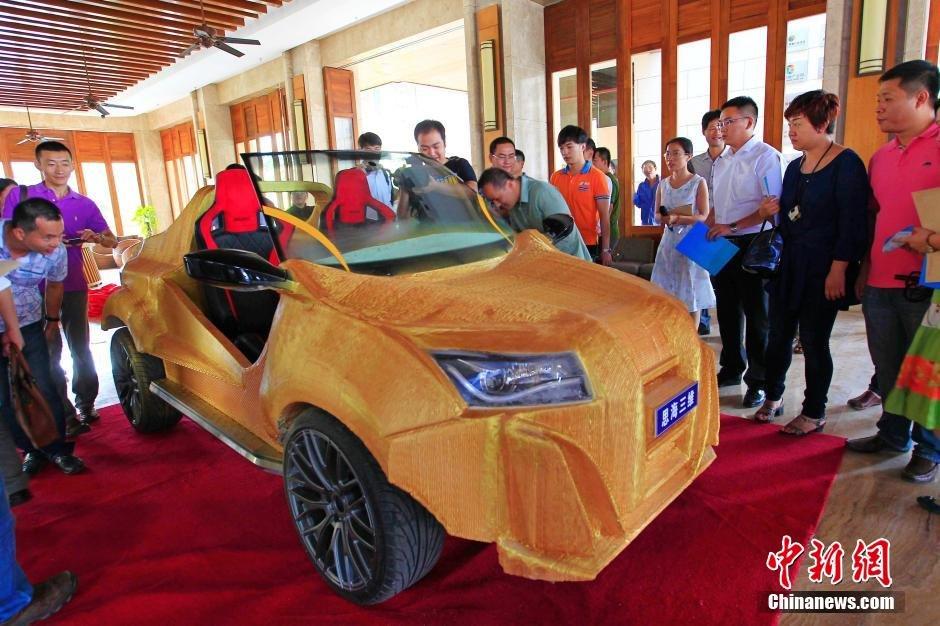
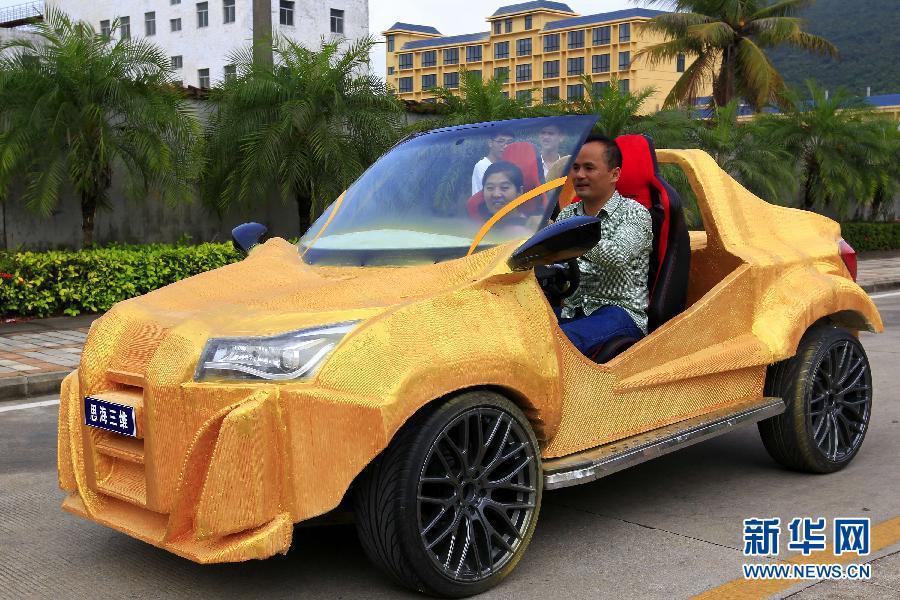
Now, one company based in Sanya City, China, called Sanya Sihai, has just accomplished the 3D printing of yet another car. This car’s body weighs an impressive 500kg (1102 pounds) and is completely electric powered. The manufacturers say that it took about a month and a half to build, with the 3D printing process taking about 5 full days. Unlike the Strati car though, the interior of this one is not 3D printed, nor does this vehicle compete with Local Motors when it comes to aesthetics.
“The density of the material is much lighter than that of the metal, only one-seventh or one-eighth,” explains Chief Designer Chen Mingqiao. “Lighter weight will help save energy in the future.”
Printed in a “Tyrant Gold” filament, the car used an astounding 500kg of filament in the 3D printing process. In total, including 1000 yuan for electricity and labor, the car cost about 11,000 yuan ($1770) to build. The 3D printed body itself, is estimated to have cost about 10 yuan per KG of material, meaning it costs the manufacturer about 5000 yuan ($805) to fabricate.
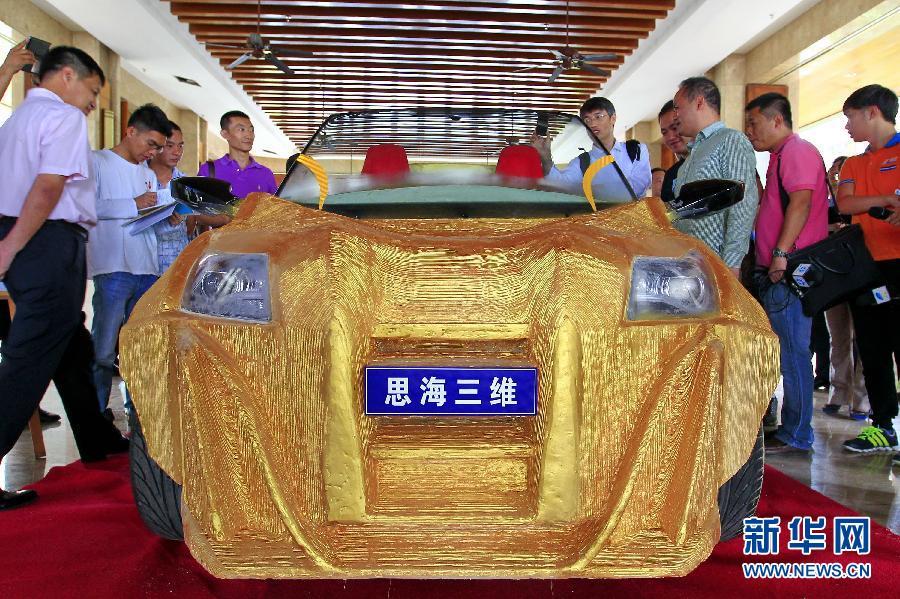 This “Tyrant Gold” car can seat two, and travel at speeds of up to 40km/h (25 MPH). It measures 3.6-meters long (11.9ft) and 1.63-meters (5.5ft) wide. Obviously, this is a great accomplishment for the Chinese based company, but it doesn’t come close to competing with what Local Motors has done or continues to do with their vehicles. Not only does the Strati look better, and go faster (40 MPH), but it is also able to be 3D printed in just 44 hours, compared to this car which took 5 days to complete. The Strati also features many more 3D printed parts, other than just the car’s body, including its seats and chassis.
It should be interesting to see how quickly Sanya Sihai is able to develop this car further, and if they will actually mass produce these vehicles in the future. While Local Motors remains leaps and bounds ahead of them as far as 3D printed car manufacturing goes, it should be interesting to see how serious they are about creating their 3D printed vehicles. What do you think about this 3D printed car? Discuss in the Chinese 3D Printed Car forum thread on 3DPB.com.
Subscribe to Our Email Newsletter
Stay up-to-date on all the latest news from the 3D printing industry and receive information and offers from third party vendors.
Print Services
Upload your 3D Models and get them printed quickly and efficiently.













You May Also Like
50,000 Orders and Counting: EPlus3D & Chinese AM Services Provider Are Scaling Liquid Cooling Solutions for AI Servers
An under-appreciated story driving the additive manufacturing (AM) industry this year has been the divergence between what’s driving the market in China and what’s driving it everywhere else. Let’s start...
Seven Trends Reveal What’s Next for 3D Printing at TCT Shenzhen 2026
TCT Shenzhen 2026 opened on October 14 in Hall 15 of the Shenzhen World Exhibition & Convention Center in Bao’an, and ran through October 16. The event brought together equipment...
With Increased Aerospace & Defense Focus, CORE Industrial Partners Buys More Manufacturing Firms
Private equity’s march into manufacturing continues with CORE Industrial Partners’ latest acquisitions. CORE purchased Fathom a few years ago, and later bought 3DXTECH LLC, Triton 3D LLC, and Gearbox3D. It...
Can India’s AM Push Help Make it a Viable Supplement to China?
Diversifying manufacturing supply chains to locales outside of China has nothing to do with actually cultivating “substitutes” to the Chinese economy. The real stakes are these: China is an irreplaceable...