3D Printed Bat Models Yield New Scientific Discoveries About Flight

 Bats are probably one of the most misunderstood animals on Earth, with groups dedicated to correcting their misrepresentation as nocturnal blood suckers most closely related to the vampire. But if you have ever seen bats up close or in flight, it can be an amazing thing.
I have been lucky to see large quantities of migrating Mexican free-tailed bats in Austin, Texas, where they congregate under the Congress Avenue Bridge annually. This congregation numbers from 750,000 to 1.5 million bats and is the largest urban bat colony in North America. Quite the sight, crowds would gather there nightly while the bats were in town to marvel at the fascinating creatures and celebrate all things bat-related. Even while we remain transfixed on all that bats represent, they face and uphill battle being misunderstood. And 3D printing is helping to correct all of that through contributing new research on how bat heads facilitate their flight and motion.
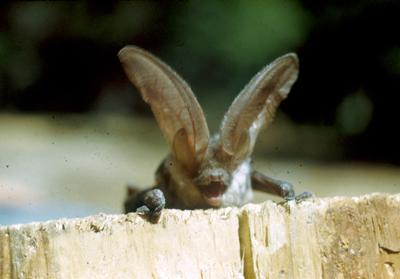 The popular scientific wisdom about bat aerodynamics is that they are the only flying animals with prominent external ears (pinnae), and it has been widely understood that bat faces, including the pinnae and noseleaves, impede powerful aerodynamics. Instead, goes the theory, they have poor aerodynamics compared to birds but they also have strong senses. It turns out that bats’ large heads and complicated facial features of bats might facilitate strong flying skills too.
In the paper “The Aerodynamic Cost of Head Morphology in Bats: Maybe Not as Bad as It Seems,” a team of European researchers 3D printed seven different bat species’ heads and then unleashed them in wind tunnels, studying their drag to lift ratio (lift is the upward force that counteracts gravity, while drag is exerted by the air on the bat as the force opposing forward motion) to determine how aerodynamic bat faces truly are.
The results confirm “non-streamlined facial morphologies yield considerable drag forces but also generate substantial lift” — which means that there is no evidence that the size and shape of bat heads impede excellent aerodynamics compared with birds.
Wow. If you think about it, that’s a big deal that scientists were able to put 3D printed heads from seven bat species in wind tunnels, study their aerodynamics, and turn the status quo scientific wisdom about bat heads on its head.
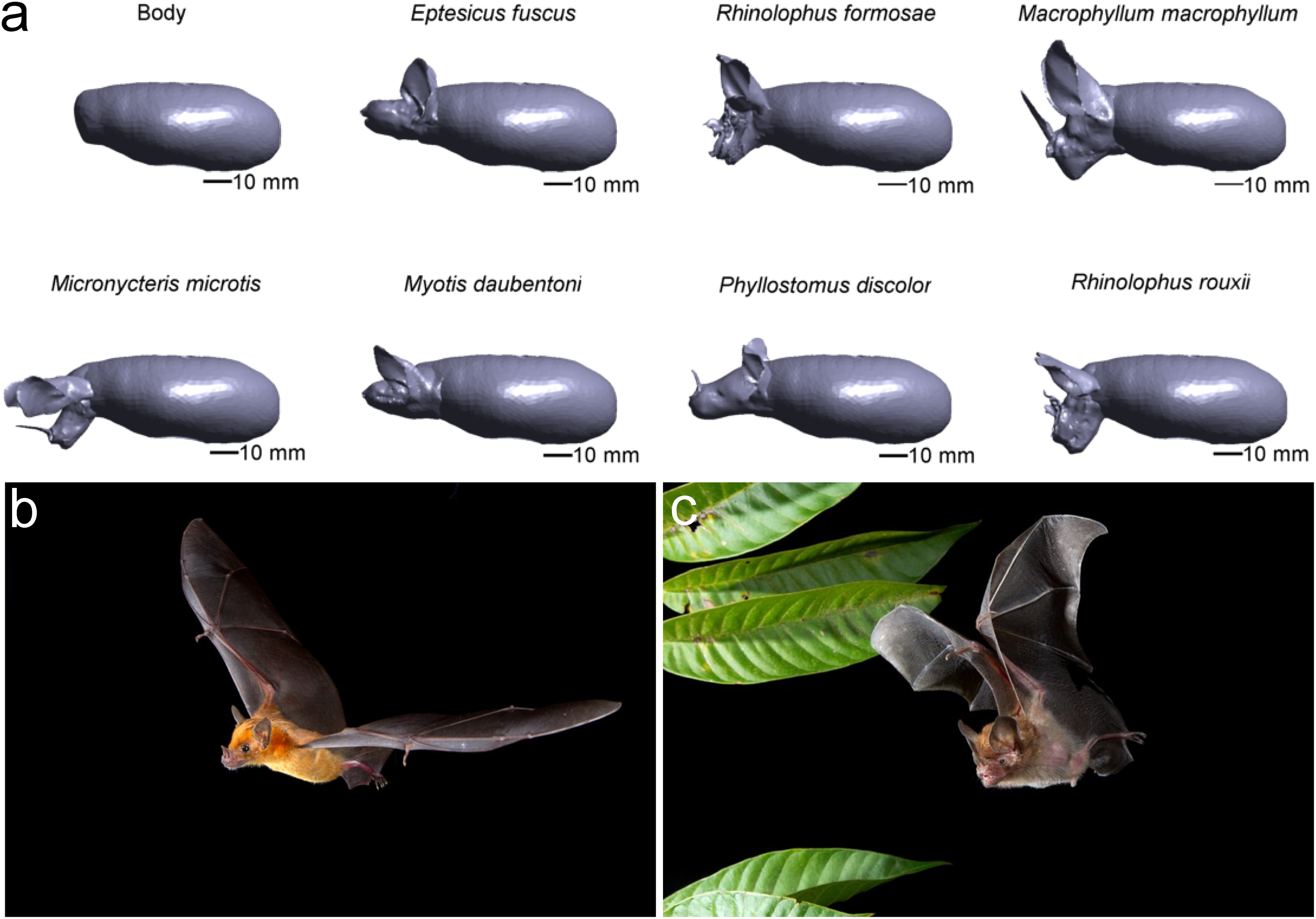
The researchers used a SkyScan 1076 micro-CT machine at a resolution of 35 μm to scan seven different bat heads. The final 3D printed models were produced by Easy2day in Odense, Denmark. Also, in order to ensure that the data about differing bat heads were correct, a standardized body was created using the Chinese 3D modeling software EasyToy from Livesforce. The shape of the body was modeled after profile photos of flying bats and scaled to a length of 72 mm.
After testing the different bats in a wind tunnel, the scientists came to the conclusion that bat pinnae act like an airplane wing contributing to both lift and drag in flight. Therefore, they do not contribute to a significant slowing down of flight time and other aerodynamic factors. In fact, the pinnae provided six out of the seven bat species studied with a net gain in flight efficiency. Also, pinnae help conserve bats’ energy in flight. So while bat faces may be a drag, they are also a lift.
It is 3D printing that has made this lift — a neutralizing aerodynamic force — into a scientific contribution that can change the way we understand why bats look the way they do.
What other scientific breakthroughs do you know of that were helped along by 3D modeling? Let us know of your findings, as well as your thoughts on these bats, in the 3D Printing to Understand Bat Aerodynamics forum thread over at 3DPB.com.
Subscribe to Our Email Newsletter
Stay up-to-date on all the latest news from the 3D printing industry and receive information and offers from third party vendors.
Print Services
Upload your 3D Models and get them printed quickly and efficiently.











You May Also Like
3D Printing News Briefs: February 19, 2026: Market Data, Africa, Metal Parts for Defense, & More
We’re starting with some business news for you in today’s 3D Printing News Briefs! The Wohlers Report 2026 is now available, Carbon announced its new Chief Technology Officer, and Farsoon...
“A More Complete End-to-End Solution”: Stratasys Launches Post-Processing Partnership Program
I think it’s safe to say that post-processing is no longer considered the “dirty little secret” of 3D printing that it once was, with users realizing that finishing is just...
Why SiC-Dedicated Additive Manufacturing Is Gaining Industrial Relevance
Silicon carbide is not a material problem—it’s a manufacturing one. Silicon carbide (SiC) has become a critical material across semiconductors, aerospace, energy, and defense. Its exceptional thermal stability, chemical resistance,...
3D Printing News Briefs, February 5, 2026: Advisory Board, Virtual Twins, & More
We’re starting with business in today’s 3D Printing News Briefs, including a new website launched by Metamorphic AM. Massivit appointed two senior leaders to its advisory board, and Dassault Systèmes...