Sinopec, China’s Largest Oil and Gas Producer, Entering 3D Printing Materials Market

China Petrochemical Corp., the largest single refiner of oil and gas in Asia, says they plan to invest in developing 3D printing materials over the course of the next decade as they look to reduce the company’s dependence on oil production and processing.
Known as Sinopec Group, China Petroleum & Chemical Corporation says they’ll need to discover technological breakthroughs as part of their long-term planning. The company also says investments will be made in creating industrial parks, investment funds and a research institute to push innovation forward.
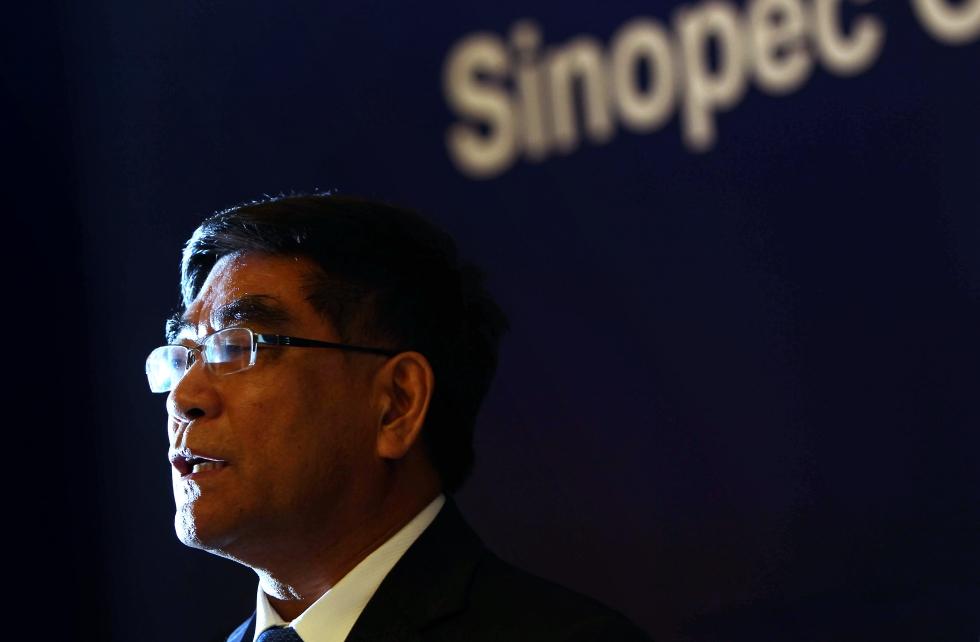
The Chairman of Chinese petroleum giants Sinopec, Fu Chengyu, says the development of 3D printing materials will be a key to the success of the fifth largest company in the world.
Sinopec Chairman, Fu Chengyu, didn’t provide details about the plans, but analysts say new business ventures will be key to providing Sinopec with growth in the coming decade.
“It’s smart to explore opportunities in high-margin products in new materials and services businesses, as lower crude prices have choked almost every oil explorer in the world,” says Shi Yan, an analyst at UOB-Kay Hian Ltd. in Shanghai. “Sinopec wants to turn itself into China’s DuPont.”
 Sinopec is based in Beijing, China, and the company is listed in Hong Kong and trades in Shanghai and New York. It’s the world’s fifth largest company by revenue, and the world’s second largest chemical producer. As the major state-owned petroleum energy and chemicals company in China, the firm is heavily involved in oil and gas exploration, refining, production and sales of petrochemicals, chemical fibers, chemical fertilizers, and other chemical products.
In 2011, Sinopec was ranked as the 5th largest company in sales in the Forbes Global, ranked 9th by Fortune Global 500, and it was also the first Chinese corporation to make the top ten. As recently as 2007, Sinopec was ranked by Forbes as number one of the Top 500 Enterprises in China.
Established as a joint stock entity under the China Petrochemical Corporation Group (Sinopec Group) in February 2000, Sinopec Limited was then simultaneously listed on the Hong Kong, New York, and London exchanges in October 2000.
As of August 2013, Sinopec acquired a 33% stake in Apache Corporation’s oil and gas business in Egypt for $3.1 billion, and in December 2013, MCC Holding Hong Kong Corp.Ltd. and MCC Petroli Hong Kong Corp.Ltd., acquired a 18% stake of Sinopec’s oil and gas business for $9.3 billion.
 Analysts say these most recent moves, particularly the company’s focus on alternative businesses like 3D printing materials development and sustainable energy, are an adjustment by the company resulting from the recent collapse of the world oil market.
Chairman Fu says 2014 was a “challenging year” for the company, but added that lower crude prices expected in 2015 forced the moves. Fu says the future of the company will change from a classic oil and gas company. He added that Sinopec intends to change its focus from “manufacturing” to “technology.”
“I hope that after a decade or so, we’ll be a science-based petrochemical company,” Fu added, and that the development of 3D printing technologies will be key to the plans. “Research (is being) conducted to explore 3D printing businesses, and to create conditions for the development of 3D printing materials.”
What do you think about the news that the single largest business in China plans to focus a major share of their effort on developing 3D printing materials? What could this mean for the materials market in general? Let us know in the Sinopec 3D Printing Materials forum thread on 3DPB.com.
Subscribe to Our Email Newsletter
Stay up-to-date on all the latest news from the 3D printing industry and receive information and offers from third party vendors.
Print Services
Upload your 3D Models and get them printed quickly and efficiently.











You May Also Like
Controlled Powder Production for Advanced Research Applications
Modern physics experiments and high-value industrial applications increasingly depend on custom, high-performance materials. These often require strict constraints such as radiopurity, controlled microstructure, and repeatable powder behavior in metal additive...
Creative Destruction in AM: What the Nobel Prize Winners Got Right
When the Nobel Prize in Economic Sciences was awarded in 2025 for work explaining innovation-driven economic growth, many readers outside economics likely skimmed past it. Inside manufacturing and technology circles,...
Titomic Lands First Order for 3D Printed Semiconductor Capital Equipment Components
One of the markets that should be a reliable source of growth well into the future for the additive manufacturing (AM) industry is semiconductor capital equipment (semicap). When Additive Manufacturing...
Applied Acoustics Uses Additive for Subsea Gear
Subsea equipment has to be rugged, temperature-resistant, and able to cope with the long-term effects of saltwater. Extreme pressure and pressure changes are also problems endemic to this industry. Subsea...