NASA Selects ‘Made In Space’ to Produce In-orbit Plastic Recycling System for 3D Printer Filament

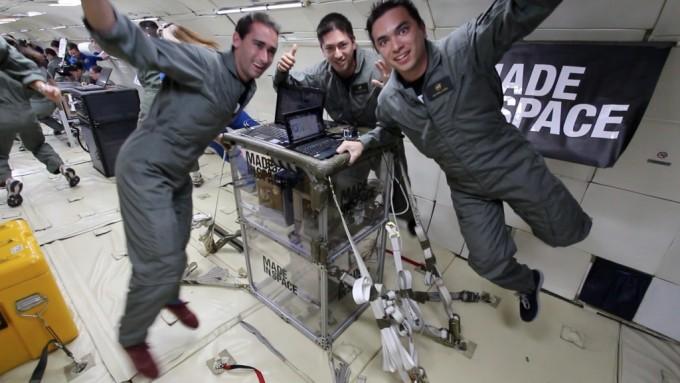
 The ability to 3D print objects in space has been one of NASA’s major goals in the last few years. In fact NASA is in the midst of working on several important projects which promise to take this amazing technology to new frontiers. 3D printing in space, with zero gravity, is an engineering problem which NASA has already been able to overcome. Unlike typical FDM printers which factor the workings of gravity into their schematics, NASA, with the help of companies like Made In Space, has come up with a way to deal with the various issues a printer may face when there is no gravity pulling the melted material down on top of the build plate.
They didn’t stop there though. Now the agency has decided to set out on a project to reclaim/recycle old 3D printer ABS plastic in space. They have selected Made In Space once again, granting the company $125,000 in Phase I awards, under their Small Business Innovation Research (SBIR) and Small Business Technology Transfer (STTR) programs.
Made In Space will use the funding to develop R3DO, a system capable of recycling ABS plastic while in orbit. NASA hopes that the machine will be able to take plastic objects, as large as 6 cm x 12 cm x 6 cm in size, and turn them into standard 1.75mm 3D printer filament, pellets, or another form which can easily be fed into an extruder. A few issues which Made In Space will have to overcome are, the bulging of the feedstock as the filament is created, containment of debris and foreign objects, and creating a gravity-independent filament spooling process.
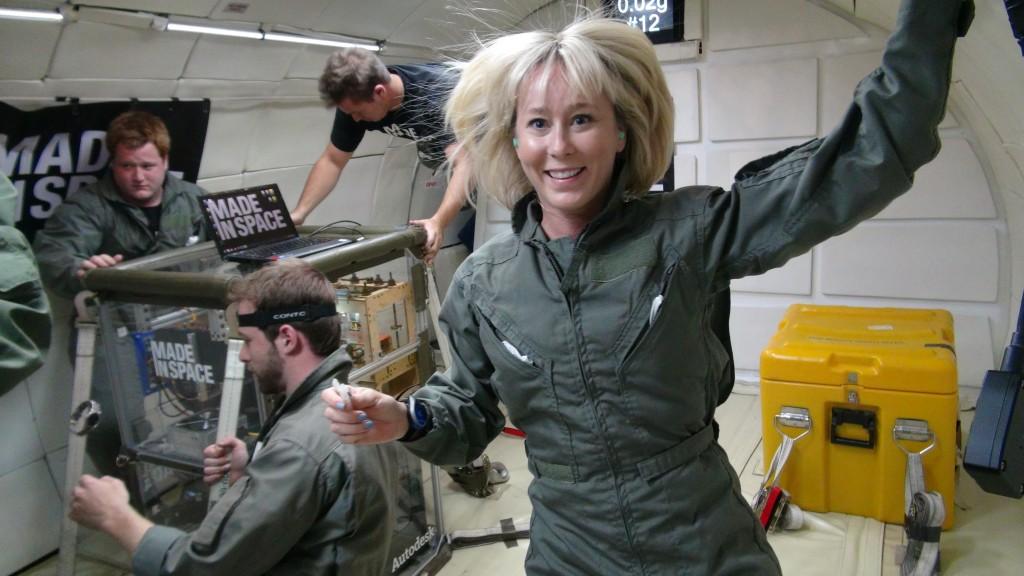
Such a system, if successful, would allow for NASA to have a closed-loop process of manufacturing, in a difficult environment with zero gravity. Such a solution could help the agency save a tremendous amount of money on fuel costs as they would be able to cut back on launch mass. The average cost of launching a space shuttle is approximately $450 million, of which a decent amount of that is attributed to rocket fuel costs.
NASA is also working with Made In Space on yet another interesting project, which involves 3D printing a polymer part, which is then infused with a molten metal. The result would be a hybrid metal/plastic part, which is 100% dense, very strong, and has low surface roughness. Made In Space will be working with the University of Central Florida in Orlando on this project.
NASA clearly understands the value of this emerging technology, one which could cut costs, make mission planning easier, and even possibly save lives in the long run. Discuss NASA’s plans at the 3DPB.com forum thread.
Subscribe to Our Email Newsletter
Stay up-to-date on all the latest news from the 3D printing industry and receive information and offers from third party vendors.
Print Services
Upload your 3D Models and get them printed quickly and efficiently.













You May Also Like
The Money Behind AM: What to Watch at AM Investment Strategies 2026
For years, simply being a 3D printing company could attract attention from investors. New machines, new materials, faster speeds, and the promise of mass production were often enough to get...
3D Printed Football Helmets Are Amazing Business. They’re Also So Much More
NFL football is by far the most popular sport in the US, followed by college football (a state-of-affairs oddly similar to the fact that the world’s largest air force is...
Continuous Composites Wins Navy SBIR for 3D Printed UAVs
In a diversification effort, Continuous Composites has decided to seek work outside of the courtroom. The company that has been successful in defending its patent portfolio in composite 3D printing...
When Data Becomes the Differentiator: Qualified Material Data is Changing the Future of Structural Additive Manufacturing
For years, additive manufacturing has promised engineers greater design freedom. The challenge wasn’t printing the part—it was proving the part belonged on an aircraft. Designing a lightweight bracket or consolidating...