Behold: The 1.3 Meter Tall, 3D Printed, World of Warcraft Frostmourne Sword

 If you are at all interested in massively multiplayer online role-playing games (MMORPGs), then you have likely wasted hours on end tethered to your PC playing World of Warcraft. In fact, close to 2% of every man, woman, and child (100 million people) on this planet have played the game, created in 2004 by Blizzard Entertainment, at some point in their lives.
If you are an avid fan of the game, then you have also likely heard of Frostmourne. A giant runeblade which had the disembodied spirit of the Lich King attached to it, Frostmourne was eventually destroyed following the defeat of Arthas in the Icecrown Citadel. Now a gold replica of the hilt of Frostmourne is on display within the game.
Ok, that’s enough of me boring all of you who do not partake in this awesome game. Whether you are a fan of the game or not, one design and 3D print of Frostmourne is certain to blow you away. Kirby Downey and Elliott Viles, designers at My Mini Factory, worked together to create one of the coolest pieces I have ever seen.
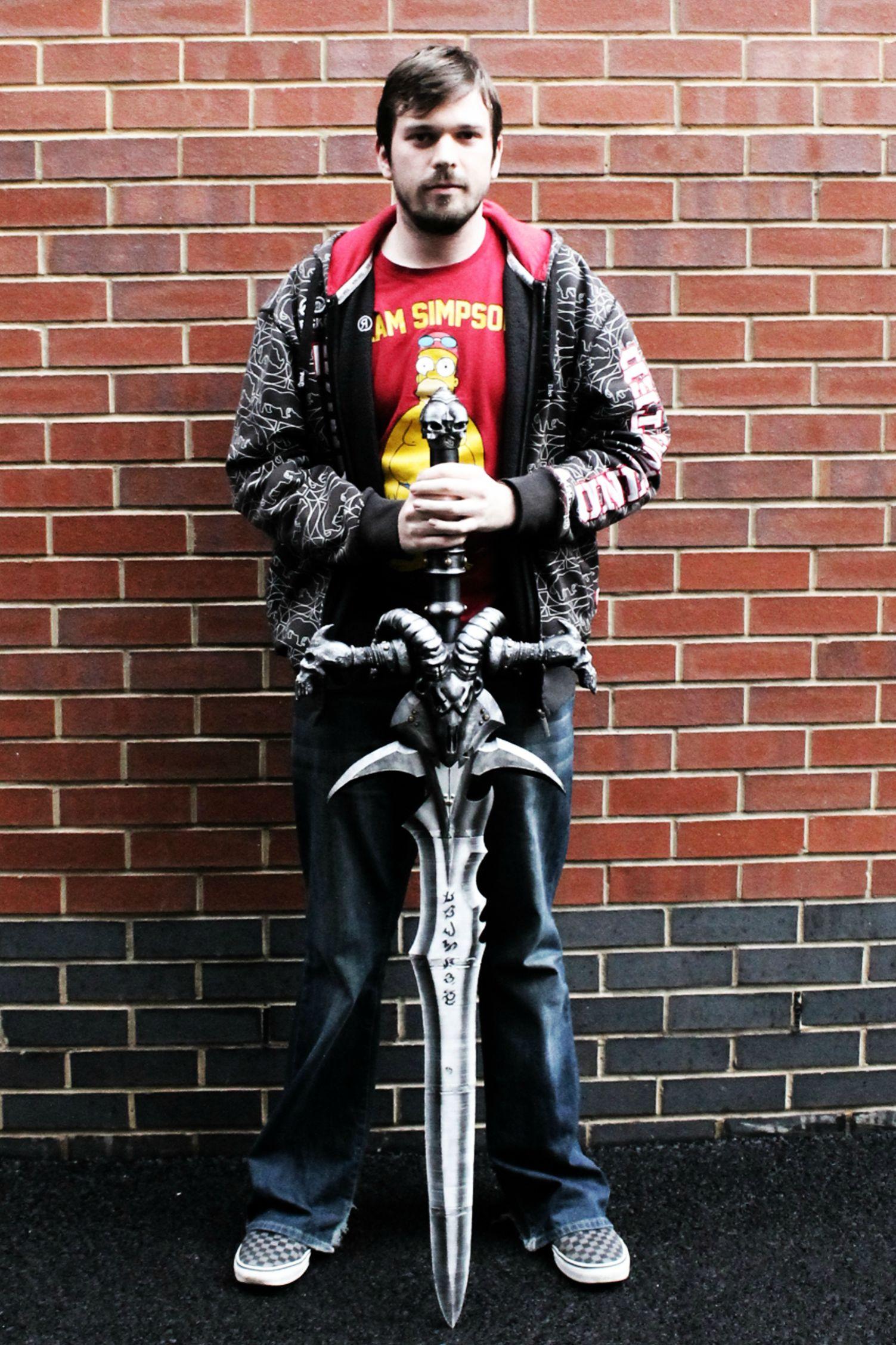
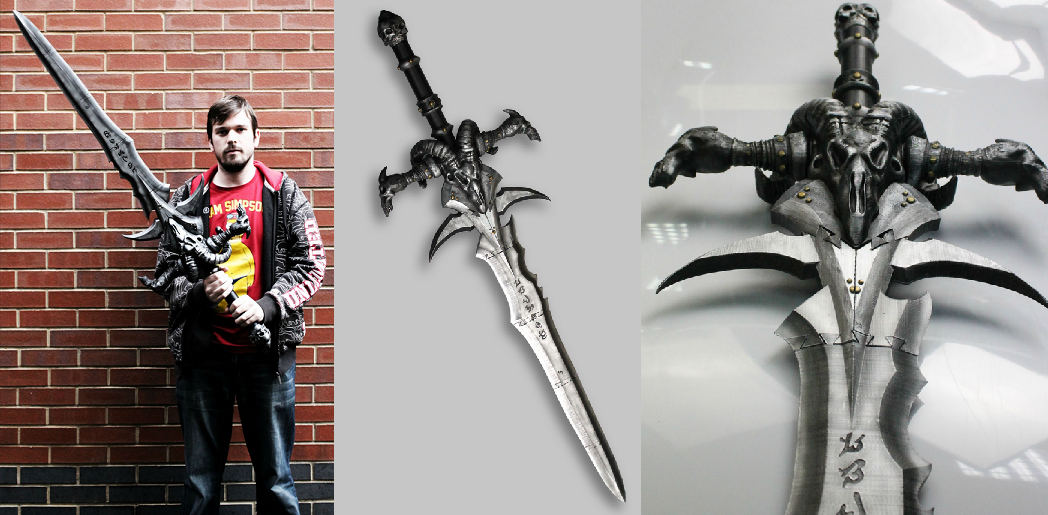
They’ve designed and put together a 3D printed Frostmourne sword — that happens to be 1.3 meters tall.
The two worked together on this challenging project, which is printed in several pieces that snap together without the need for glue. While Downey designed the blade and the hilt joints using Solidworks, Viles worked on the skulls using Zbrush. When the skulls were complete Downey then merged the designs using Meshmixer, to make sure that he did not lose the scale and accuracy inherent within the models.
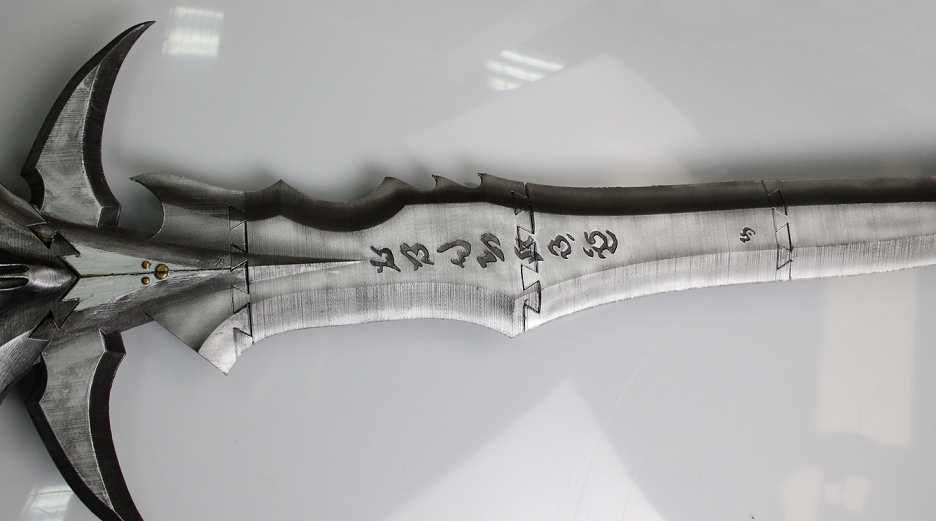
At this point it was time to print it all out, and see if it fit together like they had designed it to. They set the infill at 10% and printed at 0.2mm. The largest of the segments was the piece which included the main hilt and the ram’s head, measuring 217mm x 206mm x 120mm.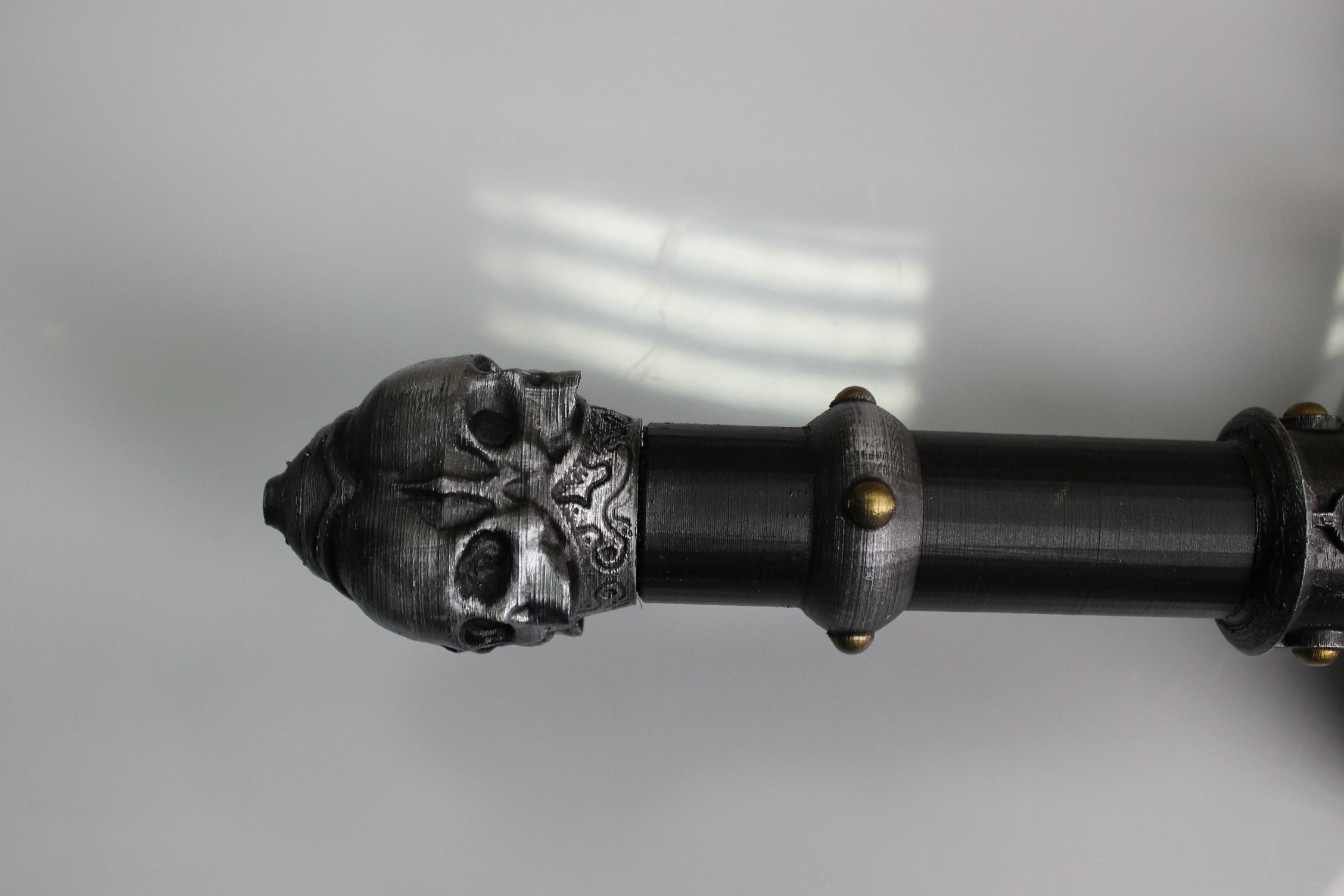
Certainly this isn’t just a weekend project. The sword, which measures a staggering 130cm x 40cm x 20cm when assembled, and weighs approximately 600 grams, took close to 50 hours to design, print, assemble, and paint. The painting and finishing work was done by Catherine Woods from My Mini Factory, and as you can see is simply amazing.
For those of you interested in trying to duplicate this incredible project, the design has been made available for free at My Mini Factory, or if you wish to purchase Frostmourne already printed and painted it is available for $499.
Let us know if you have tried printing this out. We would love to see your work posted in the 3D Printed Frostmourne forum tread on 3DPB.com.

Subscribe to Our Email Newsletter
Stay up-to-date on all the latest news from the 3D printing industry and receive information and offers from third party vendors.
Print Services
Upload your 3D Models and get them printed quickly and efficiently.











You May Also Like
HADDY’s Large-Format Robotic 3D Printing to Power Red Cat’s Drone Boat Production
In May 2025, Joris Peels, as is his custom, wrote a prescient article about Unmanned Surface Vehicles (USVs) and Unmanned Underwater Vehicles (UUVs), i.e., drone boats. Listing a multifaceted range...
6K Wins $1.95M DLA Award to Recycle Defense Metals
6K will receive $1.95 million from the Defense Logistics Agency under the Recovering Strategic Value project. The Phase II award aims to reduce the US’ dependence on Nickel, Titanium, Tungsten,...
3D Printing News Briefs, April 2, 2026: Reseller, Submarine Parts, & More
We’re starting off today’s 3D Printing News Briefs with business from Materialise and RapidFit, and Axtra3D and MULTISTATION. Then we’ll move on to a contract for submarine components, and end...
Portsmouth Naval Shipyard Installs 3D Printed Part on In-Service Submarine in Key Milestone for US Defense Sector
I’ve been tracking the US Navy’s additive manufacturing (AM) buildup as it relates to submarines for a while now, and even amidst the AM efforts that all the branches have embarked...