Legacy Filament Extruder – Open Source Kickstarter Project Turns Trash into 3D Printer Filament

One of the biggest concerns about the expanding consumer based 3D printing market, seems to be with the large amounts of plastic filament being purchased, used, and then likely thrown into a land fill. Over the past  several months, we have seen many possible solutions to this growing problem, such as biodegradable plastics and alternate materials being used. One Seattle woman by the name of Liz Havlin, has recently teamed up with designer Hugh Lyman, to introduce their solution to this growing problem.
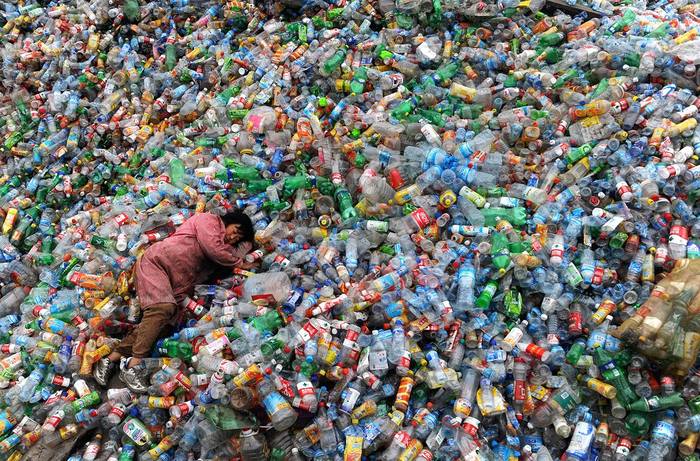
Havlin plans to launch a Kickstarter campaign shortly, to fund a project she feels will not only preserve the environment, but also allow hobbyists to drastically cut down on their filament expenses. The Legacy Filament Extruder is an open source extruder, made mainly of 3D printed parts, which can be built at a relatively low cost. The way the Legacy Extruder works, is you feed plastic from soda bottles into the machine; it melts the plastic down, extrudes it in the shape of 3D printer filament, and then wraps it into a spool for you put directly into your printer.
Such a device could drastically cut down on wasted plastics, help make recycling fun, and save a ton of money for those who purchase filament. The price of filament can range anywhere from $20-$50 per kilogram.
Havlin didn’t start the project thinking it would be open source, but she soon found out that opening the technology up to everyone was the best route to take.
“After it became apparent that investors were only interested in acquiring the IP (intellectual property) in order to stop me from manufacturing the machines, I decided this was better developed as an Open Source Kickstarter Project,” Havlin explained.
Liz and her team will offer several different rewards on their Kickstarter campaign, which includes the following:
- Backers who spend $499, will get the complete kit to build the Legacy, except for the 3D printed parts, which they can print themselves.
- Backers who spend $599, will get a complete kit, including the 3D printed parts
- Backers who spend $699, will get a fully assembled Legacy Filament Extruder.
The very fact that this is open source and constructed with mostly 3D printed parts, could lead to widespread, fast paced innovation within the recycled plastic to filament market. Havlin will seek $30,000 for the development of this device, from the Kickstarter community. She also has stated that for every five extruders that are pledged for, they will send one extruder to a place in need, such as the Protoprint, The Plastic Bank, and places in Africa. Check out the Legacy Filament Extruder forum thread for more details and discussion. The placeholder for the Kickstarter project can be seen here.
Subscribe to Our Email Newsletter
Stay up-to-date on all the latest news from the 3D printing industry and receive information and offers from third party vendors.
Print Services
Upload your 3D Models and get them printed quickly and efficiently.











You May Also Like
Bridging the Gap: 2D to 3D AI in Manufacturing
For decades, the early stages of manufacturing have been defined by a simple, frustrating trade-off: you can have it precise, or you can have it fast. AI just broke that...
Takeaways From MILAM 2026: Defense’s Growing Role in Driving 3D Printing – Part I
The annual Military Additive Manufacturing Summit & Technology Showcase (MILAM 2026) once again brought together the defense sector’s top technologists, military leaders, and additive manufacturing (AM) innovators for three days...
Hardware is Dead. Here’s What Actually Wins in Additive Manufacturing.
Hardware is rapidly commoditizing across additive manufacturing. Specifications have converged. Price competition has intensified. Margins have compressed. For companies attempting to scale additive manufacturing beyond prototyping, this shift has profound...
The Real ROI of Personalized 3D Printed Medtech in Oncology
Discover how patient-customized 3D printed devices like Stentra™ significantly reduce high toxicity-related treatment costs and improve workflow efficiencies to handle more cases more effectively overtime. Introduction: The Economic Paradox in...