Project Silkworm Plugin Seeks to Redefine 3D Printing and Design Via G-code

 There are so many aspects of the 3D modeling and printing process which are continuously improving. Whether it’s modeling software which is easier to use, enabling amateurs to design without a background in CAD, or the printer specifications themselves, the industry has made tremendous strides over the past couple of years.
One area which has not changed very much when referring to Cartesian-based desktop 3D printers, is how the machines receive and then translate G-code from a model into actual movements of the extruder along the x, y, and z-axes. G-code, for those of you who are not aware, is a numerical control programming language which is responsible for each and every printing movement. Primarily, this part of the 3D printing process has remained relatively the same for years. Once a model is translated into G-code via a slicing program, editing is a thing of the past. Also, the way in which slicing works, severely limits printing capabilities. With this said, most designers probably don’t even realize what they are missing out on because of these limitations.
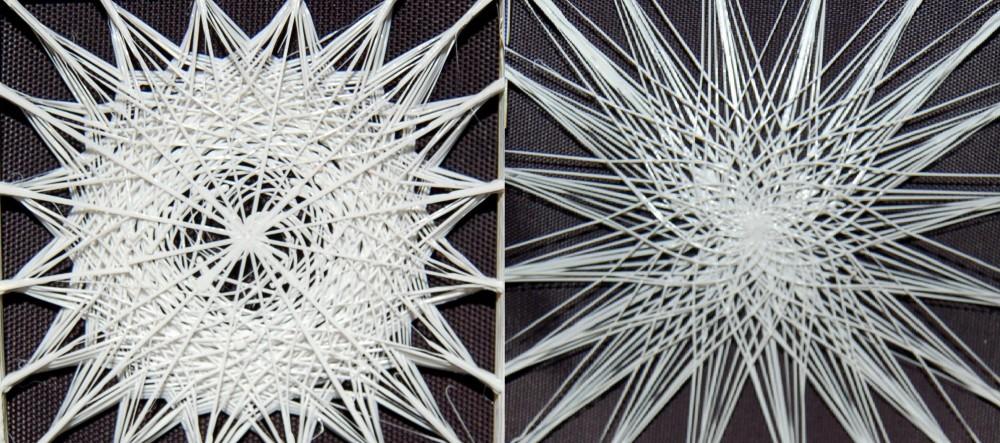
An Initiative called Project Silkworm, launched by Adam Holloway, Arthur Mamou-Mani and Karl Kjelstrup-Johnson, looks to do away with these limitations by providing a new revolutionary technique to manipulate a printer’s G-code.
A typical G-Code for a 3D printer will look something like this: G1 F100 X15 Y12 E0.02. ‘F’ represents the speed of the extruder, ‘G’ is a movement command, ‘X’ and ‘Y’ are the coordinates, and ‘E’ represents the extrusion flow. What Silkworm allows one to do, is manipulate this G-code movement while still using the CAD software, allowing for customizable input, translating Grasshopper and Rhino geometry into the G-Code needed for the print. By doing this, designers now have the capability of controlling the flow from the extruder, equating to thicker or thinner extrusions, as well as better controlling the exact paths of deposition and speed.
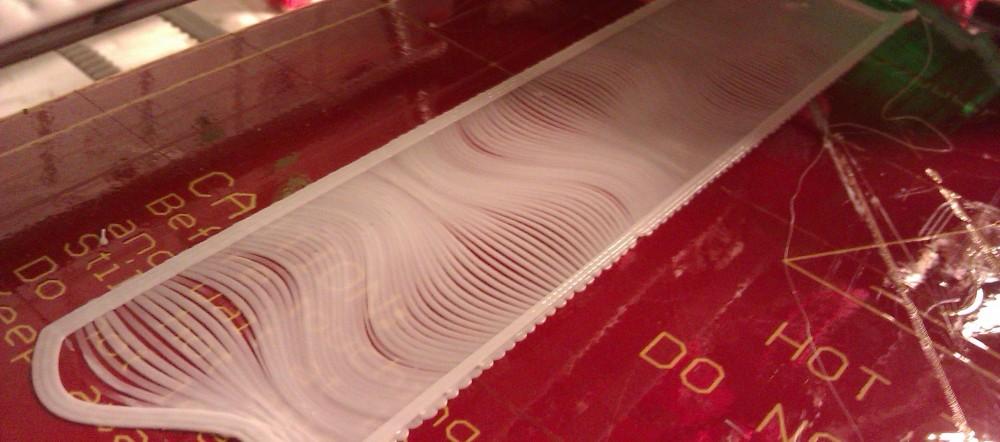
“Now additive processes can be manipulated through data driven logics programmed directly by the designer,” states the creators. “Silkworm offers the designer a vocabulary to choreograph these processes and develop the way the printed object is conceived.”
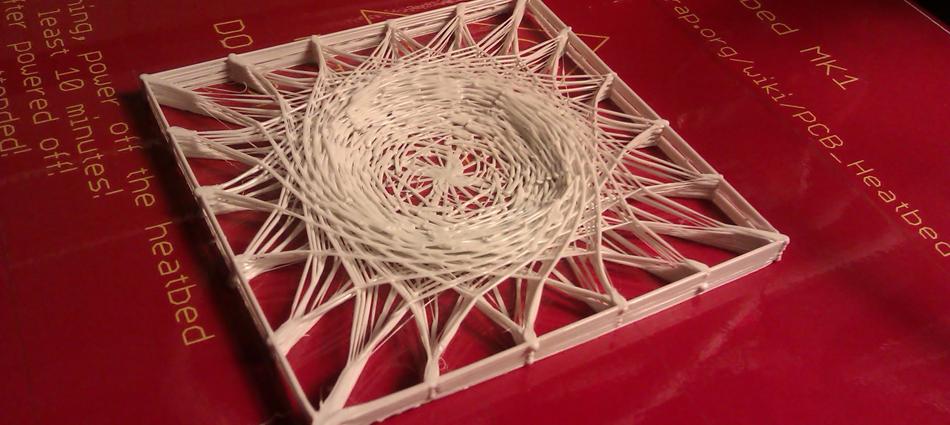
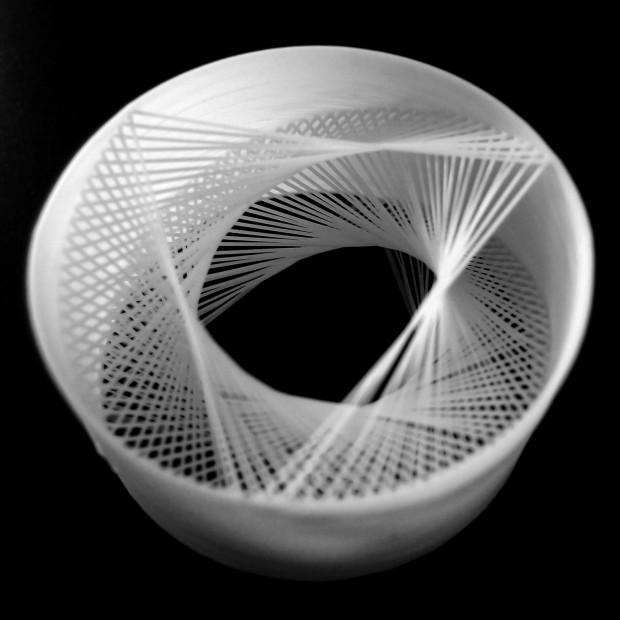
For instance, if a designer wants to control his/her printer in order to create intricate weaves, using varying extrusion widths and print speeds, this is all very possible with the Silkworm plugin. If a designer wishes to create various contours such as a grainy wood look, or a single layer spiral going up the z-axis, these projects would also be possible.
Project Silkworm promises to change the way, we as designers, interact with our 3D printers, providing additional tools for 3D printing which I’m sure many individuals will use their creative minds to take advantage of. The plugin is available for free download, but note that it is still a work in progress. Silkworm is open source and made available under a Creative Commons Attribution-NonCommercial-ShareAlike 3.0 Unported License.
Have you downloaded the plugin? What do you think? Discuss in the Project Silkworm forum thread on 3DPB.com. Check out some larger examples of what Silkworm is capable of below.

Subscribe to Our Email Newsletter
Stay up-to-date on all the latest news from the 3D printing industry and receive information and offers from third party vendors.
Print Services
Upload your 3D Models and get them printed quickly and efficiently.











You May Also Like
Advancing Workforce Development for Industrial Additive Manufacturing
As additive manufacturing (AM) continues its transition from a niche technology to a core element of industrial production, workforce development has emerged as one of the industry’s most pressing issues....
Scaling DLP: How Visitech Moves Production Beyond the “Printer Farm”
With hundreds of light engines shipped in 2025, Visitech is leveraging its new Texas facility and scrolling DLP architecture to redefine industrial throughput. By achieving up to 20 times the...
Reuniting ExOne and voxeljet: An Investor’s View on Building a Global Industrial Sand Printing Leader
Authored by Whitney Haring-Smith, Chair of the Board, ExOne Global Holdings & Managing Partner, Anzu Partners At Anzu Partners, we invest with conviction in industrial technologies that create categories—and then...
Adoption of Advanced Powder Metal Manufacturing in the Global Small Arms Space – SHOT Show 2026 Additive Manufacturing Analysis
Back in 2013, I remember being completely blown away when a company called Solid Concepts reportedly additively manufactured nearly a complete firearm as a proof of concept. Although desktop polymer...