Turning First World Trash Into a Third World Water Purifier Via 3D Printing

Most likely if you are reading this story, you have relatively easy access to clean drinking water. Whether this encompasses walking a few steps to the nearest sink, or opening the fridge, water is taken for granted by those living in the developed world. Unfortunately this is not the case for an approximate 783 million peope worldwide. As I sit here drinking a cold bottle of spring water from my local Publix supermarket, I stumbled upon a few eye opening statistics. For 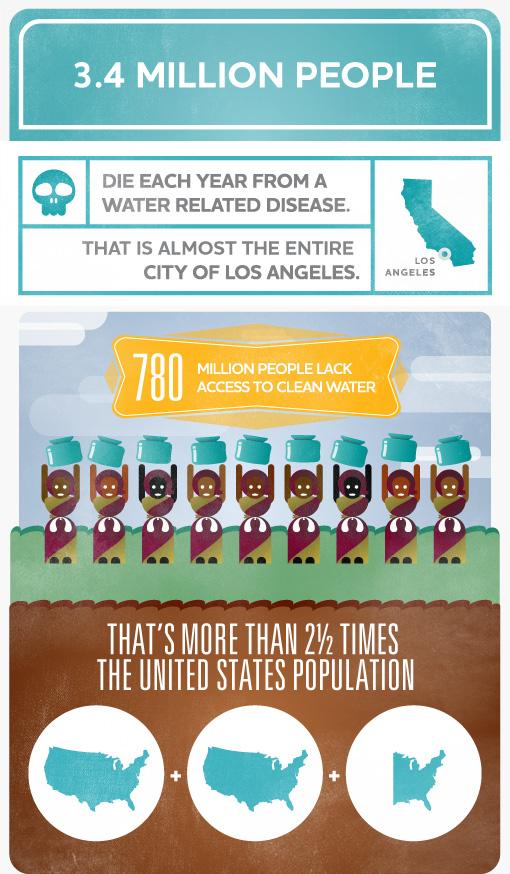 those of you who take your water supply for granted like I have been doing, I have listed a few of these stats below.
- Every year 3.4 million people die from water related disease.
- The lack of clean water is responsible for killing children at a rate equal to approximately six jumbo jets crashing per day.
- The total number of people lacking access to clean water equates to approximately 2.5 times that of the population of the United States.
Now that you have an idea of the severity of the situation, let’s turn to one man named Les Hall, who has come up with a simple, yet brilliant 3D printed invention, which has the potential to provide clean drinking water to millions around the world.
Called the Solar Water Purifier, the device was 3D print within a couple hours and can be placed somewhere in the middle of an empty two liter plastic bottle which has been cut into two sections. The ring-like device fits onto the bottom half of the bottle, and then the upper half is placed on top. Unpurified water should be poured into the bottom half of the bottle prior to placing the top half back on. Once assembled, like shown in the video below, the bottle can be placed out in the sun to allow nature’s purification method, evaporation, to take place.

As the water evaporates and then condenses, it will accumulate on the inner walls of the upper section of the bottle, and then slowly work its way down, dripping into the tray of the 3D printed ring. The water in the ring is purified, and thus drinkable. Such a 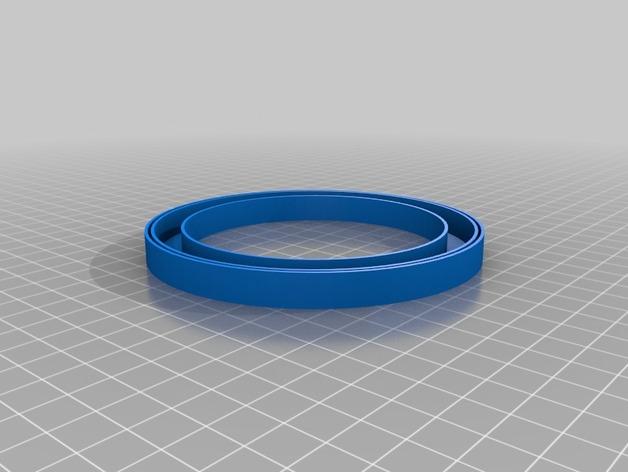 device could be used in 3rd world island nations such as Haiti, which ironically is surrounded by the very resource they lack. It could be used to desalinate the country’s abundant sea water. Haiti is just one of the dozens of nations, particularly in Africa and South America, who could put such a device to use.
“What makes this invention so likely to actually be used is the following fact,” explained Hall. “If you give a desperately impoverished person an object with the intention of helping that person survive, what typically happens is the person will sell the object to buy food. Therefore it stands to reason that to help such a someone, what we give them must be basically trash that nobody wants, and therefore has no sale value, so the recipient will keep it and use it for its intended purpose, in this case to clean dirty water.”
Hall, 47, said that since he was a child he has always wanted to ‘make the world a better place’. Well, this might just be his calling. He has decided to make his design, which he calls a prototype, available for free download and improvement, hoping to generate enough interest to get his invention to those who need it most.
Please fee free to download the design, manipulate it and share your improvements with the 3DPB.com community in the 3D printed water purifier forum thread. Watch as Hall explains this device in further detail below.
Subscribe to Our Email Newsletter
Stay up-to-date on all the latest news from the 3D printing industry and receive information and offers from third party vendors.
Print Services
Upload your 3D Models and get them printed quickly and efficiently.











You May Also Like
Scaling AM Suppressor Production: Oerlikon AM & ATLIX Rise to the Challenge
End-of-barrel suppressors, oftentimes referred to as silencers, function by capturing and redirecting high-pressure propellant gases through carefully engineered internal structures and channels. By disrupting the gas flow before it exits...
Unlocking Big Part Manufacturing for the Energy Sector: How EPRI’s Convergent Approach Proves the Potential of Large-Area DED 3D Printing
The U.S. hydropower fleet, more than 2,200 plants averaging 65 years of age, relies on large, bespoke components that are increasingly difficult to source. Long lead times, disappearing suppliers, and...
In-Situ Automated Toolpath Generation and Auto-Alignment for Performance-Driven Directed Energy Deposition (DED)
The evolution of Directed Energy Deposition (DED) systems has increasingly focused on improving process adaptability, geometric fidelity, and integration into automated manufacturing environments. FormAlloy has advanced this progression through the...
From Material Maturity to Fleet Execution: What Comes Next for Additive Manufacturing in the U.S. Navy
Additive manufacturing is steadily moving from experimental use toward routine application in U.S. Navy shipbuilding, sustainment, and much more. In recent years, the Navy, working through its Maritime Industrial Base...