Siemens Saves Time and Money Using Ultimaker 2 3D Printers for Prototype Production


Siemens AG is a multinational corporation that holds the distinction of being Europe’s largest engineering company. Headquartered in Berlin and Munich, Germany, the company focuses on Healthcare, Industry, Energy, and Infrastructure & Cities, with its Industrial Automation division generating the largest company profit of these sectors. Simply stated, Siemens leads industry trends in manufacturing, which includes additive manufacturing and 3D printing, so it is a company to watch regarding its incorporation of 3D printing technology into its industrial automation. Recently, the company has announced it has started to integrate 3D printing into all aspects of the value chain of a product, not just on the factory floor. This integration of 3D printing is paying off greatly in the amount of time saved as an idea becomes a prototype, and then, finally, a component.
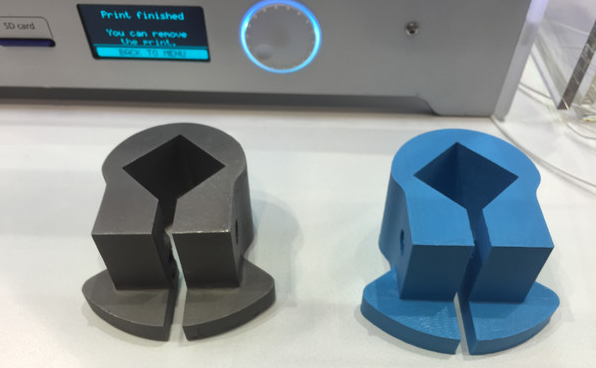
Jamie McDyre, Siemens’ Head of Freight and Products (ASEAN Pacific), reports that 3D printing is helping the company bring customers into the early phases of the design process due to the ability to quickly produce prototypes. These prototypes engage customers in the whole process, and not just the end product, which helps both customer relations and the final product’s quality as well.
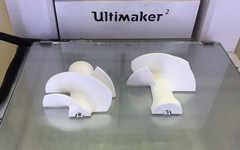
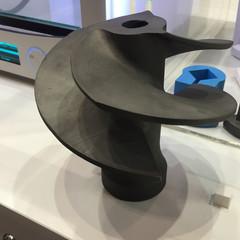
Another Siemens employee who sees what a great contribution 3D printing makes to the manufacturing process is Stephen Baker, Head of Research and Development for Siemens Rail Automation division. Baker describes how 3D printing with an Ultimaker 2 3D printer makes an initial plastic component prototype, and then, in only a couple of weeks, a final 316 grade stainless steel product emerges from the process. The development of components used to take much longer, as Baker explains:
“So therefore we gone from a 3D CAD model, to a 3D component, to the final metallic component without having to go through the normal process of manufacturing. This has enabled us to reduce our time from the model stage to the final component stage to about a week to 2 weeks, compared to where this would normally take us anywhere between 12 and 16 weeks. The principle saving is time (traditional an average of 10+ weeks per component) and potential rework as one-off prototyping allows us to try designs and elements without investing in expensive tooling.”
A Sydney-based foundry was able to take 3D printed PLA components, place them into a wax form, and make “a ceramic slurry around the printed parts.” By using 3D printing as part of the actual manufacturing process to avoid expensive tooling, Siemens is saving an average of ten weeks per component. Now those are numbers that are difficult to dispute!
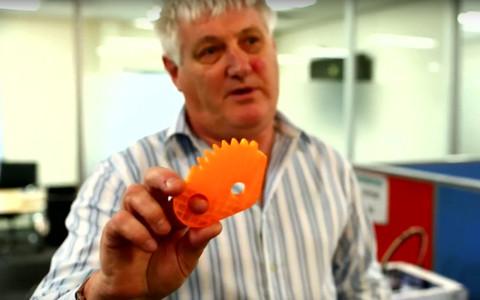
Baker also reports that the company chose the Ultimaker 2 3D Printer because it met all of Siemens’ specifications. It needed to have an 8” building space, a sub 0.100mm resolution, and be under $10,000. It also needed to have some level of local support, and the Ultimaker 2 met all of these requirements.
Now 3D printing is expanding its influence in Europe’s largest engineering company by saving time and money, and proving flexible in its applications. You can watch a video providing more information about Siemens and 3D printing below to see for yourself how the company is using 3D printing these days.
Subscribe to Our Email Newsletter
Stay up-to-date on all the latest news from the 3D printing industry and receive information and offers from third party vendors.
Print Services
Upload your 3D Models and get them printed quickly and efficiently.













You May Also Like
3D Printing Financials: New Money Flows Into Medical, Industrial and AI 3D
Money continued to move into 3D printing in the second half of August. Hike Medical raised $22.5 million as it grows its 3D printed custom medical device business. Swiss additive...
3D Printing Financials: 6K Additive Sales Rise as Aerospace and Defense Demand Grows
6K Additive (ASX: 6KA) grew rapidly in the first half of 2026 as demand for its metal powders increased, particularly from aerospace and defense customers. The newly public company also...
HeyGears G1 Passes $14M on Kickstarter with Full-Color 3D Printing
HeyGears was started in 2015 and has been making value-driven Vat Polymerization systems for dental and home use. The company is marketing savvy and very driven. Now the firm has...
The Business Case for 3D Printed Stents
A new 3D printed stent developed at New York University (NYU) does not look like the devices doctors typically use today. Instead of a simple tube, the prototype resembles a...