The 3D Printed Cascaqua: Aquaponics Allow Fish & Plants to Live Together Symbiotically


 Unless it’s landing on my plate in the form of fresh golden fried flounder just caught off the beach, or a broiled piece of rainbow trout just plucked out of a chilly lake, I’m generally not interested in having fish in my house. My daughter has been asking for a fish for years now, and I’ve managed to escape that with a dog, a hedgehog, and a bird so far. But even as the home continues to fill with pets, my initial thought at checking out the Cascaqua home aquaponics system is that the idea of having some fish sounds–and looks–pretty good here. Maybe I could even convince my generally not cooperating gardener’s thumb to turn green as well, while I turn over a new leaf here.
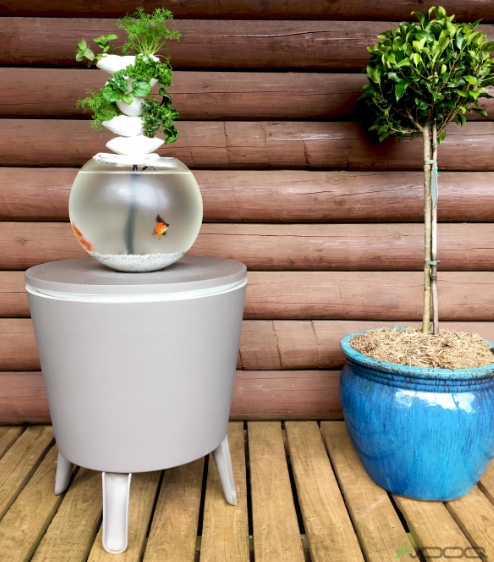
Just imagine the soothing sounds of trickling water, a tower of stacked, growing greenery, and fish swirling happily in a beautiful bowl. That would be the Casaqua–and now you can download the 3D files to make it yourself. Featuring a sculptural tower, growing beds, and a beautiful fish bowl, the patent-pending design works with a quiet pump.
Designed by Avooq, this 3D printed system is meant to further the movement toward sustainability and healthy living. In promoting a miniature garden and aquarium, Avooq offers a way for everyone to bring beauty and tranquility to the home. It’s a well-known fact that both plants and fish offer mental health benefits to us all. Plants have not only a pleasing aesthetic quality, but can also help improve air quality and fight pollutants–especially in a small city apartment or home. The combination of flowing water and calmly moving fish can be almost hypnotic, helping to reduce stress and anxiety too.
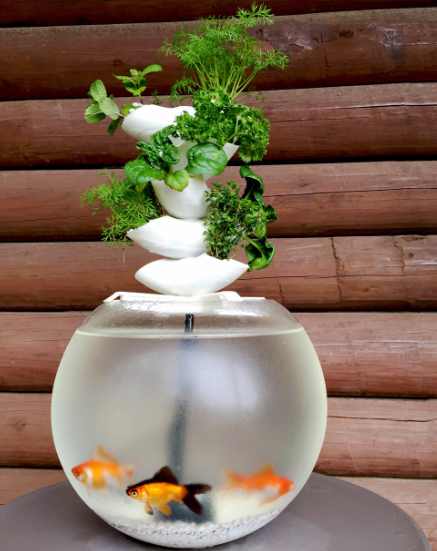 Cascaqua is kind of mindblowing–if this sort of stuff is new to you–in that you can grow plants without the one thing we are used to as a central requirement: dirt. Operating as a symbiotic ecosystem, the plants and the fish work together. Without the complication of any soil or any fertilizer–even that of organic makeup–the threat of any chemicals or toxins is completely eliminated. To make it yourself, you can download all the files yourself now, 3D printing all the parts except for:
- 270mm diameter fish bowl with a 170mm diameter opening
- 300L/hour submersible pump
- 8mm O.D. flexible tube
These can all be found easily at places like Amazon.
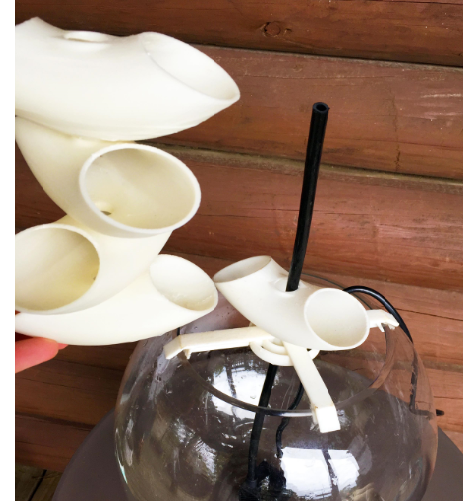
The 3D printed parts, with some of the outriggers requiring possible modification depending on fishbowl, consist of:
- Cacade planter (5)
- Outrigger 1 (3)
- Outrigger 2 (1)
- Base (1)
It’s recommended that you print with ABS, expecting a print time of around eight hours.
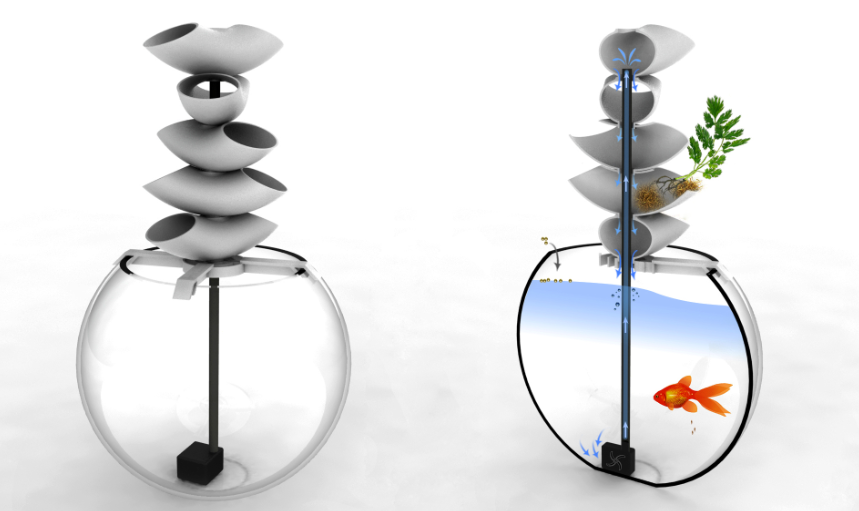 Once assembled, the process works as the fish eat the food and then excrete waste, in the form of ammonia. Bacteria converts that into nitrites, nitrates, and then–nutrients. This water, nutrient-rich, is pumped to the top of the grow bed system, feeding and hydrating the plant roots, which take up the nitrates and therefore filter the water for the fish.
This type of mini ecology is absolutely the most natural method for growing produce and plants, and is also perfect for your fish, as they are not subjected to anything noxious in their filtration system, oxygenated by the plant. Many even believe that this could prove to be a viable method for sustainable food production, well suited to developing nations where such a thing is so badly in need. It’s certainly hard to see how this wouldn’t be completely feasible and enormously beneficial.
Discuss this story in the 3D Printed Cascaqua forum thread on 3DPB.com.
Subscribe to Our Email Newsletter
Stay up-to-date on all the latest news from the 3D printing industry and receive information and offers from third party vendors.
Print Services
Upload your 3D Models and get them printed quickly and efficiently.













You May Also Like
Apple’s 3D Printed Hinge Cover & the Inauguration of the Ternus Era
Marc Andreessen notwithstanding, it turns out that hardware is, in fact, eating the world. Perhaps after being starved for so long, the hardware side of tech innovation is now overcompensating,...
The Exploration Company Raises $450M to Rival SpaceX
The space industry is currently worth about $650 billion globally, growing nearly 50 percent since 2020, which is certainly impressive. But over the next decade, the total market opportunity in...
3D Printing News Briefs, September 10, 2026: Tax Credits, Polymer Research, Microneedles, & More
We’re starting off this week’s 3D Printing News Briefs with a little business from Axtra3D and Beehive Industries, before moving on to a scientific collaboration agreement between Roboze and a...
The Formlabs Shuffle
For the latest development on 8/31/26, please see an update at the end of this article. Formlabs is doing a management shuffle, pointing the firm even more surely towards an...