MatterFab Reveals Their Affordable Metal 3D Printer, ‘An Order of Magnitude Cheaper’


Metal 3D printing is the Holy Grail of additive manufacturing. Unlike with other materials that can be printed, metal enables manufacturers to create end-use objects via 3D printing, objects which oftentimes outperform  those produced with traditional casting techniques. In fact General Electric and Airbus are already saving money money using metal laser sintering machines to produce parts for anything from aircraft, to fuel nozzles. Additionally, once those products are installed for end-use, they continue to save money because of their light weight, great strength, and precise fit. The reductions of just a few kilograms on board an aircraft can save thousands of dollars over the course of a year in fuel costs. Multiply this by an entire fleet of passenger planes all using hundreds of a particular part, and that equates to millions of dollars in annual savings.
There is a problem though. Multi-billion dollar corporations like General Electric and Airbus can afford the $1 million+ price tags for these machines, however, most smaller manufacturers find it too hard to even dream about owning one.
One San Francisco based company, MatterFab, founded by Mathew Burris and Dave Warren, want to change all this. This week they have brought their low cost industrial 3D metal printer out of stealth mode, giving hope to all those small manufacturers out there, who have aspirations of owning such a device. Their goal is to lower the barriers of entry for businesses within all industries, which they intend to accomplish by lowering machine, support, and material costs. The printer will be the first U.S. based powder bed fusion metal 3D printer to ever come to market.
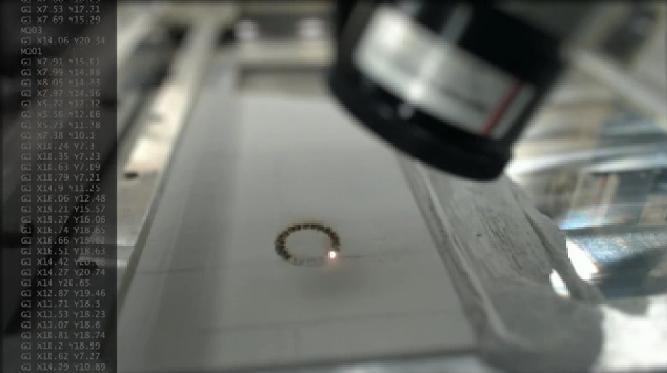
The MatterFab 3D Metal Printer in Action
It works by laying down metal powder. A high powered laser then melts that powder in certain precise locations based on a CAD file. Once one layer is melted, the printer will place another layer of metal powder on top, and the process repeats until an entire object is fabricated.
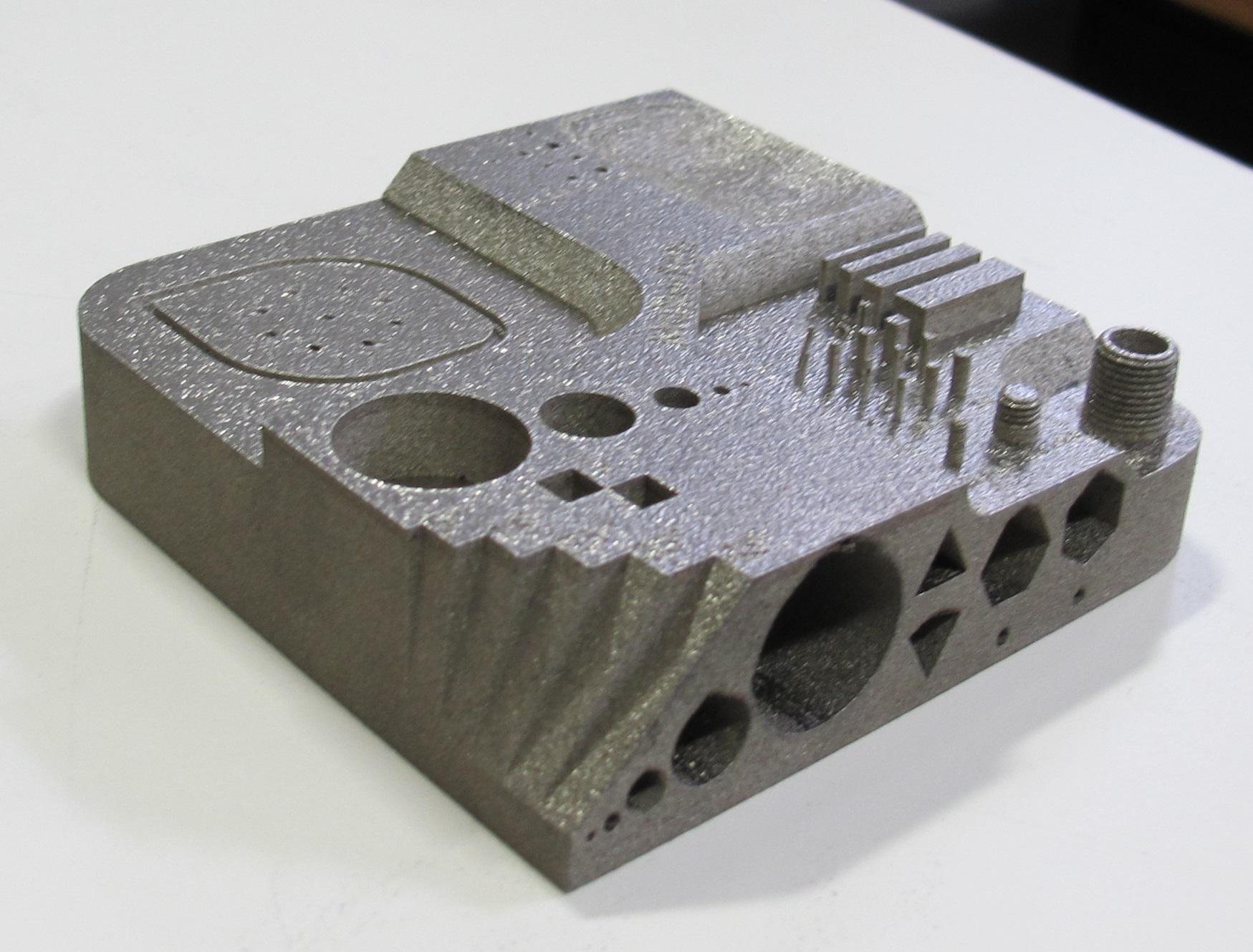
An Object Printed on a MatterFab Machine
MatterFab CEO Matt Burriss, sat down recently with Ryan Lawler of Techcrunch, and discussed the printer in a bit more detail. What we learned from the interview, which is available at the bottom of this article, are several key details.
Matterfab first successfully 3D printed a metal object back in April, so they certainly are working quite fast. Burris stated that he expects the first test units will begin shipping to their test partners in the early part of next year. He also stated that the reason the company is able to reduce the price of this technology so significantly is because of the experience of the team, which allows them to pull a dozen different engineering disciplines together and come up with workable solutions. This is in addition to the drastic price decreases we are seeing in computational power, and components which make up the printer, including high precision sensors.
The exact price of the MatterFab metal printer was not stated, however, a recent press release from the company stated the following,
“MatterFab’s 3D metal printer is an order of magnitude cheaper and has the same quality as million dollar metal 3D printers.”
This would equate to a price which is approximately 10% of metal 3D printer prices which are on the market today. What do you think? Will MatterFab revolutionize the industrial metal 3D printing market? What could this mean for manufacturing in general? Discuss in the MatterFab metal 3D printer forum thread on 3DPB.com.
[Source: Matterfab.com, TechCrunch.com]
Subscribe to Our Email Newsletter
Stay up-to-date on all the latest news from the 3D printing industry and receive information and offers from third party vendors.
Print Services
Upload your 3D Models and get them printed quickly and efficiently.













You May Also Like
Kalogon Wants to Patent Its Variable Density Wheelchair Cushion
Kalogon has brought the Verro to market. This is a 3D printed wheelchair cushion, made with vat polymerization technology. Using a variable density lattice, it hopes to give wheelchair users...
Pogačar & Fairlight Cycles Show Us Low Cost 3D Printed Components for Bikes
There has been a lot going on in 3D printing for bicycles over the years. The most successful implementation so far is in bicycle seats. Carbon 3D printed seats are...
3DPOD 295: From Product to Design at Carbon, with Kristi Eveland Smith
Kristi Eveland Smith started as a competitive soccer player before moving into consulting, operations, and 3D printing. She’s now Vice President, Design to Production at Carbon 3D and has been...
AMS 2026 in Photos: Snow, Songs, and Serious Conversations
AMS 2026 may have been altered by flight delays and snow-covered streets, but once you made it, the energy felt anything but frozen. This year’s Additive Manufacturing Strategies, which wrapped...