eGarbigune, the Mini 3D Printer Made from Recycled Components


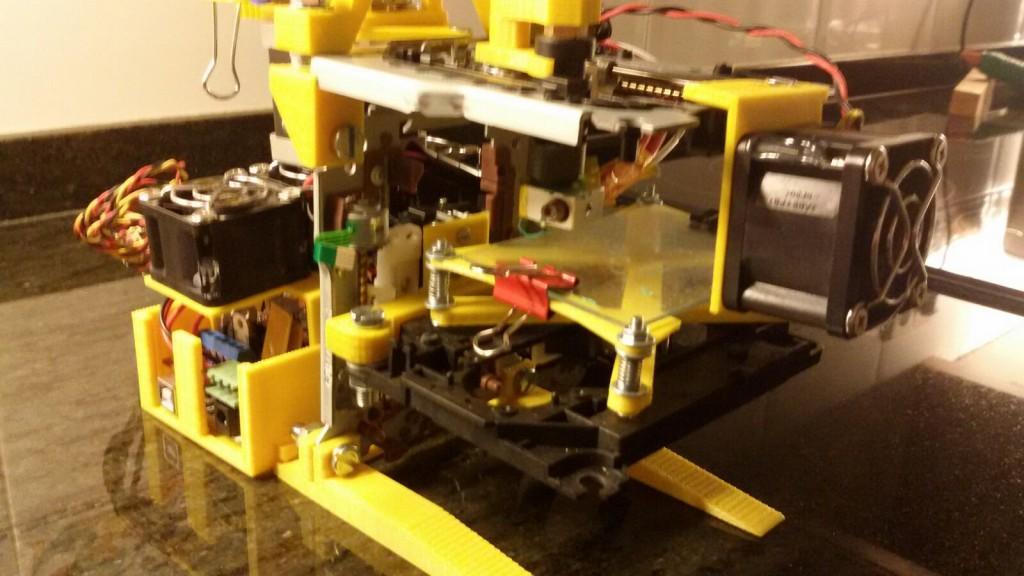 Not everyone can afford to buy their own desktop 3D printer, but that does’t mean that they can’t have one. With a little bit of skill (or maybe a lot), some old electronic components and a lot of patience, anyone can construct their very own desktop 3D printer at a cost which may actually shock you.
We’ve covered numerous projects in the past where designers were able to upcyle the old components from computers, DVD players and CD-Rom drives to build an FFF 3D printer capable of quite a bit of detail. One of these projects was the eWaste $60 3D printer posted on Instructables many months back. This printer was able to be produced using electronic scraps and cost the designer only around $60 to build.
One Spanish designer named Eneko Montero, however, decided to take the eWaste machine and iterate upon it, increasing its efficiency and accuracy even further. While initially Montero intended to only change a few of the design components of the eWaste machine, he eventually changed his course to drastically reimagine the machine and has redesigned nearly everything from scratch. Called the eGarbigune 3D printer, this latest machine can be built for under $80, and in completely open source with a large portion of its body being 3D printable itself.
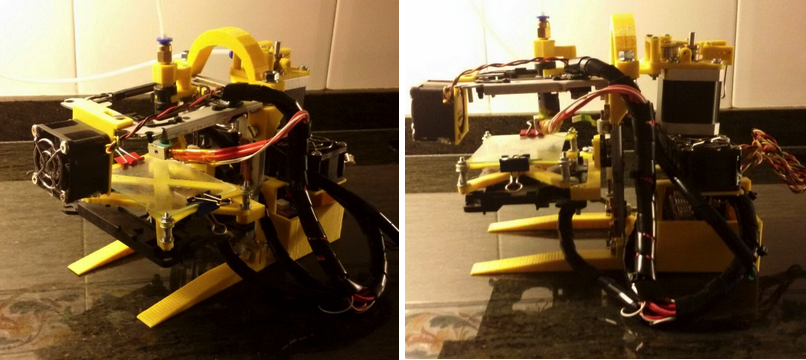
“eGarbigune is a mini home 3D printer made from recycled components, such as CD players and DVD drives that are no longer in use,” explains Montero. “This allows us to reduce costs for the project on a topic that is in fashion because of its enormous potential. The idea is not to buy the materials, but recycling as much as possible. Another important part of the project is that besides using recycled components, will use 3D printed parts, allowing us to design and assemble a structure quickly while adjusting to our needs.”
Below you will find some of the general specifications of the eGarbigune machine once it’s assembled:
- Print Technology: FFF/FDM
- Build Envelope: 40 x 40 x 400 mm
- Print Speed: 20-40mm/s
- Electronics: Arduino MEGA + 1.4 Ramps
- Filament Compatibility/Size: PLA at 1.75mm
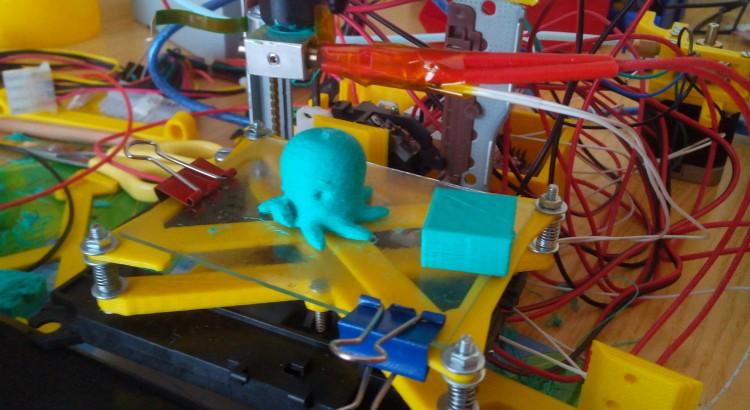
Some of the main attributes which differentiate the eGarbigune machine from the eWaste 3D printer include that this new machine utilizes three CD/DVD drives rather than two, meaning its build envelope is able to be increased. Additionally, no laser cutter or CNC machines are required because the bulk of the parts making up the machine, besides the recycle electronics, can be 3D printed themselves. If you don’t have access to a 3D printer, Montero recommends using a service, perhaps 3DHubs, to outsource the part production.
While this certainly is not an easy printer to build, it’s also not incredibly difficult either. Let us know your thoughts on this latest DIY machine. Discuss in the eGarbigune forum thread on 3DPB.com. Check out the video clip of the machine below:
Subscribe to Our Email Newsletter
Stay up-to-date on all the latest news from the 3D printing industry and receive information and offers from third party vendors.
Print Services
Upload your 3D Models and get them printed quickly and efficiently.











You May Also Like
The Two Paths to AM Print Services Market Growth
AM Research New market research: AM Research is building its new Additive Manufacturing Services Market 2.0 model. Learn more about the report and preorder here → Things continue to heat...
Additive Manufacturing Has a Major Growth Opportunity; Trust Will Decide Who Captures It
After years of overpromising, the next phase of AM growth will be won by companies that consistently deliver what they say. When I entered additive manufacturing in 2014, after 15...
10 Years of Multi Jet Fusion: Onsite at HP’s Vancouver, Washington Facility
At this year’s RAPID event in Boston, HP Additive Manufacturing Solutions celebrated ten years in the additive manufacturing (AM) market. The company ushered in the milestone with several innovations, including...
ADDMAN to Buy Up to $10.8M in Nickel 718 Powder from 6K Additive Over 30 Months
After years of buildup, we’re finally starting to see what the US metal additive manufacturing (AM) market could look like at scale. To be sure, it’s still not quite there,...