Panasonic Unveils 3D Scanning Booth in Japan Featuring 120 Lumix Cameras


 It’s certainly no surprise to see 3D printing and all that encompasses it picking up momentum in Japan, as it allows for their versatile culture to see further innovation in every sector from 3D printed medical models to 3D printed style and fashion accessories to Manga character figurines.
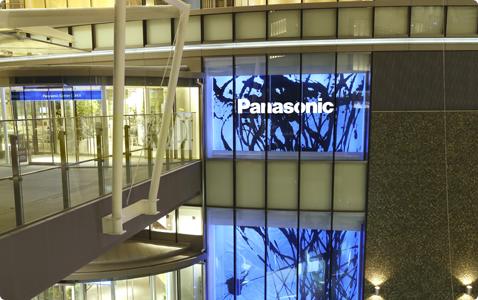
As mega entities like Panasonic make their entry into the 3D printing world, innovation should continue to explode there–especially in a country that loves characters, figurines, and many exciting new forms of entertainment. Now, as Panasonic, headquartered in Osaka, unveils their 3D scanning booth in the same city–those characters and figurines can be personalized.
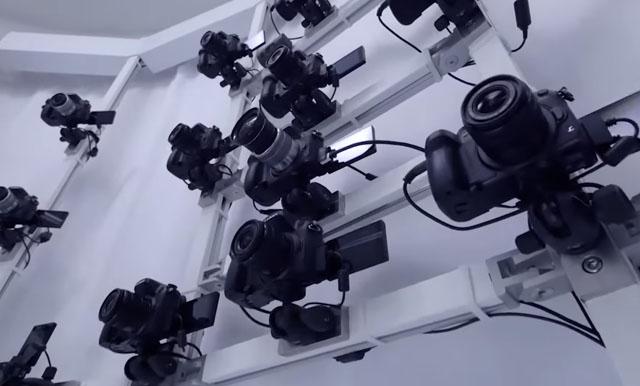
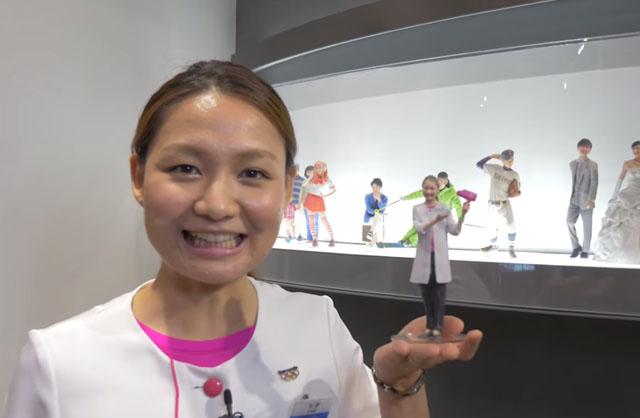
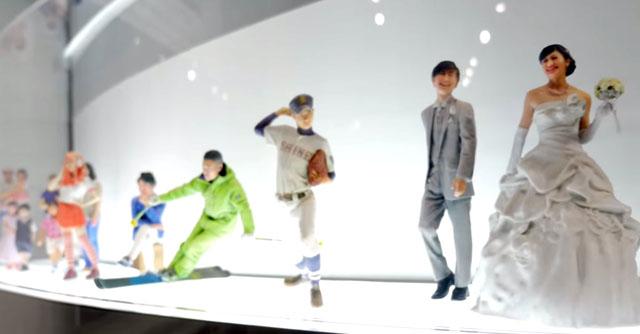 The Panasonic Center will be home to their spectacular new display of technology that allows for curious, technologically savvy shoppers to explore the latest from the electronics giant hailing from their home country. This isn’t just the latest in magically turning 2D selfies into generic 3D figurines perched atop a limited number of body choices. Panasonic’s technology defines state-of-the-art in itself. How so? With a world of cameras seemingly gone wild–in the form of 120 Lumix GH4 cameras all working as a team.
In quite the fascinating process, all triggering at the same time, the mirrorless cameras fire within a stunning 1/1,000,000th of a second, featuring an output with over 2 billion pixels of imag120e data. What makes this imaging scenario different from others is that the system does not employ a central scanner, but instead uses the multitude of very expensive cameras, so this isn’t something you will see in anyone’s home in the near future. Each camera itself weighs in at about $1,500, with a total of $180,000 in inventory being housed at the Panasonic Center.
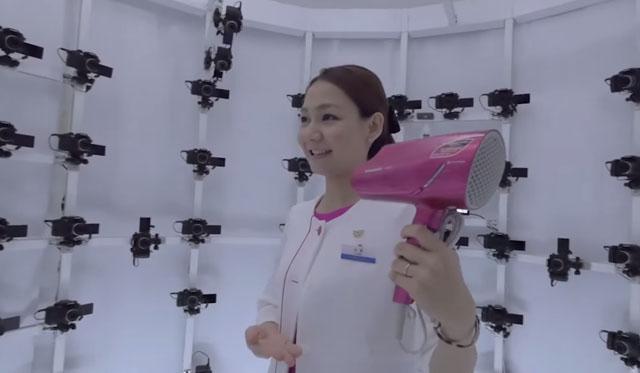
 What ultimately makes the experience truly different is that with this particular setup, the cameras can actually capture individuals moving in the circular room. After the data is captured, it’s loaded into special software allowing for a total 3D viewing. For $450, the data is turned into 3D model keepsakes. The precision and accuracy in the technology are apparent in the details of not only the face but its expression, as well as the pose of the body, which can even be realistically depicted holding items.
It remains to be seen how popular the booths will be, while it was with great interest that last year we reported on the Lumix camera as well as Panasonic worked with Materialise to produce 3D printed camera covers to allow for personalization. It should be exciting to see what progresses from here, as well as what greater affordability is produced in the future as both Panasonic and Japan eagerly work to grab a foothold in the 3D printing market.
Discuss your thoughts on this new technology in the Panasonic 3D Scanning Booth forum thread over at 3DPB.com. Below is a Japanese-language video in which you can see the impressive detail of the 3D models.
https://youtu.be/ifKshZto4t0
Subscribe to Our Email Newsletter
Stay up-to-date on all the latest news from the 3D printing industry and receive information and offers from third party vendors.
Print Services
Upload your 3D Models and get them printed quickly and efficiently.













You May Also Like
Impossible Objects Closes $40M Series B
The Pentagon, along with deep-pocketed collaborators in the private sector, is urgently coordinating the buildup of all the elements necessary for a domestic US drone supply chain. Even so, those...
The 3D Printing Opportunity in UGVs
In 2024, IperionX partnered with fastener firm Vegas Fasteners to jointly make fasteners for the US Army Ground Vehicle Systems Center (GVSC). That DEVCOM component has been hit by funding...
$51 Million Revenue VMP Wants to Become a Leading Additive Manufacturing Metal Powder Producer
Chinese powder producers have traditionally had little impact on the additive manufacturing market. Typically, they offer low-cost powders without much in the way of settings or application support. But China’s...
IperionX Gets $11.5M Army Boost to Make Titanium Fasteners in the U.S.
IperionX is going to get another $11.5 million, potentially up to $25.4 million, of an existing SBIR Phase III with the Army (Task Order W911QX26FA097). The award covers low-cost titanium...